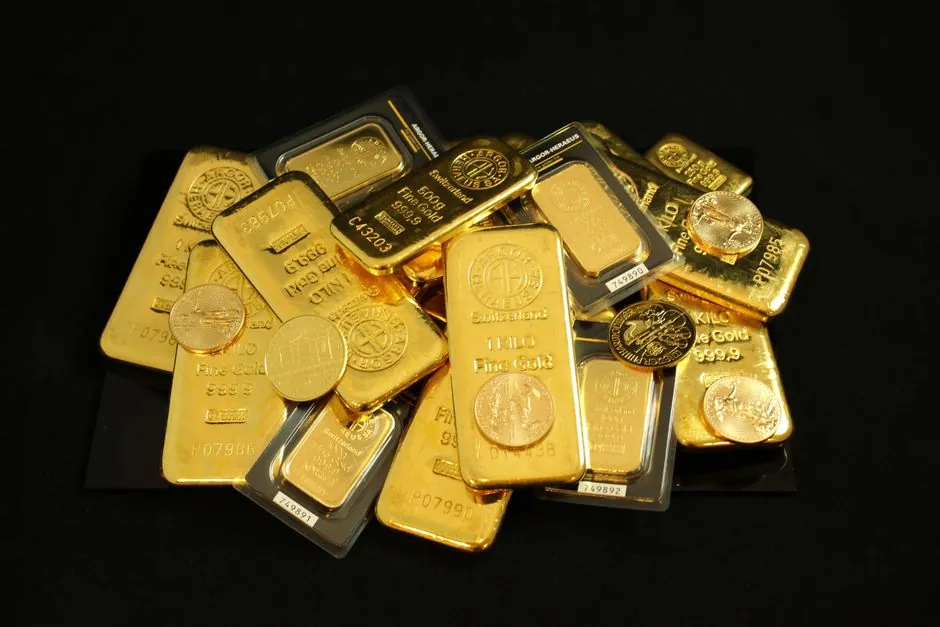
Precious-metal content is the dominant cost driver for sputtering targets, with Au, Ag, Pt and Pd grades specified at 3N5 (99.95%), 4N (99.99%) and 5N (99.999%) commanding multiples of 10x-100x over commodity targets [S1][S9]. A standard supply slate covers Au and Ag at 4N and 5N, Pt at 4N, Pd at 3N5 with higher purity available on request, and custom precious-metal alloys [S1].
The precious-metal sputtering target segment was valued at $1.44 billion in 2025 and is projected to reach $1.55 billion in 2026, a 7.5% CAGR run-rate through 2033 driven by semiconductor, display, solar and data-storage demand [S4]. A separate forecast sizes the segment at $0.45 billion in 2026 expanding to $1.14 billion by 2035 at 10.83% CAGR, with the spread between the two series reflecting scope and methodology differences rather than contradiction on direction [S2].
What Drives the Price: Metal Content First, Purity Second, Form Factor Third
Three variables determine a precious-metal sputtering target quote, and they stack multiplicatively. First, the underlying metal price: Au, Pt and Pd are LBMA/LPPM-traded and re-priced daily, while Ag is dual-traded on LBMA and COMEX. Second, the purity grade: stepping from 3N5 (99.95%) to 4N (99.99%) to 5N (99.999%) raises refining yield loss and energy input, with 5N Au and 5N Ag priced above 4N equivalents on the same form factor [S1]. Third, fabrication and quality: homogeneous grain structure, void- and inclusion-free certification, controlled oxygen content, and backing-plate bonding all add processing cost but are non-negotiable for production-grade PVD [S1].
For a process engineer, the practical implication is that a target quote is best read as (metal content x live fix) + (purity premium) + (form factor and bonding) + (certification and QA).
Grade Comparison: Au, Ag, Pt, Pd at Standard Purities
Standard commercial grades from one US specialty refiner list Au at 4N (99.99%) and 5N (99.999%), Ag at 4N and 5N, Pt at 4N, and Pd at 3N5 (99.95%) with higher purities on request, and Pd at higher-than-3N5 available on engineering request [S1]. A separate refiner notes that used targets frequently contain Au, Ag, Pt, Pd and Rh commingled with backing-plate bond layers, which means even nominally pure purchases are never guaranteed to be 100% pure in the metallurgical sense [S3].
Selection logic for a process engineer: specify Ag for low-cost conductor layers and antimicrobial coatings, Au for inert contact and biomedical layers, Pt for high-temperature stable electrodes, and Pd for hydrogen-selective and catalytic films. Where two or more of these functions are needed in adjacent layers, an alloy target is preferred over sequential monolayers to reduce interface defects, with custom alloy compositions handled on inquiry basis by most refiners [S1].
Application Split: Semiconductors, Large-Area Glass, Medical, and Optical

Semiconductors and display panels are the largest pull, with the segment forecast at 7.5% CAGR through 2033 on strength of HPC, AI, 5G, EV and ADAS demand [S4]. Medical and sensor applications add a third vector, where Ag targets deposit antimicrobial films and Au, Pt and Pd deposit electrically and chemically stable layers on devices such as glucose monitoring strips [S1]. Precision optics rounds out demand, with Au and Ag the standard reflectors across visible and IR bands.
Reclaim, Recycle, and Total Cost of Ownership
Reclamation is where precious-metal target spend is most often left on the table. Used targets are frequently returned to the original manufacturer, refurbished, and resold, but the reclaim yield is rarely transparent and backing-plate bond layers can retain measurable Au, Ag, Pt, Pd or Rh content that the original purchase contract does not credit back [S3]. Independent refiners run assay and recovery programs that return value from spent targets, spent sputter shields, and other precious-metal-bearing manufacturing consumables, with one industry source citing a 10% or greater profit-line impact from an organised recycling programme [S5].
Operationally, a 10% improvement in reclaim yield on a precious-metal-heavy target fleet translates roughly one-for-one into a 10% reduction in net metal spend for that fleet, because metal content dominates the invoice. For higher-level guidance on selecting sputtering target material grades and on the broader category of precious and rare metal stock forms that feed a PVD line, a process engineer should anchor specifications to live metal-account pricing, not list price.
Supply, Specification, and What to Ask a Vendor

Four questions separate a usable precious-metal target quote from a marketing number. First, what is the metal-account mechanism: bank transfer, pool account, or fixed-price purchase, and how is the metal re-priced between order and delivery [S1]? Second, what is the bonded-to-backing-plate configuration, and is the backing plate credited on return? Third, what is the documented minimum purity, and is the assay method (GDMS, ICP-MS) disclosed? Fourth, what is the reclaim return rate, expressed as a percentage of metal content, on spent targets and shields [S3][S5]. The four answers together reveal whether the vendor is selling metal, fabrication, or both, and where the value back to the buyer actually lives.
For broader PVD process context and a primer on how sputter deposition parameters interact with metal powder feedstocks used in adjacent additive and coating lines, the engineering literature is consistent that metal content, not fabrication, sets the cost ceiling on any precious-metal target spec.
Track the following signals through the next two quarters: LBMA and LPPM daily Au, Ag, Pt and Pd fixes; revised 2026 segment sizing from second-tier market research houses (current spread is $0.45 billion to $1.55 billion depending on scope) [S2][S4]; and any disclosure of higher than 4N Pd becoming a stocked rather than inquiry-only grade at the major US specialty refiners [S1].
See also our earlier report, Medium phase vs dense phase pneumatic conveying: selection by material and distance.