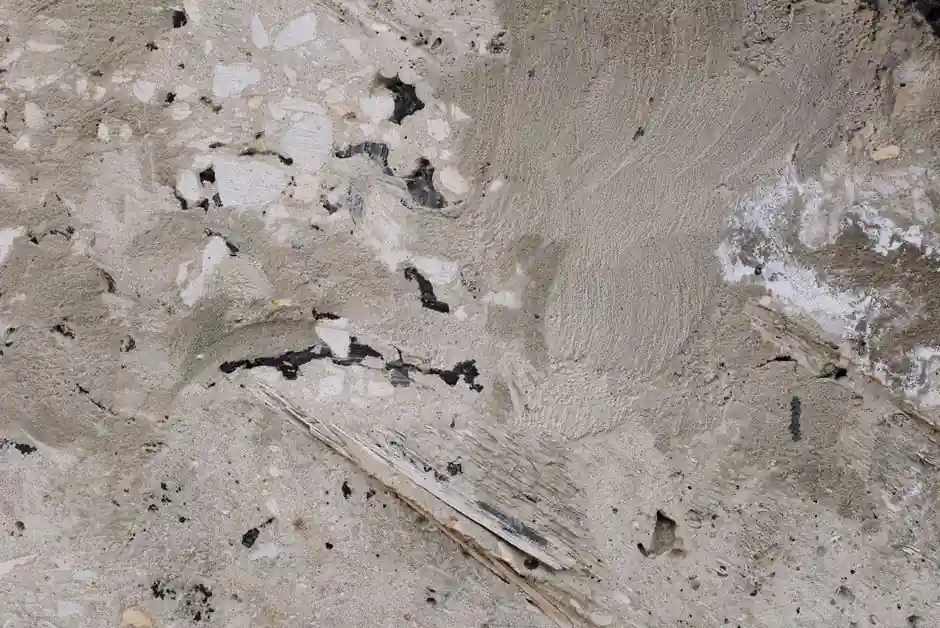
Post-sinter cooling rate is the single largest controllable lever in sinter hardening, with measured CR windows in the 0.56-1.94 °C/s band producing the martensite fraction that defines final hardness [S4]. When the forced-convection zone in a pusher or roller furnace can deliver that band, alloy design can be leaner; when CR is capped, the steel powder must carry more hardenability to compensate [S3].
Sinter hardening collapses sintering and hardening into one furnace cycle by accelerating cooling immediately after the part leaves the hot zone, eliminating downstream quench and temper operations [S1][S5]. Three reference materials, Distaloy DH, Astaloy CrM, and Astaloy CrA, each blended with 1 wt% -200 mesh electrolytic Cu and UF4 graphite, bracket the alloy-CR tradeoff that production engineers must resolve [S1].
Why Cooling Rate, Not Just Alloy, Decides the As-Sintered Hardness
Increasing CR transforms more retained austenite into martensite, the phase that drives as-sintered hardness and tensile strength, while higher sintering temperature promotes neck growth and rounder pores but also drives grain coarsening that hurts toughness [S1]. On 1300WA (0.5Mo-1.8Ni) and 5301SH (0.5Ni-0.9Mo-0.38Mn) base powders, martensite content rose monotonically with CR across the 0.56-1.94 °C/s sweep tested, with sinter-hardening response also tracking Cu content upward [S4].
Su et al. report that 5301SH reaches near-full martensite when Cu exceeds 1.5 wt% and CR clears 1.61 °C/s, while the leaner 1300WA needs Cu above 2.0 wt% combined with CR around 1.94 °C/s to hit the same microstructural state [S4]. Zurecki's Air Products work on accelerated forced-convection cooling reaches the same conclusion from the other direction: if the convection zone cannot deliver the required CR, the powder metallurgy steel itself has to be re-engineered for higher intrinsic hardenability [S3].
Process Window: 0.5-2.0 °C/s, Hardness Above 450 HV
A practical production target for low-alloy sinter-hardened PM steels is apparent hardness above 450 HV10, which Hojati et al. report as achievable in gas-quenched cycles once the CR window is met, with gas-quench CRs sitting below oil-quench values but still inside the hardenability envelope for properly alloyed Distaloy and Astaloy grades [S6]. Engström's evaluation of different PM materials records impact energy moving from 18 J at the lower CR to 16.8 J at the higher CR condition, a modest 6-7% drop that flags the toughness-hardness trade inherent to pushing more martensite [S7].
The sinter-cooling band that consistently produces a martensitic-dominant structure sits between roughly 0.5 and 2.0 °C/s; below 0.5 °C/s, austenite stabilizers and softer transformation products return, and the part loses the strength advantage that justifies the sinter-hardening route [S4][S1]. For comparison, vacuum-sintered austenitic and ferritic stainless steels held at an average 5 °C/min (≈0.08 °C/s) develop brittle secondary phases and lose corrosion resistance, the negative control case that defines why sinter hardening pushes the CR up rather than letting the load cool [S2].
Alloy Design vs. Furnace CR: Decision Matrix
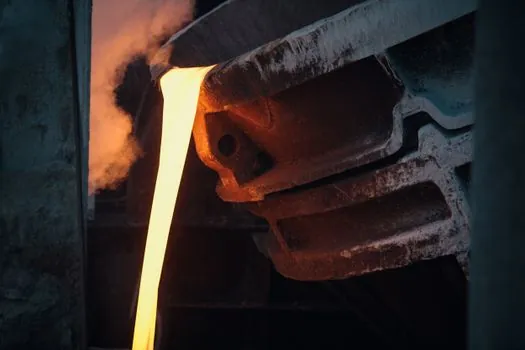
The selection question in a sinter-hardening cell is always: spend the budget on alloy content (Mo, Cr, Ni, Cu) or on furnace cooling capacity. The Engström/Höganäs matrix shows that Mo/Cu hybrid and Cr/(Mo) pre-alloyed systems hit their property targets at different CR floors, so furnace-limited shops should bias toward pre-alloyed Cr-bearing grades, while CR-rich shops can run leaner mixes [S1]. Hardness multiplying factors follow the (1+0.24·%C)·(1+0.27·%Cu)·(1+0.52·%Ni) style, meaning each 1 wt% Cu adds roughly 27% to the hardenability product, a quick spreadsheet check before locking the mix [S1].
For PM stainless steels the same CR lever works in reverse: duplex SS benefits from water-cooling (high CR) to suppress sigma and brittle intermetallics, while austenitic and ferritic SS tolerate slower rates if downstream corrosion is not critical [S2]. A related design constraint in the broader metal-powder supply chain, covered in alloy steel reference data, is that any Cr or Mo added for hardenability must diffuse during the high-temperature soak, so peak temperature and time-on-belt set the floor under which CR optimization can operate [S1][S8].
Process Variables That Shift the Required CR
Carbon, copper, nickel, and the Cr/Mo couple in the base powder are the four levers that move the martensite finish (Mf) and the CR needed to clear it [S1][S4]. Sintering temperature itself does double duty: it activates alloy diffusion but also grows grains, so running 1250 °C instead of 1120 °C to get cleaner necks can demand a slightly higher CR to recover the lost toughness [S1]. The Höganäs WorldPM 2018 dataset also shows that Astaloy CrA at low Cr content still develops usable martensitic structure at the top of the tested CR range, provided the high-temperature soak is long enough to put Cr into solution [S1].
Kazior's 2023 work on precipitation-hardening stainless systems reinforces that sintering atmosphere, peak temperature, and any in-cycle solution anneal stage all bias the post-sinter CR requirement, with reducing atmospheres favoring cleaner prior-austenite grain boundaries and a tighter CR band [S8]. Operators who want to compare their conveyor furnace CR profile against a benchmark can cross-check the metal powder selection and base-grade hardenability multipliers against the Engström impact-energy numbers (18 J vs 16.8 J) for a quick sanity pass [S7].
Equipment, Atmosphere, and Quench Medium Constraints
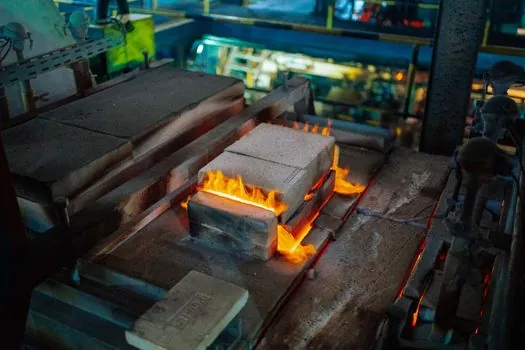
Modern sinter-hardening lines use a forced-convection cooling zone immediately after the hot zone, with H2 or N2-based atmospheres protecting the freshly sintered surface from decarburization and oxidation while the gas stream strips heat [S5][S3]. ASCO Sintering's 2025 process note states that enhanced in-furnace cooling can be used to improve metallurgical properties without subsequent heat-treating steps, a claim that lines up with the single-cycle sinter-harden concept and the 450 HV gas-quench floor reported by Hojati [S9][S6].
The CR a furnace can actually deliver is bounded by gas velocity, part mass per belt area, and the residence time in the convection zone, which is why Zurecki's Air Products paper treats CR as the design variable and hardenability as the fallback [S3]. For shops that cannot extend the convection zone, switching from a hybrid Mo/Cu mix to a pre-alloyed Cr-Mo system is the documented path to recovering martensite at the available CR, and the aluminum alloy reference data is a useful cross-material analogy for how pre-alloying raises the hardenability floor without changing furnace hardware [S1][S3].
Failure Modes and What They Look Like in Production
The three failure modes that show up when CR drops below the hardenability threshold are mixed ferrite-plus-pearlite microstructures with low hardness, retained austenite that drifts during service, and brittle grain-boundary networks in stainless variants that lose corrosion resistance [S2][S1]. In low-alloy sinter-hardened parts the visible symptom is hardness scatter, with parts from the belt edges (lower gas velocity, lower CR) sitting 30-50 HV below center-belt parts, a fingerprint the Hojati dataset captures by comparing gas-quench to oil-quench CRs [S6].
The Su et al. 5301SH vs 1300WA comparison is the cleanest production-grade warning: under the same CR, the leaner 0.5Mo-1.8Ni mix falls short of full martensite until Cu is pushed past 2.0 wt%, so a shop that buys cheap on alloying will see hardness dropouts the moment the convection-zone CR drifts down by 0.2-0.3 °C/s [S4]. The broader PM steel supply side, where the low-pressure die casting machine and conventional press-and-sinter lines share a steel-powder market, has flagged the same CR sensitivity in 2025 reviews of industrial sinter-hardening solutions [S4][S5].
Selection Criteria: When Sinter Hardening Pays, When It Doesn't
Sinter hardening pays when the part geometry fits a pusher or roller furnace with a real forced-convection zone, the production volume justifies a single-cycle process, and the required as-sintered hardness sits in the 350-550 HV10 range where gas-quench CRs are sufficient [S1][S6][S9]. It does not pay for thin sections that need through-hardening beyond the gas-quench CR limit, for parts requiring tempering above 200 °C for toughness, or for alloys whose hardenability cannot reach the required Mf without pushing CR above 2.0 °C/s [S1][S6].
A working spec for a new sinter-hardening cell should pin three numbers: a CR window of 0.5-2.0 °C/s, a minimum apparent hardness of 450 HV10, and a Cu + Mo + Cr total above the level that saturates the hardenability multiplier at the available CR, then validate against the 18 J impact floor that Engström reports as the lower bound for production-acceptable sinter-hardened PM steel [S7][S4][S6]. Shops that hit those three numbers on the first article inspection rarely revisit the alloy mix; shops that miss usually discover the gap is in the convection zone, not the powder [S3][S1].
Trackable signals to watch over the next reporting cycle: whether pusher-furnace OEMs publish CR-vs-belt-load curves tied to specific Höganäs Astaloy CrA/CrM and Distaloy DH grades, and whether 2026 reviews of industrial sinter-hardening solutions narrow the published 0.5-2.0 °C/s window into a tighter grade-by-grade band [S4][S9].
This topic is covered further in PPR Fitting Cost Share in Total Plumbing Material Budget: 2026 Breakdown.