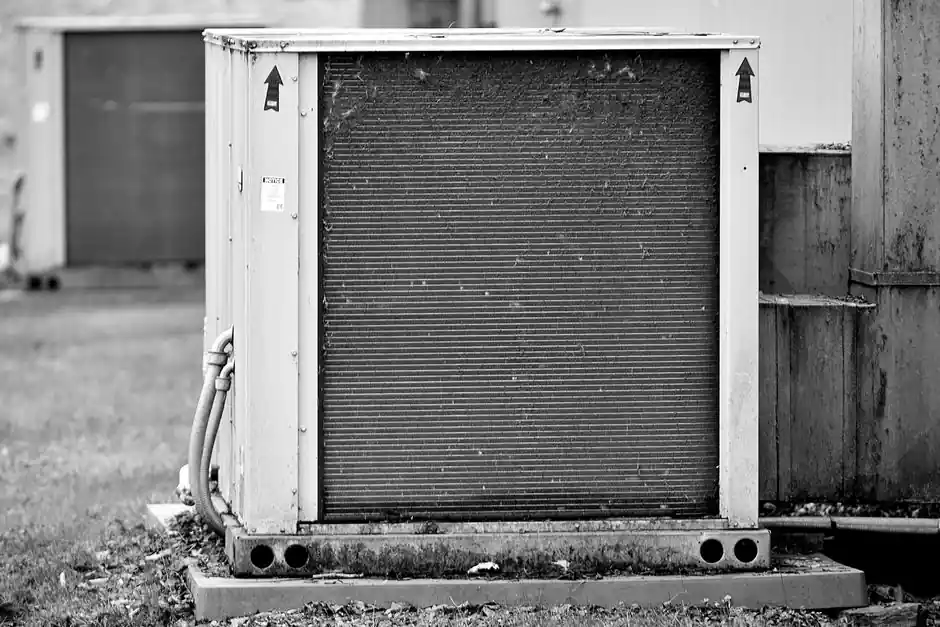
The precision air conditioning (PAC) competitive landscape in 2026 is a ten-vendor oligopoly serving AI, hyperscale, and edge data centers, with Vertiv, Schneider Electric, STULZ, Daikin Applied, Mitsubishi Electric, Airedale (Modine), Rittal, Huawei, Delta Electronics, and GOTTOGPOWER listed as the dominant suppliers [S1].
Market scale matters: the global air conditioning system market is sized at USD 206.6 billion in 2026 and projected to reach USD 361.2 billion by 2035 at a 6.4% CAGR, with Daikin Industries, Carrier, LG Electronics, Midea Group, and Mitsubishi Electric collectively holding 45% share in 2025 [S2]. For deeper demand modelling, see Precision Air Conditioning 2026-2030: Sizing the Demand Curve and Spec Gates.
Vendor Map and Where Each Player Sits
The 2026 PAC supplier list is concentrated in Western, Japanese, and Chinese OEMs, with integration depth as the primary differentiator [S1]. Vertiv and Schneider Electric anchor the integrated power-plus-cooling stack; STULZ and Airedale (Modine) lead in CRAC/CRAH units for European and colocation sites; Daikin Applied and Mitsubishi Electric bring inverter compressor and refrigerant IP; Rittal supplies enclosure-coupled cooling; Huawei and Delta Electronics compete in modular, prefabricated Asian builds; GOTTOGPOWER positions around UPS and modular data center integration supporting CRAC/CRAH uptime [S1].
Broader AC market concentration is even tighter: the top five players held 45% of the USD 206.6 billion 2026 market, with Daikin Industries alone exceeding 13% in 2025, meaning PAC buyers are sourcing from a supplier base where roughly half of global revenue is concentrated in five names [S2]. Inverter and VRF technology capability, not brand heritage, is the decisive procurement filter for AI rooms.
Demand Curve: AI Loads, Density, and Modular Designs
AI workloads and GPU-based computing are forcing precision cooling to absorb significantly higher heat densities than traditional IT rooms, pushing operators toward advanced CRAC/CRAH, rear-door heat exchangers, and liquid-assisted air handlers, per industry synthesis [S1]. In parallel, modular and prefabricated data center designs are gaining traction, requiring cooling systems that can be rapidly deployed and easily integrated into compact infrastructure environments [S1].
For 2026 sizing, GMI sizes the AC system market at USD 206.6 billion against a USD 37.62 billion US-only equipment market growing at a 4.86% CAGR to USD 47.71 billion by 2031, and FMI sizes the global market at USD 146.5 billion in 2026 reaching USD 251.8 billion by 2036 at a 6.2% CAGR, with split/multi-split systems at roughly 48% of 2026 mix and inverter-based systems holding nearly 56% share [S2][S3][S4]. The demand is more concentrated in AI-build regions than the headline AC number implies.
Selection Criteria: Inverter, Refrigerant, and Modularity
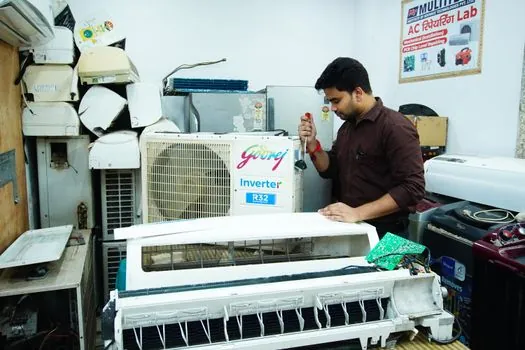
Procurement filters for 2026 PAC bids are concrete: inverter-driven compressor platforms, low-GWP refrigerant compatibility (R-32 and R-454B are the named transition options), part-load efficiency under minimum energy performance standards, and modular skid form factor for prefabricated white space [S4]. In the US equipment segment, inverter platforms already accounted for 68.86% of 2025 revenue and are forecast to grow at 5.53% CAGR to 2031, with variable refrigerant flow systems advancing at 5.73% CAGR, so any PAC vendor without a mature inverter line is already off the shortlist for new AI builds [S3].
Capacity band matters: in the US, equipment up to 10 Tons captured 38.97% of 2025 share, but the above-26-ton refrigeration band is the fastest-growing at a 6.01% CAGR through 2031, which lines up with hyperscale and AI cluster cooling where precision units cluster in the 30-80 kW per cabinet range [S3]. Power-thermal integration, where UPS feeds CRAH without transfer glitch, is the differentiator that GOTTOGPOWER explicitly markets around, complementing rather than replacing the cooling OEMs [S1].
Who It Is For, and Who It Is Not
PAC, as defined by the 2026 vendor cohort, is for mission-critical cooling: data centers, telecom central offices, high-performance computing rooms, life sciences cleanrooms, and advanced manufacturing cells where tight temperature and humidity control matters, with the listed ten vendors collectively defining the competitive landscape through system integration, energy efficiency, industrial reliability, and large-scale deployment capability [S1].
It is not for general office comfort cooling: that segment is served by split, multi-split, and VRF units from Daikin, Midea, LG, Mitsubishi Electric, and Carrier, with residential taking 64.12% of US 2025 equipment revenue and dealer/retail distributing 42.12% of units, a totally different go-to-market model than the engineered PAC channel [S2][S3]. If your facility does not need ASHRAE TC 9.9-style tight tolerance or N+1 cooling redundancy, a packaged terminal AC or VRF system will undercut PAC on $/kW by a wide margin. Related power-thermal supply context is mapped in UPS Demand Forecast 2026-2030: Supply-Bound Growth Across Modular Online Builds.
Comparison of the Main Vendor Options on 2026 Procurement Criteria

Lining the ten named 2026 PAC vendors against the criteria that actually show up in an RFQ, the table below is the condensed engineering read. Vertiv, Schneider Electric, and Huawei are the strongest on full-stack power-thermal integration; STULZ, Airedale, and Rittal lead on European colocation and enclosure cooling depth; Daikin Applied and Mitsubishi Electric bring compressor IP and refrigerant transition experience; Delta and GOTTOGPOWER compete in modular Asian builds and UPS-coupled PAC respectively, with each contributing through system integration, energy efficiency, industrial reliability, and large-scale deployment capability [S1].
Nikhai Kaitwade, Principal Consultant for Industrial Automation at FMI, states: "The air conditioning systems industry is entering a pivotal transformation, one where success is no longer defined by sheer shipment volumes but by the ability to deliver efficiency-driven value", which lines up with the inverter 68.86% US share and the above-26-Ton 6.01% CAGR split as the real procurement signals for 2026 [S3][S4].
Limits, Failure Modes, and Standards to Watch
Two constraints dominate 2026 PAC supply: refrigerant transition timing and skilled-labor capacity. GMI flags "high initial installation costs" and "high energy consumption and operating costs" as the two structural challenges for the wider AC market, while Mordor specifically calls out "skilled labor shortages and PFAS policy uncertainty" as near-term headwinds in the US segment [S2][S3]. For PAC specifically, the failure mode is not the unit, it is the integration: CRAC fans failing because UPS transfer glitched, CRAH coil fouling because humidity setpoint was loose, hot-aisle containment bypassed because prefab modular kit did not seal against raised floor, all classic commissioning gaps rather than vendor defects [S1].
On standards, the AC industry is leaning on minimum energy performance standards for inverter dominance, R-32 and R-454B as the named low-GWP transition options per FMI, and January 2023 US efficiency standards that sidelined fixed-speed compressors in the US segment, but specific PAC standard numbers (ASHRAE TC 9.9, TC 9.11, or harmonized EN standards for IT cooling) are not enumerated in the public sources reviewed and should be confirmed against the project specification before bid [S3][S4].
Sourcing Signals to Track Into 2027

Two trackable signals: first, watch the US equipment above-26-Ton capacity band, forecast at 6.01% CAGR through 2031, as a proxy for AI-build PAC demand, and the US inverter 68.86% revenue base for the inverter floor any new vendor must clear [S3]. Second, watch the R-32 and R-454B transition roll-out, which FMI names as the dominant low-GWP alternatives, because refrigerant qualification is now gating PAC vendor shortlists in EMEA and parts of APAC [S4]. For power-thermal coupling context, see Best Power Distribution Box for Oil and Gas: ATEX Spec Map 2026 on the enclosure-side spec discipline that PAC bidders increasingly must meet in hazardous-edge builds.
Spec-level background on the components involved: precision filter, air pick, and air impact wrench.