
The selection logic for a precision filter is governed by three hard constraints: portafilter diameter, dose capacity, and the manufacturing tolerance of the hole pattern. A precision basket only delivers the documented repeatability benefit when those three numbers line up with the grinder and machine upstream of it [S1][S2].
What follows is a 2026 spec map built from manufacturer and retailer technical guidance published between March and July 2026, covering pressurized vs non-pressurized wall construction, single/double/triple dose windows, the 58mm/54mm/51mm diameter split, and the difference between generic stamped baskets and laser-cut precision units from IMS and VST [S1][S2][S3][S4].
Pressurized vs Non-Pressurized: Wall Construction Decides Flow Logic
A pressurized (dual-wall) basket has a built-in valve with a single exit hole that forces water through regardless of grind size or tamp quality, producing foam even with stale beans or coarse pre-ground coffee [S1]. A non-pressurized (single-wall) basket uses hundreds of precision holes (typically around 0.3mm) and relies on grind, dose, and tamp to create the resistance the pump needs [S1]. The performance gap is documented: pressurized crema is foamy and short-lived, non-pressurized crema is rich, golden, and long-lasting, because the latter comes from actual coffee lipids, not forced air [S1].
For selection, pressurized baskets are appropriate for entry-level machines without a capable grinder, pre-ground coffee use, and beginners dialing in their workflow [S1]. Non-pressurized baskets require a grinder that can deliver a consistent fine particle distribution; under that condition they expose the real extraction quality of the bean [S1][S2]. Comparing the two: pressurized baskets accept any grind, non-pressurized demand a precise fine grind; pressurized masks technique errors, non-pressurized surfaces them; pressurized has a minimal learning curve, non-pressurized requires practice plus a competent grinder [S1].
Dose Capacity: Single, Double, and Triple Basket Windows
Dose capacity drives puck depth, flow rate stability, and how forgiving the basket is to grind inconsistency. The 2026 source band is consistent: single baskets hold 7–14g (with a narrower 7–9g subset for true single shots yielding 15–20g), double baskets cover 14–22g, and triple baskets cover 21–24g or more [S1][S4]. The 18–20g double dose is flagged in 2026 guidance as the everyday standard for both home and most cafe setups, because the deeper puck bed stabilizes flow and reduces the chance of channeling [S1][S4].
Single baskets are harder to extract evenly because the shallower coffee bed leaves less margin for grind and distribution error, and they are increasingly rare in modern home setups [S1][S4]. Triple baskets are common in specialty shops pulling back-to-back shots and on light roasts that need more mass to hit target extraction; they also demand a grinder with low retention and precise dosing [S1][S4]. For most buyers outside that workflow, an 18–20g double is the rational default [S1][S4].
Portafilter Diameter: 58mm, 54mm, and the 51mm Trap
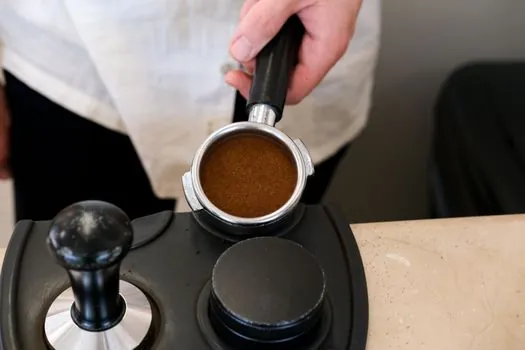
Diameter is non-negotiable: the basket must match the portafilter exactly, and the three common sizes split the 2026 market as 58mm (Gaggia, Rancilio, Breville, ECM, Rocket, with the widest accessory selection and treated as the industry default), 54mm (Breville Barista Express and some Sage models, with a growing but smaller catalog), and 51mm (De'Longhi Dedica, SMEG, some other De'Longhi models, with limited third-party options) [S1].
The 51mm case carries a specific compatibility trap: the De'Longhi Dedica uses a proprietary 3-ear locking mechanism, and generic 51mm baskets often fail to seat correctly, so any purchase must be explicitly labeled as Dedica-compatible before the order goes through [S1]. For 58mm and 54mm, the breadth of compatible aftermarket baskets (including precision options) makes spec-matching straightforward, while 51mm buyers should verify fitment on every purchase [S1].
Standard vs Precision: Where Manufacturing Tolerance Shows Up
A standard basket is the unit shipped with most espresso machines, mass-produced with wider tolerances, and adequate for most users when paired with correct grinding and technique [S2]. A precision basket is manufactured to tighter tolerances on hole size, hole spacing, and basket geometry, with the explicit goal of repeatable extraction; the benefit is consistency, not free flavor [S2]. The 2026 source set cites laser-cut holes, electropolished surfaces that reduce friction and improve flow, and uniform hole distribution as the defining precision features [S1][S2][S3].
Precision baskets do not automatically improve espresso; they reveal what the grinder and coffee are already doing, so they pay off when paired with high-end flat-burr grinders such as the Eureka Mignon Zero 55S, Timemore Sculptor 078S, or Mahlkonig X64 SD that can deliver a tight particle distribution [S2]. For users chasing the last 5% of extraction quality or working with light roasts that resist even extraction, precision baskets are a documented upgrade path [S1][S2]. Buyers on entry-level grinders will see more lift from a grinder upgrade than from a basket swap [S2].
VST vs Generic Precision: When the Tightest Spec Matters

VST baskets are precision baskets from VST Inc. and sit at the tightest end of the 2026 manufacturing tolerance band; they focus heavily on hole uniformity, hole count consistency, and basket geometry, producing very even water flow across the coffee bed [S2]. The trade-off is documented: that precision exposes problems elsewhere in the setup, so an inconsistent grinder or uneven puck preparation becomes easier to spot, not easier to fix [S2].
A criteria-based comparison of the three tiers: standard baskets offer moderate manufacturing consistency and moderate hole uniformity at the lowest price; generic precision baskets (IMS and similar) offer high consistency and high hole uniformity at mid-price; VST offers very high consistency and extremely high hole uniformity at premium price, with the strongest repeatability and the lowest tolerance for upstream errors [S2][S3]. For most home users, a standard or generic precision basket is sufficient, and VST is reserved for advanced setups where grinder and puck prep are already dialed in [S1][S2].
Ridged vs Ridgeless, and Who Should Not Buy a Precision Basket
The ridge is a small indent around the outside of the basket that locks it into the portafilter; ridgeless baskets rely on a tighter fit to the portafilter wall instead, and most precision aftermarket baskets are ridgeless, so buyers need to confirm the portafilter accepts a ridgeless basket before ordering [S4]. Pressure transmitter spec sheets follow a similar fit-or-no-fit logic, where housing and process connection decide compatibility long before sensing technology does, as laid out in the precision filter reference page.
A precision basket is the wrong upgrade for buyers who have not yet solved the upstream variables. Specifically, do not buy a precision basket if the grinder cannot deliver a consistent fine particle distribution, if the puck preparation workflow is not yet repeatable, or if the machine itself is the binding constraint (for example, a pressurized portafilter on a basket that requires non-pressurized flow) [S1][S2]. In each of those cases, the documented 2026 guidance is to fix the upstream variable first: upgrade the grinder, dial in puck prep, or replace the portafilter, and only then revisit the basket as a precision component [S1][S2].
Sourcing, Standards, and the 2026 Shortlist Logic
The 2026 sourcing signal across all four references is consistent: baskets from IMS and VST carry documented laser-cut holes, tighter geometric tolerances, and electropolished internal surfaces, while OEM baskets ship with Profitec PRO 400, Profitec Drive, Meraki, and Victoria Arduino Eagle One Prima machines as standard equipment [S2][S3]. The 2026 spec band for a precision basket purchase reduces to four checkpoints: confirmed portafilter diameter (58mm, 54mm, or 51mm with explicit Dedica verification), matched dose capacity (18–20g double for most, 21–24g triple for high-volume or light-roast specialty work), confirmed wall type (non-pressurized for any precision workflow), and confirmed ridgeless fit if buying aftermarket [S1][S2][S4].
For buyers working through a wider spec-to-supplier map that follows the same fit-first, tolerance-second logic used here, the bag filter selection map applies the same diameter, micron rating, and housing-fit discipline to industrial liquid filtration, and the self-cleaning filter spec map extends the same pattern to continuous-flow service. Trackable signals for the next 90 days: new IMS and VST basket releases for 54mm machines (still a thinner catalog than 58mm in 2026), and any 51mm precision option that meets the De'Longhi Dedica 3-ear lock geometry without shims [S1].
Component reference pages worth checking: bag filter, and filter element.