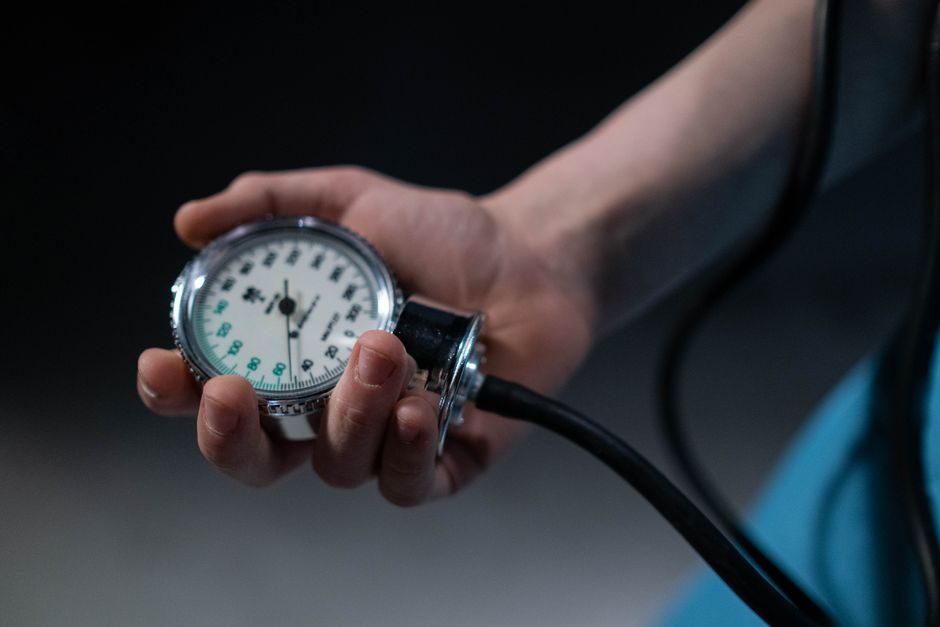
Within the selection criteria for pressure gauges, the type of pressure being measured takes top priority, because gauge pressure reliably fulfils the purpose in the majority of processes while absolute and differential modes address narrower, more specialised applications [S1].
Specifying a dial pressure gauge is rarely a single-parameter exercise: a process engineer has to reconcile the physical sensing element, the static operating pressure versus the measuring range, the wetted-material compatibility, the accuracy class demanded by the loop, and the mechanical process connection — in that order, or the wrong gauge gets bolted to the line.
Bourdon Tube vs. Capsule vs. Diaphragm: Which Element Fits the Range
The physical sensing element is the first fork in the path, and the WIKA engineering guidance groups the decision by pressure range rather than by brand: Bourdon tube designs handle the bulk of mid- and high-pressure work, capsule elements cover low-pressure and vacuum duties down to roughly −100 mbar, and diaphragm-seal assemblies are specified when the media would corrode, clog, or freeze a direct-wetted element [S1][S2][S3].
AFRISO-EURO-INDEX's D1 Bourdon-tube series covers −1 bar to 400 bar with 40–100 mm dial diameters in brass or stainless-steel cases, while the same vendor's D3 capsule-type D3 series addresses low-pressure gas duties from −100 mbar to 1,000 mbar in 63–100 mm dials [S2][S3]. A 1,000:1 span between these two product lines illustrates why selecting the element first collapses most of the downstream decisions — including case material, connection size, and accuracy class.
Static Working Pressure, Pulsation, and Range Sizing
Range sizing is the second criterion and is governed by a well-known mechanical reality: a Bourdon tube driven to its full-scale endpoint fatigues quickly, so the working pressure under normal operation should sit in the middle third of the gauge range, never above 75% full scale during steady state, and never above 90% under transient peaks [S1].
For a steam-line application the WIKA guidance pushes the engineer toward a dedicated steam pressure gauge with a siphon or pigtail siphon, partly because condensate protects the element from high-temperature media and partly because pulsation damping extends service life — diaphragm seals with fill fluid serve the same role on chemical dosing skids where slurries would otherwise destroy a direct Bourdon element [S1]. Differential-pressure variants such as the AFRISO RF100Dif D201 cover 0–60 bar differential across a 100 mm dial for filter-staus and pump-monitoring loops [S4].
Wetted-Material Compatibility: Brass, Stainless Steel, Aluminium, and Plastics
Wetted-material selection is where most catalog mistakes originate, because the wetted parts — not the case — determine chemical compatibility: a stainless-steel case on a brass Bourdon tube still leaks on ammonia service [S1][S2].
Catalog options cluster into four families: brass/Bronze for inert air, water, and oils; stainless steel (commonly 316L) for chemicals, steam, and sanitary service; aluminium for compressed-air panels where cost matters more than corrosion resistance; and engineered plastics (PP, PVDF) for aggressive acids where even stainless would pit [S1][S2][S3][S5]. Diaphragm-seal assemblies extend the wetted-material list further into PTFE, Hastelloy, and tantalum for applications where the process would otherwise attack the Bourdon element directly.
Accuracy Class, Dial Size, and Readability Trade-offs
Accuracy class is a percentage of full-scale reading — and that single fact is the most commonly misunderstood point in gauge specification, because a 1.0% Class 1.0 gauge on a 0–400 bar range reads with a ±4 bar error band regardless of where the needle sits, which is why over-ranging the dial to gain resolution costs accuracy on every other point [S1][S2].
Dial size maps to viewing distance and to the process environment: 40 mm and 50 mm dials are panel-mount instruments read from arm's length, 63 mm is the workhorse for skid-mounted equipment, while 80 mm and 100 mm dials are specified when the gauge sits on a distant header or a steam drum viewed from the operating floor [S2][S3][S4]. For applications where the eye cannot be trusted — cleanrooms, dark pipe racks, remote telemetry — the digital pressure gauge is increasingly specified, and a separate article on loop calibrator fabrication is useful for traceable in-house verification of the gauge under test.
Process Connection, Mounting, and Hazardous-Area Considerations

The process connection is the fifth criterion and is usually settled by the existing pipework — NPT, BSP, G, M14×1.5, and flanged DIN/ANSI connections all coexist on a typical plant — but the radial-versus-axial mounting decision is still under the engineer's control, with bottom-entry (radial) the default for new builds and back-entry (axial) preferred for panel-mounting on a control-room door [S2].
Hazardous-area ratings for Zone 1 / Zone 2 / Class I Div 1 service are independent of all the above and must be specified separately: a standard brass-case gauge is not the same as an ATEX- or IECEx-certified instrument even if every other line on the data sheet matches. When the loop also demands a 4–20 mA or HART output, a pressure transmitter supersedes the dial gauge rather than complementing it, and a force gauge or height gauge covers different physical quantities entirely.
Selection Comparison: Element vs. Range vs. Media vs. Typical Use
For a fast decision, the matrix below lines the three main element families against the criteria that drive the choice — it is the kind of comparison a sourcing engineer can extract directly into a procurement spreadsheet [S1][S2][S3][S4].
Bourdon tube: range −1 bar to 400 bar, media clean liquids and gases, accuracy typically 1.0–2.5% FS, typical use compressed air, hydraulic, steam headers, pump discharge. Capsule element: range −100 mbar to 1,000 mbar, media low-pressure gas, accuracy typically 1.6–2.5% FS, typical use burner air, building HVAC, gas-train monitoring. Diaphragm-seal: range depends on seal, media corrosive, viscous, slurry, or high-temperature, accuracy 1.0–2.5% FS with fill-fluid damping, typical use chemical dosing, fermenter headspace, dirty slurries. Differential-pressure: range 0–60 bar Δp, media clean liquids and gases, accuracy typically 1.6–3.0% FS, typical use filter status, condenser Δp, pump performance verification [S1][S2][S3][S4].
Limitations, Failure Modes, and What Gauges Do Not Do
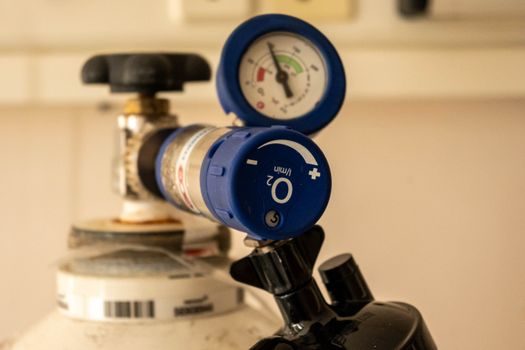
Mechanical dial gauges are not a substitute for a pressure calibrator on a calibration bench: their hysteresis, temperature error, and pointer friction all conspire to put them in the 1.0–2.5% accuracy band at best, so they belong on the pipe, not on a traceability certificate [S1].
Common field failure modes are predictable: Bourdon-tube rupture on over-pressure events, case ingress on submerged or wash-down installations, pointer dropout on gauges specified for high-vibration service without a liquid-filled case, and bourdon-tube set / zero shift when a gauge is removed and reinstalled. Liquid-filled (glycerine or silicone) cases address the vibration and condensation issues simultaneously and are specified as a default on hydraulic power units and compressor skids, while the related pressure gauge encyclopedia entry covers the standards landscape (EN 837-1 / EN 837-3 for Bourdon and capsule types respectively) that most catalogs cite on the data sheet.
Two trackable signals close the loop: first, WIKA's selection-guidance article dated 2026-05-16 explicitly lists type of pressure as the top criterion, so any future update on the same blog page should be checked before re-issuing a procurement spec; second, the AFRISO D1 / D3 / RF100Dif data sheets on DirectIndustry (2026-05-19 to 2026-05-28) provide working examples of the range, dial-size, and material combinations a process engineer can copy directly into a vendor RFQ.