
In SWRO desalination, pressure-reducing valves may encounter feed pressures of approximately 70–80 bar and must resist chloride-related corrosion while maintaining stable downstream pressure.
Correct selection depends on the process stage, salinity, temperature, inlet and outlet pressures, minimum run flow, allowable pressure drop, actuator arrangement, and applicable end connections, not the body material alone.
Match the PRV to the desalination train
A PRV reduces inlet pressure to a controlled outlet pressure as inlet pressure or flow changes; that operating principle applies to seawater service, but it does not determine material or pressure-class suitability [S5][S9]. The main selection branches are direct-acting, pilot-operated, and back-pressure-supported arrangements. Direct-acting PRVs are appropriate for modest capacity and compact installations where the diaphragm or piston can close at low minimum run flow. Pilot-operated PRVs suit larger flows, wider pressure ranges, and tighter downstream control because the pilot works on a smaller flow fraction. A back-pressure regulator is a different device for maintaining upstream pressure against a downstream restriction and should not be substituted for a PRV [S4].
For stage-by-stage material work, the related guide to ball valve selection for desalination provides a useful comparison of seawater isolation duties, but PRV selection remains governed by regulation performance and exposure to chloride service.
Set pressure capability by stage
In SWRO desalination, pre-treated seawater is typically boosted to approximately 70–80 bar, equivalent to approximately 1,000–1,160 psi. These are application ranges, not universal valve ratings. The selected PRV must remain compatible with the maximum inlet pressure, design pressure, temperature, and backpressure that can occur at every operating condition.
Use the minimum and maximum inlet pressures, minimum and maximum flow, required outlet-pressure band, and maximum allowable pressure drop to establish the duty. A self-acting PRV also needs sufficient closing force at the lowest expected inlet pressure, while its outlet-pressure rating must not be exceeded during a failed-open or isolation condition. For RO applications above 70 bar, verify the valve body, closure member, springs, trim, end connections, and actuator mounting as a complete pressure-containing assembly rather than rating only the body.
Compare materials by chloride exposure
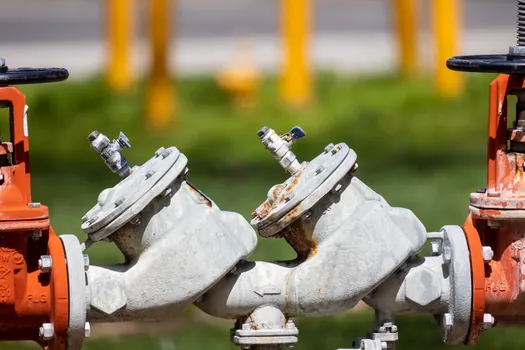
PREN is a material comparison index, not a complete corrosion allowance; temperature, chloride concentration, crevices, residual chlorine, and fabrication condition still require assessment.
Check capacity, Kc, and stability at low flow
Domestic-water PRV guidance identifies speed, pressure drop, oversizing, and parallel bypass installation as central selection considerations [S3].
Compare at least three operating points: minimum normal flow, design flow, and maximum flow. At each point, verify that the downstream pressure remains inside the required band and that the valve can close.
Decide between direct-acting and pilot operation
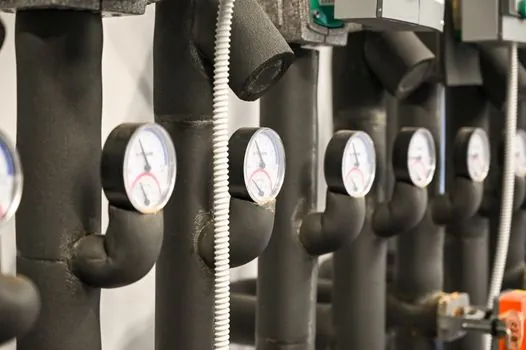
Their practical limit is stable regulation across the required flow range and sensitivity to inlet-pressure changes.
Do not choose the mainstream direct-acting option when the duty requires sustained control near very low flow, repeated throttling at high differential pressure, or remote setpoint adjustment. Do not choose pilot operation merely because the system is high pressure; it adds complexity without correcting unsuitable sizing, excessive chloride exposure, or an unstable hydraulic installation. If makeup or emergency bypass is required, keep that function separate from normal regulation and specify its interlocks explicitly.
Specify details that survive the saline environment
Specify pressure class, body and trim material grades, wetted material list, elastomer compatibility, operating temperature, closure type, end connections, vent or drain provisions, bonnet and spring housing material, and actuator details as a complete datasheet. PRV30, PRV44, and PRV45 are cited as compact, self-contained examples with enclosed regulating springs and no external pneumatic or electrical actuator requirement [S1].
Seat leakage and pressure drop depend on trim and test conditions, so procurement documents should request applicable pressure-temperature ratings and project-specific test requirements. Confirm dimensional compatibility with the piping class, including face-to-face length, flange standard, bolt pattern, and allowable face-to-face or flange dimensions. For maintenance planning, compare this valve need with needle valve selection for seawater desalination, especially where throttling, isolation, and corrosion-resistant construction must be allocated separately.
Base procurement on service-specific data
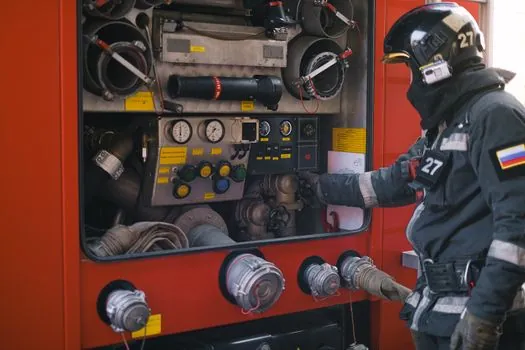
A defensible desalination PRV data sheet needs the line medium, chloride concentration, temperature, minimum and maximum inlet pressure, required outlet pressure, minimum and maximum flow, allowable pressure drop, minimum stable run flow, backpressure, connection details, and applicable project design code. The operating envelope should be checked for combination effects, especially 70–80 bar RO service and concentrated reject water, rather than assigning one alloy to the entire plant [S2][S4].
Generic 316 bodies have been reported to fail within 12–18 months in saline service because galvanic attack and chloride stress-corrosion cracking can compromise the regulating mechanism; that observation is not a universal service-life prediction, but it demonstrates why alloy grade, construction quality, and isolation of dissimilar metals require review [S1]. For procurement, request material certificates, pressure-temperature ratings, model-specific trim data, test certificates, and corrosion-specific construction details, then verify the selected unit at all three flow points before installation.