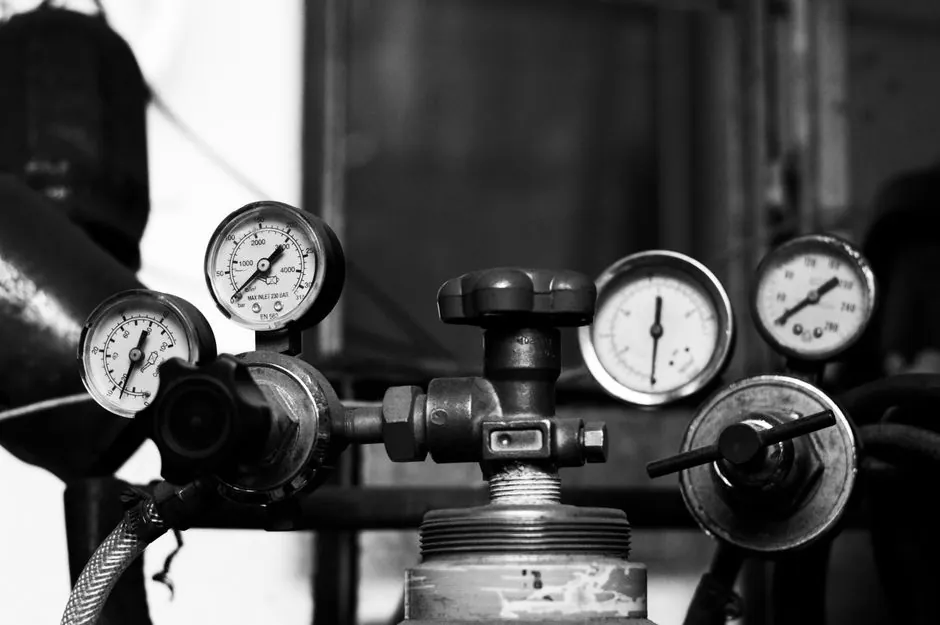
A pressure reducing valve maintains a selected downstream pressure by balancing outlet-pressure feedback against an adjustable spring or pilot, commonly serving water, steam and industrial process systems [S1][S3].
For water treatment, direct-acting valves suit compact installations and modest flow demand, while pilot-operated valves provide closer regulation at higher or changing flow rates [S1][S3].
Pressure-Reducing Valve Types and Duties
A pressure reducing valve reduces a higher inlet pressure and adjusts its opening as downstream demand changes, with the outlet pressure sensed by a diaphragm or piston and opposed by an adjustable spring [S1][S3]. This feedback mechanism makes it suitable where downstream equipment must remain within a defined pressure band despite inlet-pressure or flow variation.
Direct-acting reducers have no external sensing lines or pilot system. Their compact construction, fast response and limited number of moving parts suit domestic water, irrigation, compressed-air and smaller treatment duties, but they generally provide less accurate regulation than pilot-operated designs [S1].
Pilot-operated reducers use a smaller pilot to command the main valve. They are the stronger choice for large flow rates, close pressure regulation and systems with substantial load variation [S1][S3]. A pilot-operated piston valve can also hold a stable lower downstream pressure while inlet pressure and flow demand vary [S7].
Compare Direct-Acting and Pilot-Operated Options
The selection decision is governed mainly by flow regime, pressure accuracy and installation complexity. Direct-acting designs offer a smaller, simpler package, while pilot-operated designs trade added components for greater hydraulic capacity and tighter control [S1][S3].
Published commercial ranges show the scale difference: one adjustable water regulator covers DN15-DN50, maximum inlet pressure 2.5 MPa, a 0.1-0.55 MPa adjustment range and an 80°C maximum media temperature [S2]. A separate industrial water reducer covers DN20-DN200 and PN10-PN64 [S3]. These ranges are model-specific, not universal limits.
Size the Valve from the Water Duty

Do not select a water treatment pressure reducer by pipe diameter alone. Define minimum, normal and maximum inlet pressure; required downstream pressure; minimum, normal and maximum flow; water temperature; and the acceptable pressure variation before choosing the valve size [S1][S2].
Roffia distributes Spirax Sarco pressure reducers for steam and Caleffi pressure reducers for water and heating, with its technical team able to assist with selection and sizing. A DN40-DN500, PN10-PN25 flanged model demonstrates that large industrial frames exist, but its body material and seal package must be confirmed rather than assumed [S6].
Where published flow data are available, use them as a verified envelope. The Hydrocore pressure reducing valve is suitable for all valve sizes and pressure ratings, and its specifications list sizes beginning at 50NB alongside flow coefficients and flow rates. The required duty should remain inside the selected size's verified hydraulic range.
Installation can alter control performance. One GenTant domestic regulator features a side threaded port for pressure monitoring, with the pressure gauge sold separately, and protective nylon caps on both connection ends. Install the valve so its adjustment sleeve remains accessible, and flush the line before final commissioning [S2].
Materials and Water Compatibility
Water treatment service requires wetted materials to match both temperature and chemistry. One GenTant pressure reducing valve includes a side pressure-gauge port and protective nylon caps on both connection ends. That construction is a specific model choice, not a blanket approval for every treatment water.
For chlorinated, acidic, alkaline or biologically active treatment streams, obtain a project-specific compatibility check for every wetted seal, diaphragm, piston and trim component.
Corrosion-resistant construction should be considered where rust staining or metal loss affects service. The Yoshitake GD-27BP uses corrosion-resistant wetted parts, combines pressure reduction with bypass and stop functions, and uses a pressure-balance structure intended to hold reduced pressure despite inlet-pressure variation [S8]. For potable or health-sensitive service, require the appropriate drinking-water certification for the selected model rather than inferring suitability from stainless steel construction alone.
Limits, Failure Modes and Protection
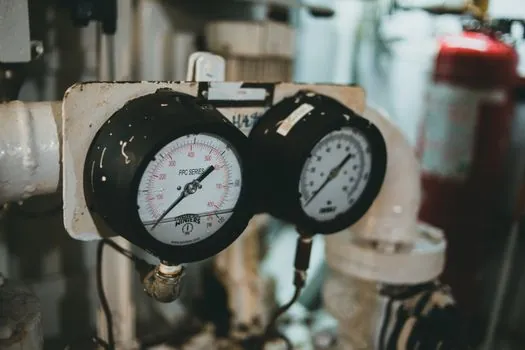
Pressure regulation is not overpressure protection. A reducing valve can fail open, stick, oscillate or lose shutoff, so downstream equipment that cannot tolerate a continuous high-pressure condition may also need a separate safety relief valve. [S5]
The Hydrocore pressure reducing valve is listed as suitable for low flow at high velocity, reducing noise and vibration, and providing improved anti-cavitation at the valve-seat area. The Hydrocore pressure reducing valve lists suitability for low flow at high velocity, noise and vibration reduction, and improved anti-cavitation at the valve-seat area as design features.
Water treatment plants can contain suspended solids, scale, polymer carryover and cleaning chemicals. One Hydrocore specification is restricted to liquids and gases with a low content of suspended solids [S4]. Where solids are significant, specify a suitable upstream strainer, confirm the minimum regulated flow and evaluate a fouling-resistant trim arrangement.
Check inlet and outlet pressure ratings against the maximum possible surge condition, not only the normal operating pressure. The cited Hydrocore range states 250 bar maximum for 50NB-100NB sizes and 160 bar maximum for 150NB-300NB sizes, with an 85°C limit using standard seals [S4]. These limits apply to that specific model family.
Commissioning and Verification
Commission the reducer after piping installation, flushing and pressure testing, because debris or sealing tape entering the working chamber can impair the piston, diaphragm or seat [S2]. Record inlet and outlet pressure at zero flow, minimum design flow, normal duty and maximum demand.
Verify that outlet pressure remains within the specified operating band through the full expected flow range. A direct-acting regulator described for water service maintains downstream pressure at or below its setpoint and provides a side port for monitoring with a separately supplied pressure gauge [S2]. Pilot-operated equipment should be tested with its gauges, pilot supply and hydraulic circuit fully commissioned [S7].
For water treatment stations with changing demand, compare the observed downstream-pressure excursion with the equipment's allowable limit. The Roffia comparison gives pilot-operated steam reducers an accuracy of ±0.1 bar or ±2%, versus ±0.2 bar or ±5% for direct-acting diaphragm steam reducers [S5]. Those figures illustrate the expected accuracy trade-off, although water-treatment performance must be confirmed for the selected water model.
Procurement Checklist

A defensible water-treatment selection record should state DN or NPS size, PN or ASME pressure class, connection type, flow range, inlet and outlet pressures, water temperature, control accuracy, reduction ratio, wetted-material grades, seal material, filtration requirement and installation orientation [S2][S3].
Include commissioning criteria and maintenance access in the purchase document. Hydrocore specifies annual cleaning and greasing of sealing surfaces for its valve family [S4], while pilot systems need inspection of the pilot, gauges, impulse or control connections and adjustment mechanism [S7].
For a mixed water-treatment skid, apply the same selection logic used for Pressure Reducing Valve Selection for Pulp and Paper, but retain water-specific flow, chemistry and filtration data. The shortlist logic is straightforward: choose a direct-acting reducer for a compact, clean, low-to-medium-flow installation with modest accuracy needs; choose a pilot-operated reducer when flow is high, demand varies materially or stable downstream pressure has engineering consequences.