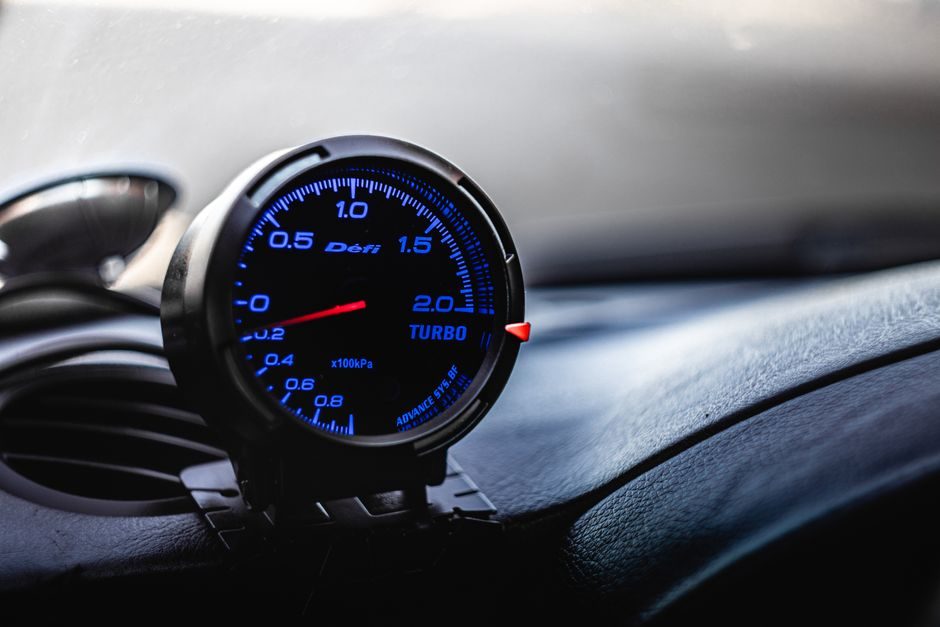
Industrial pressure sensor buying in mid-2026 is driven by four decisions made before any brand shortlist: pressure type (relative vs differential vs absolute vs vacuum), sensing-element technology, output protocol, and media compatibility. The June 2026 DirectIndustry directory entry for pressure sensors with LED displays lists 6 relative, 3 differential, 3 vacuum and 1 absolute model from 9 manufacturers, with membrane as the dominant sensing element (7 of 13 entries) [S1].
That 6:3:3:1 ratio is the first spec to lock in: gauge/relative remains the workhorse for tank-level, hydraulic and pneumatic line pressure, differential is reserved for filter-strain and orifice-flow work, and absolute is non-negotiable for atmospheric-referenced loops and barometric compensation. Vacuum-rated units overlap with gauge at sub-atmospheric ranges, but their calibration chain and zero reference are different, so the buying guide must keep them as a separate line on the BOM rather than a sub-line of gauge.
Pressure Type Matrix: What Each Topology Actually Does on the Plant Floor
Relative (gauge) pressure sensors reference local atmosphere, making them the default for tire, hydraulic, pneumatic and most process-vessel readings where the surrounding air is the relevant zero [S5]. Differential sensors measure the difference between two ports and are the right pick for filter-monitor drop, level-on-closed-vessel bubbler systems, and orifice-plate flow — applications where one side of the element is exposed to a changing reference, not a stable vent [S5].
Absolute sensors seal a fixed vacuum reference behind the diaphragm, so output tracks true pressure referenced to hard vacuum. They are the only correct choice for barometric compensation in weather stations, altimeter calibrators, and any closed-loop where atmospheric drift would corrupt the reading [S5]. Vacuum sensors overlap gauge at the low end but are typically specified with a higher overpressure margin on the positive side, because vacuum processes frequently steam-sterilize or back-flush the line. The 6:3:3:1 split in the LED-display OEM listing tracks this long-standing application split rather than vendor preference [S1].
Membrane is the dominant cell technology in the current LED-display OEM catalog (7 of 13 entries) and pairs naturally with stainless-steel welded process connections for hygienic and chemical duty [S1]. Piezoresistive silicon cells are the workhorse for low-pressure, high-accuracy instrumentation and feed the pressure sensor category on most general-purpose transmitter datasheets.
Thin-film and thick-film strain gauges on stainless steel give the widest media compatibility and the best long-term stability for industrial hydraulic and process lines, while ceramic-capacitive cells (capacitive cells, see capacitive sensor) dominate high-temperature, aggressive-media and refrigeration duty where silicon would fail. For OEM buyer guides in 2026, the practical question is not "which cell is best" but "which cell survives the media, temperature and thermal-shock profile" of the specific loop.
Specification Hierarchy: Range, Accuracy, Long-Term Stability, Output

Pressure range must be sized so the normal operating point sits at 60–80% of full scale, and proof pressure / burst pressure ratings must exceed the worst credible hydraulic-shock or steam-strike event by a comfortable margin. Accuracy is typically quoted as a percentage of full scale (FS) or of reading (r) — and the difference matters when the operating point sits well below FS, because a ±0.5% FS unit at 25% of range is effectively a ±2% rdg unit. [S1]
Long-term stability, expressed as %FS per year, decides calibration interval. The DirectIndustry LED-display entry exposes both accuracy and stability bands as buyer filters, which is the right place to start tightening the spec [S1]. Output protocol is the next gate: 4–20 mA + HART for brownfield loops, IO-Link for new machine builds, and Ethernet-APL (10BASE-T1L) for greenfield plant-wide Ethernet instrumentation. The 4–20 mA loop carries HART as FSK superimposed on the analog current, which is fully compatible with legacy DCS analog input cards but is not the same protocol as Foundation Fieldbus or PROFIBUS PA — those are digital-only and require a different cable and host interface.
Hazardous-Area and Materials Rules That Change the SKU
Any pressure sensor on a hazardous-area line must carry the right zone rating: ATEX category 2 (zone 1) or category 3 (zone 2) inside the EU per 2014/34/EU, IECEx for the rest of the world, and UL/CSA class/division in North America. Sour-service oil & gas duty adds NACE MR0175 metallurgical limits on the wetted parts. These are mandatory drops for the spec sheet — they are not optional features. [S2]
Buyers who try to skip the media-compatibility list and order a generic 17-4PH cell into a sodium-hydroxide line usually learn the cost the first time the diaphragm pinholes.
Who This Buying Path Is For — and Who Should Not Use It

Process engineers specifying a pressure transmitter on a chemical, oil & gas, water, HVAC or hydraulic line, or OEM machine builders integrating 10–500 sensors per year into a skidded unit, should run this spec-first path. The same logic holds for system integrators sizing boiler, compressor and pump station instrumentation [S1][S5].
Lab and education buyers are a different market. PASCO's PS-3203 wireless gas-pressure sensor ships as a USB-C/Bluetooth teaching device with its own curriculum hook, not as a 4–20 mA industrial transmitter [S4]. Specifying an industrial HART unit into a school physics lab is the wrong way round; that buyer should be reading the education vendor's curriculum-first page, not this guide.
Vendor Landscape: 2026 OEM Snapshot
Industrial pressure-sensor OEMs active in the 2026 DirectIndustry LED-display listing include Autonics, Beck Sensortechnik, CRESSTO, Delta Electronics, GEFRAN, ifm electronic, SMC Corporation of America, and Terry Ferraris & Eder — a mix of European and Asian brands rather than a single dominant supplier [S1]. On the maker/R&D side, SB Components publishes open firmware for a Raspberry Pi Pico W-based pressure-sensor board on GitHub, useful for prototype work but not for hazardous-area process lines [S6].
Specialty catalogs such as FUTEK run their own pressure sensor storefront organized by sensing method, which is a good cross-check on what cell technology the broader market is shipping [S5]. Pressure Sensor Limited (pressure-sensor.com) splits its catalog into pressure-sensor modules, pressure transducers, media-isolated sensors and load cells — four different physical products that buyers frequently conflate, but the catalog keeps them separate on purpose [S3].
Real Use Cases Mapped to Spec
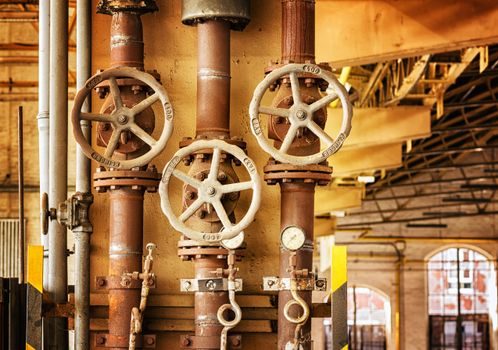
Hydraulic and pneumatic press: relative, 0–600 bar, 316L, 4–20 mA + HART, IP67, M12 connector. Chemical reactor: relative or differential, 316L or Hastelloy, IECEx zone 1, 4–20 mA + HART or Ethernet-APL, remote diaphragm seal with capillary.
Welding-gas and medical-gas manifolds in some regions are switching to flow sensor plus absolute pressure reference, where the absolute sensor provides line-pressure compensation for the flow element. The interface between the two is the standard ISA- or IEC-based signal path, and the absolute sensor on the manifold has to be specified against the same media, cleanliness and accuracy bands as the flow element or the compensation drifts.
Failure Modes, Limitations and What the Datasheet Does Not Tell You
Common failure modes are burst diaphragm from hydraulic shock, zero drift from thermal cycling in high-temperature steam, and chemical attack of the elastomer seal on the wetted side. Long-term stability is the parameter that decides calibration interval, but it is the parameter most often quoted as "typical" rather than "guaranteed" — push the vendor for the guaranteed number, and check that the cell you are buying is not the one they are sunsetting. [S3]
Datasheets also rarely quote the effect of static line pressure on a differential sensor, the thermal-shock envelope across a steam-sterilize cycle, or the behaviour of the unit when the loop power is removed mid-calibration. These three are the items to put in the RFQ's "deviation from ideal" column before you sign the PO.
Standards, Sourcing and Calibration Anchors
Anchor specs to named standards: ATEX 2014/34/EU for EU hazardous-area equipment, IEC 60079-series for zone classification and intrinsic-safety design, IECEx for the IEC scheme, NACE MR0175 for sour-service metallurgy, ISO 5167 for orifice and related flow-element geometry, and ISA/IEC 60770 for transmitter test procedures. Standards for calibration artifacts and reference-grade work — for example, gauge-block geometry in mechanical calibration — sit on a different shelf and feed the displacement sensor and metrology side, not the process-pressure loop. [S4]
Buyers who need a calibration anchor for adjacent mechanical-strength work can cross-read load cell vs electronic scale: which instrument to specify for mechanical-strength tests and strain gauge installation: the 8-point field data sheet. For process-flow sizing in the same plant, wastewater flow meter selection: matching technology to pipe, solids and accuracy targets and the inductive sensor or linear guide encyclopedia entries round out the spec set. Trackable next nodes for the June 2026 buyer: the DirectIndustry LED-display filter re-issued 2026-05-21 [S1], SB Components' Pico W firmware repository [S6], and the FUTEK sensing-method storefront [S5] — re-check those three when the BOM is being frozen.