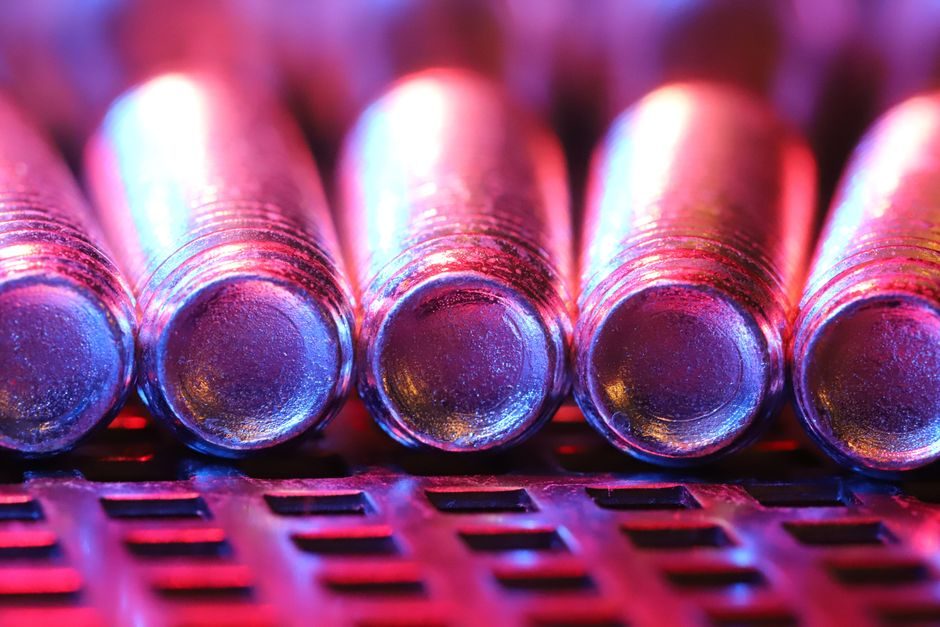
Eddy-current proximity probes for turbomachinery vibration monitoring in 2026 are most commonly specified with 2 mm nominal measuring range, M10 or M12 thread bodies, and -25 °C to +85 °C operating envelopes, with stainless-steel housings the dominant selection for harsh environments [S1].
Procurement shifts this year concentrate on three variables: target material (ferrous vs. non-ferrous), probe-tip diameter, and the integrity of the gap-voltage calibration loop — the latter being the single most common root cause of false alarms on turbines and compressors [S2].
Definition and Scope: What a 2026 Proximity Probe Is
Non-contact proximity probes — also called eddy-current probes — are transducers that monitor vibration on critical rotating equipment such as turbines, compressors, and large motors by sensing changes in the gap between the probe tip and a target surface [S2]. Unlike a general inductive proximity sensor used for object detection on a conveyor, a vibration proximity probe is calibrated for sub-millimetre gap resolution and dynamic shaft motion, not simple presence/absence logic.
Two device families coexist in the 2026 catalog. Compact inductive switches commonly offer 1 mm to 20 mm measuring range at process temperatures of -25 °C to +70 °C, while ultrasonic and magnetic variants extend range up to 1,200 mm or shift the sensing principle entirely to reed/magnet actuation [S1]. The bearing-housing vibration monitor is the eddy-current type; the part-present sensor on a factory line is usually the inductive-switch type.
Stainless-steel enclosures — typically 1.4305 / 1.4404 grade — dominate 2026 listings, with one major vendor's NMB series offering 35 mm to 65 mm body length, 10 mm measuring range, and a -25 °C to +70 °C process window [S1]. Switching frequencies on the same listings reach 1000 kHz, which is irrelevant for vibration work but defines the upper bound of the underlying oscillator circuit.
Selection Criteria: Six Variables That Decide the Build
Six variables determine the build in a 2026 proximity-probe RFQ: measuring range (typically 1 mm to 20 mm for shaft vibration, 0.8 mm to 10 mm for casing), housing material and IP rating, process temperature window, thread form and tip diameter, output protocol, and target material compatibility [S1][S2].
Range is the first gate. Standard API 670-style radial vibration probes sit at 2 mm nominal with linear output, while axial position probes are commonly 4 mm to 5 mm [S2]. Compact inductive switches — same physics, different duty — span 0.8 mm (Baumer IFRM series) to 20 mm (ER series) in 2026 catalogs, with a switching frequency ceiling of 5000 Hz for the BES00P7 PNP NO variant [S1].
Housing material drives both chemical compatibility and impact resistance. Metal-face sensors with stainless-steel detection surfaces are now positioned for "tough applications" where conventional PBT or ABS faces would pit or crack [S1]. Magnetic sensors in food-grade housings (BNS 40S, 88 mm × 27 mm × 14.5 mm) add stainless cable entries specifically for washdown zones [S1].
Process temperature and IP rating travel together. Inductive switches with -40 °C to +85 °C windows and IP67 encapsulation are now table stakes for outdoor or skid-mounted equipment, while vibration-only eddy probes in turbomachinery rarely exceed +180 °C at the probe tip without a high-temperature cable extension [S1][S2].
Comparison: Four Probe Families Across 2026 Specs

Four probe families now compete in the 2026 catalog space, each with a clear duty boundary: inductive-switch (1–20 mm range, -25 °C to +85 °C, PNP/NPN or IO-Link, stainless or PBT housing); eddy-current vibration (1–5 mm range, dynamic gap voltage, target-specific calibration); ultrasonic (40–1,200 mm range, colour-transparent surface, M18 cube housing); magnetic-reed (8–18 mm range, no mechanical wear, food-grade cable variant) [S1].
On four decision criteria the comparison reads as follows. Range: ultrasonic leads at 1,200 mm, magnetic and inductive switch cluster at 1–20 mm, eddy-current vibration pins to 1–5 mm [S1]. Temperature: ultrasonic and inductive switch are typically capped at 70–85 °C, while eddy-current vibration probes survive in bearing housings where 120–180 °C continuous is common with armoured cable [S1][S2]. IP rating: all four lines offer IP67 as a 2026 baseline [S1]. Target material: ultrasonic ignores colour and transparency, magnetic requires a magnet or ferromagnetic target, eddy-current vibration requires a calibrated metallic target with known conductivity and permeability [S1][S2].
Switching frequency is the wildcard metric. Inductive switches in the 2026 catalog span 5000 Hz (BES00P7 PNP NO) up to 1000 kHz on flush-mount KIB/KIN series with 1 mm to 2 mm range, with the higher end reserved for counting and high-speed positioning rather than continuous vibration monitoring [S1].
Who Should — and Should Not — Specify Which Variant
Specify eddy-current vibration probes for any API 670 turbomachinery channel (radial vibration, axial position, keyphasor, speed) where shaft-relative dynamic measurement is required; portable vibration calibrators are the only practical way to validate the gap-voltage loop and probe sensitivity on these units [S2].
Specify an inductive switch for discrete part-present or end-of-stroke detection on a packaging line, valve position feedback, or mobile-equipment limit switching — including SIL 2/PL d safety duty on the 2026 stainless-steel inductive safety line [S1]. Specify an ultrasonic probe for transparent, coloured, or reflective targets at 40 mm to 1,200 mm stand-off where the surface finish rules out eddy-current sensing [S1]. Specify a magnetic-reed sensor for food/beverage conveyor positions where stainless enclosure and concealed mounting matter more than switching speed [S1].
Do NOT specify a general-purpose inductive switch in place of an eddy-current vibration probe on a turbine-bearing housing — the inductive switch has no gap-voltage calibration, no target-material compensation, and will pass a "present/absent" check while the shaft is actually about to fail [S2]. Do NOT specify an ultrasonic probe inside a hot bearing-housing cavity above its rated 70 °C; the piezo stack will derate or die [S1]. Do NOT specify a magnetic-reed sensor as a turbomachinery vibration channel; it cannot resolve the micron-level dynamic gap a 2 mm eddy probe tracks at shaft running speed [S1][S2].
Calibration, Mounting, and the Gap-Voltage Loop
Calibration is the single most common failure node in proximity-probe installations, and portable vibration calibrators exist specifically to surface it: "incorrect impedance leads to false alarms or catastrophic failures. Gap voltage alone is incapable of detecting such faults" [S2]. A calibrator dynamically drives the probe across a known gap and back-plots voltage vs. distance, exposing sensitivity drift, linearity error, and dead-band that a static gap-voltage reading hides.
Three operating rules hold in 2026. First, validate the probe's full gap-voltage curve at commissioning, not just a single gap setpoint — a calibrator with on-board memory can store the report and replace manual chart sheets during an audit [S2]. Second, use the manufacturer's mounting kit for the specific probe family; an uncalibrated bracket standoff shifts the linear range and can move the operating point into the non-linear end of the curve [S2]. Third, the probe, extension cable, and driver must be impedance-matched as a system; mixing probe brands or cable lengths without re-running the calibration is the most common way to pass a static check and fail a dynamic one.
Standards, Sourcing, and 2026 Vendor Landscape
API 670 governs proximity-probe specification for turbomachinery vibration and axial-position channels on refineries, power plants, and large air-separation trains. ATEX/IECEx certification is required for Zone 1 or Zone 2 hazardous-area bearing housings, and SIL 2/PL d certification is now offered on at least one 2026 stainless-steel inductive safety line for safety-instrumented functions [S1]. For non-vibration discrete switching, IEC 60947-5-2 covers proximity-switch performance and is the baseline for CE/UKCA/cULus conformity marks visible on 2026 catalog entries such as the BES00P7 PNP NO M8 connector variant [S1].
The 2026 vendor field for vibration-grade eddy probes is concentrated in the legacy turbomachinery instrumentation houses (Bently Nevada, Metrix, Vibro-Meter, Brüel & Kjær / Hottinger, SKF / Dytran), while the discrete inductive-switch field is fragmented across Baumer, Keyence, Pepperl+Fuchs, Sick, ifm, Omron, Turck, and Balluff [S1]. For proximity probe sourcing, treat the legacy five as the qualified base for any API 670 channel; treat the discrete-switch eight as interchangeable for non-safety part-present duty where a 4-week lead time matters more than a calibration certificate.
Lead-time and calibration-certificate economics have hardened in 2026. Buyers who order eddy-current vibration probes with traceable calibration certificates, armoured high-temperature cables, and ATEX/IECEx certification are seeing 8–14 week lead times; off-the-shelf inductive switches with CE/UKCA/cULus marks ship in 1–3 weeks from regional stocking distributors [S1].
Selection Shortlist Logic

Shortlist by duty, not by brand. For any API 670 turbomachinery channel, hold the build to eddy-current vibration probes from one of the legacy five, with full dynamic calibration traceable to the probe-cable-driver system [S2]. For SIL 2/PL d discrete safety switching, hold the build to the 2026 stainless-steel inductive safety line that is explicitly SIL 2/PL d certified [S1]. For high-speed counting or small-part detection at 1–2 mm range, hold the build to flush-mount KIB/KIN or IFRM miniature series with 1000 kHz or 5000 Hz switching ceilings [S1].
Cross-reference: buyers comparing a 2026 condition monitoring system build against a stand-alone probe should price the calibrator and gap-voltage reporting first — the monitor is a sunk cost without validated probes feeding it. Buyers comparing probe cost across the vibration analyzer price tiers should treat the calibrator as a separate line item, not bundled into the probe vendor's quote. For the broader inductive sensor duty where vibration is not the question, follow the same six-variable logic but drop the calibration-certificate gate.
The two trackable signals for the next quarter: lead-time movement on armoured high-temperature eddy probe cable assemblies, and any IEC 60947-5-3 alignment update affecting SIL 2/PL d inductive safety certification. Watch both before locking a 2027 frame agreement.
Spec-level background on the components involved: linear guide.