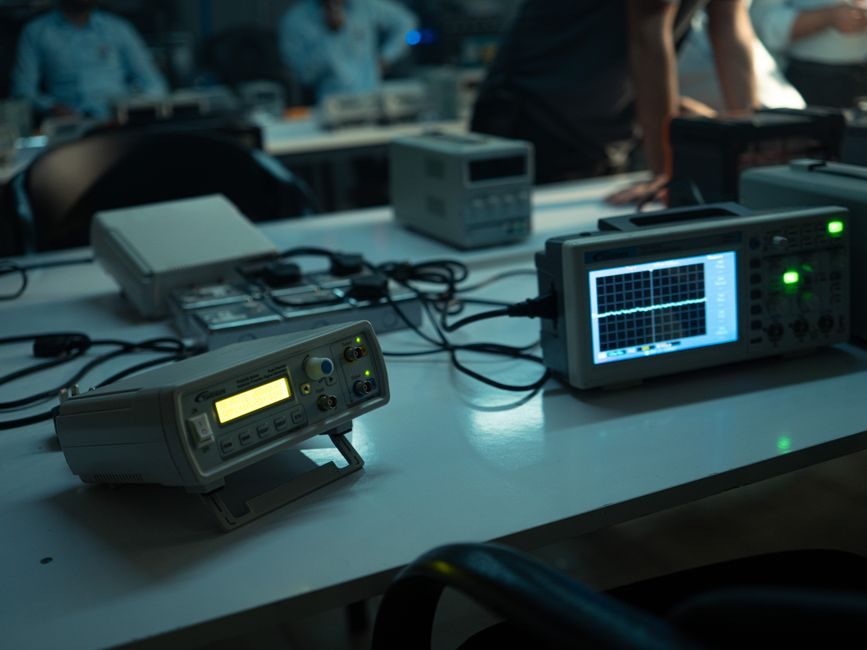
Condition monitoring systems in 2026 split cleanly across four sensor physics — vibration (dominant on rotating equipment), airborne/structure-borne ultrasound, thermal imaging and oil-wear particulate analysis — and the buying decision is driven by asset class, not by software dashboards [S1][S2].
For pumps, motors, gearboxes and fans, vibration CMS (accelerometer-based, IEPE or MEMS) remains the most specified architecture, while ultrasound dominates on enclosed bearings and lubrication state, and thermal is reserved for electrical cabinets and large motors where insulation failure is a primary failure mode [S2][S3].
What a CMS actually is, and where it stops being one
A condition monitoring system is a sensor-plus-software stack that observes one or more physical parameters (vibration, acoustic emission, temperature, lubrication state) over time, compares the trend against a baseline, and triggers an alarm when deviation exceeds a threshold — it is not a SCADA tag and not a process control loop [S3].
The four-parameter scope above is consistent with how industry catalogues group CMS products: Brüel & Kjær Vibro defines a CMS by the words "vibration, measurement, machine protection" [S1]; UE Systems frames its RAS as an ultrasound transducer targeting bearings in automotive, petrochemical, metallurgical, food, chemical, pharmaceutical and glass plants [S2]; Bachmann groups its CMS under "Energy: Renewable" alongside other automation functions [S4].
For broader context on how a CMS fits into plant-level instrumentation, see the condition monitoring system reference and the related power monitoring system architecture.
Sensor-physics comparison: vibration vs ultrasound vs thermal vs oil-wear
Vibration accelerometers (IEPE, ±50 g typical, 0.5 Hz–10 kHz usable band) remain the default for rolling-element bearings, with Brüel & Kjær Vibro's VIBROTEST 80 / VIBROPORT 80 handhelds plus VIBROSTORE 100/100E storage feeding the ReO Report & Route Manager software as a typical offline stack [S1].
Ultrasound sensors such as the UE Systems RAS (Remote Access Sensor) use a piezoelectric transducer in a stainless-steel housing, Ø1.0″ × L2.4″ (2.54 × 6.1 cm), with a 10/32 female thread, 25 ft (7.6 m) BNC cable extendable to 50 ft (15.2 m), 20 kHz–100 kHz response, and 0–60 °C operating range [S2].
Thermal monitoring via IR or RTD is non-contact and reveals electrical problems (loose connections, winding hot spots) that vibration cannot detect, while oil-wear particulate counters add ppm-level wear-debris trends for gearboxes and hydraulic systems [S5].
For a four-criteria comparison that a buyer can extract directly: vibration wins on fault-coverage breadth (imbalance, misalignment, looseness, bearing defect) but needs line-of-sight mounting; ultrasound wins on enclosed/enclosed-bearing access and lubrication state but is a handheld route-based workflow; thermal wins on electrical-asset coverage but misses mechanical faults; oil-wear wins on wear-mode identification but is invasive and lubricant-dependent.
Architecture choices: offline handheld vs online fixed vs wireless
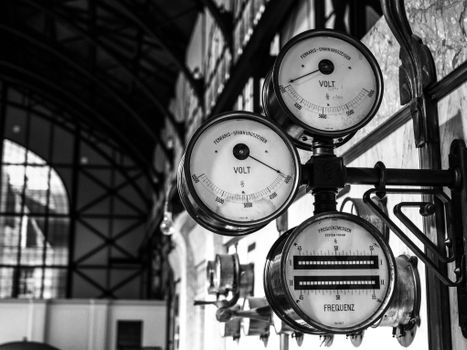
Offline handheld CMS kits (route-based) suit low-to-medium asset counts and pull data via periodic walk-downs; Brüel & Kjær Vibro's ReO software specifically supports this workflow with "Analysis, Balancing or Data Collection" modules and a predecessor product ReX PREMIUM that users are being asked to upgrade from [S1].
Online fixed CMS modules (continuous, hardwired to plant LAN) suit critical assets — typically 5–20 % of the fleet covering 80 % of production loss exposure; Ethernet, Modbus, RS-485 and PROFINET are the common backhauls in current OEM offerings [S1][S3].
Wireless CMS with battery-powered sensors (typical 3–5 year life on LoRaWAN or WirelessHART) is the fastest-growing segment for retrofit on existing assets where cabling cost dominates; ultrasonic permanently-mounted variants fall into this same class [S2][S4].
Buyers in the same condition-monitoring category should also evaluate shuttle and ASRS retrofits on a separate axis; for those comparisons see the shuttle system reference and the ASRS system reference.
Software tiers and what each one actually delivers
Tier-1 (entry) is data acquisition + trend display with fixed alarm thresholds — most handheld kits stop here [S1]. Tier-2 adds FFT spectrograms, waveform storage, and route reporting (ReO's documented functions include "easy navigation within the measurement analysis and diagnosis tools" and "ultra-fast and efficient reporting") [S1].
Tier-3 adds automated fault classification (bearing defect frequencies, gear-mesh sidebands) and integrates with CMMS/EAM to raise work orders. Tier-4 (the "digital twin" tier) fuses CMS data with process data and runs remaining-useful-life (RUL) models; this is where 2026 buyer interest is concentrated but where claimed capability often exceeds validated capability [S3][S4].
The SourceForge "Best Nonprofit Condition Monitoring Software of 2026" listing includes Valmet DNA — a single Distributed Control System (DCS) framing the CMS as part of process automation rather than as a standalone maintenance tool [S6], which is a useful counter-data-point for buyers who default to a separate maintenance stack.
Standards, certifications, and what to verify on the datasheet
For mechanical CMS on rotating equipment, ISO 17359 and ISO 13373 (vibration monitoring of machines) are the baseline condition-monitoring standards; for hazardous areas, IEC 60079-series (ATEX 2014/34/EU in the EU) governs the sensor and barrier combination. Buyers should require the exact certificate number, not a marketing claim, on the datasheet. [S1]
For electrical-thermal monitoring, IEEE 841 motor and IEC 60204-1 electrical-equipment standards are the relevant baseline, and for oil-wear, ISO 4406 (cleanliness code) is the most common reference.
Bachmann explicitly markets its CMS as "Scalable. Robust. Versatile. Web compliant" with planning, detection and prevention functions bundled [S4] — a useful checklist item against which to score any other vendor's offering.
Selection criteria, who should NOT pick the mainstream option, and shortlist logic
Who the mainstream vibration-CMS is FOR: plants with >50 rotating assets, 24/7 operation, and an existing reliability team. Who it is NOT for: small plants with <10 assets where a handheld route-based kit (B&K Vibro VIBROPORT 80 + ReO) gives better ROI than fixed sensors [S1].
Use ultrasound-first when the dominant failure mode is lubrication on enclosed bearings — UE Systems' RAS + Ultraprobe 9 000/10 000/15 000 is the documented reference architecture, with frequency response 20 kHz–100 kHz and an integrated 25–50 ft BNC extension to bring the test point to a safe access location [S2].
For deeper hardware-side selection, the related Vibration Meter vs Analyzer: Spec Map, Use Cases, and Selection Logic article covers the instrument-tier decision in detail.
Shortlist logic in three steps: (1) classify the top 10 critical assets by failure mode; (2) pick one sensor physics per failure mode (vibration for bearing/balance, ultrasound for lube/enclosed, thermal for electrical, oil-wear for gear wear); (3) require datasheet proof of certificate numbers, FFT band, sample rate, ingress rating, and the exact software version covered by the support contract. For the broader five-axis view, the Condition Monitoring System Selection: 5 Hardware Axes, ISO 17359 Fit, and Buyer article lays out the matching logic against ISO 17359.
Two trackable signals to watch: the rotation of B&K Vibro's software line from ReX PREMIUM to ReO, which signals an end-of-support window older buyers should plan for [S1]; and the SourceForge "Best Condition Monitoring Apps for iPad of 2026" listing dated 19 July 2026, which signals that mobile-tablet UI is now an evaluated axis on most 2026 RFPs [S7].