
A vibration sensor is the transducer that converts mechanical motion into an electrical signal; a vibration analyzer is the instrument that turns that signal into spectrum, waveform, and condition verdict. Across the 31 logged products listed on DirectIndustry's 2026-06-25 catalog snapshot, 19 manufacturers split their lines between portable FFT analyzers, data-logging meters, and bare transducers [S1].
The split matters because plant engineers routinely under-spec one side and over-spec the other. A triaxial IEPE accelerometer wired into a $200 handheld meter can outperform a $5,000 analyzer driven by a low-bandwidth displacement probe, and the opposite is also true. The 2026 shortlist of laser vibrometers, MEMS wireless sensors, and 3-channel FFT analyzers now reaches bandwidths as wide as 32 MHz on the high end [S2] and battery life as long as 1.5–2 years on the low end [S3].
Sensor, Meter, Analyzer: Three Distinct Functions, Not Three Names for One Thing
A vibration sensor is purely a transducer, and the cheapest industrial-grade part on the list — the SW-180xxP mechanical-mass vibration switch — closes a contact when acceleration crosses a fixed threshold and is typically used for tamper detection rather than condition monitoring [S4]. A vibration meter wraps that sensor in a readout that displays a single number, most often RMS velocity in mm/s, and is the right tool for periodic walk-around checks against ISO 10816-3 severity bands on machines up to 15 kW [S1].
A vibration analyzer adds the FFT, envelope, time-waveform, and trending that turn a number into a diagnosis. The Adash VA3 Pro Ex, for example, ships as a 3-channel FFT analyzer with on-site balancing, while the Acoem 3656-A helicopter-engine test kit bundles a dedicated vibration meter with a high-temperature accelerometer and a 10 m cable for line-replaceable unit borescope checks [S1]. The Fluke 810 sits between those two worlds as a handheld diagnostic tester that identifies and locates the most common mechanical faults on rotating assets [S5].
Decision Matrix: Match Instrument to Measurement Task
Four criteria separate the options and should drive every purchase: measured quantity, frequency range, channel count, and data destination. A handheld meter such as the PCE-VT 3800 reads displacement up to 3.9 mm with an external sensor and serves single-point severity checks, while a 3-channel analyzer like the VA3 Pro Ex handles route-based data collection and balancing on the same asset [S1].
For high-frequency or non-contact work, the Polytec VibroScan QTec scanning vibrometer pushes the envelope with up to 30 m/s velocity range, 32 MHz bandwidth, and SWIR laser capability that holds SNR on glossy, oily, or matte surfaces alike [S2]. At the opposite extreme, the Niyatech wireless sensor package offers 3-axis monitoring (X/Y: 10–1600 Hz, Z: 10–550 Hz), 16 g acceleration range, 70 mm/s velocity range, BLE protocol, and 3 mA active / 7 µA idle draw for 1.5–2 year battery life on rotating plant equipment [S3]. Pricing tiers, signal routing complexity, and ATEX/IECEx certification scope follow directly from those four axes.
Sensor Technology Comparison by Application
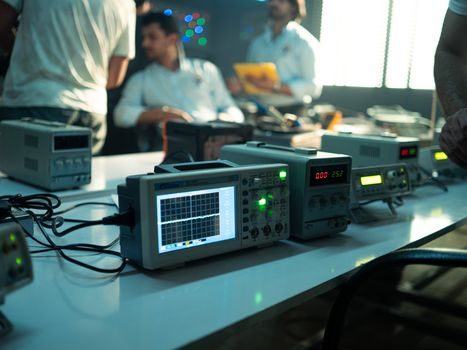
Piezoelectric accelerometers dominate the high-frequency, harsh-environment end because they survive -40 °C to 85 °C operating windows and reject low-frequency structural noise; the Niyatech wireless module demonstrates that same thermal envelope in a much smaller package, and the Acoem kit ships a high-temperature accelerometer specifically for helicopter-engine borescope ports [S3][S1]. MEMS accelerometers now cover the bulk of wireless route-monitoring installations because they integrate signal conditioning, draw microamps in sleep, and pair with BLE or LoRaWAN gateways.
Laser Doppler vibrometers are the only category that measures vibration without mass-loading the target, which is why VibroScan QTec is specified for FE model validation, modal analysis, and operational deflection shapes on structures where a contact sensor would alter the reading [S2]. Mechanical-mass switches like the SW-180xxP remain useful as low-cost tilt or tamper alarms, not as condition-monitoring primary sensors [S4]. For full coverage of transducer physics and selection logic, the vibration sensor encyclopedia entry breaks down IEPE, MEMS, and laser variants side by side.
Analyzer Architecture: From Walk-Around Meter to Lab-Grade FFT
Entry-level analyzers today still ship as single-channel handheld units with on-board ISO 10816-3 limits, FFT to 1–10 kHz, and USB export. Mid-range units such as the VA3 Pro Ex and PRÜFTECHNIK VIBSCANNER 2 add 2–4 channel simultaneous sampling, route database storage, and on-board balancing routines, with the VIBSCANNER 2 explicitly marketed for fast and comprehensive data collection with minimum training [S1].
High-end systems add Ethernet or EtherCAT backhaul, open APIs, and modular channel cards. VibroScan QTec exposes an open API plus drivers, a VibroLink Ethernet data interface for notebook transfer, and is field-upgradeable to a 3D measurement system without factory return [S2]. For walk-around severity checks a vibration meter is enough; for trending and diagnosis a vibration analyzer is mandatory.
Wireless, Edge, and AI Integration Trends From the 2026 Catalog
The 2026-06-25 DirectIndustry index shows wireless sensors and analyzers have moved from novelty to default for new condition-monitoring rollouts. Niyatech's BLE sensor pairs with an Android APP that runs FFT spectrum, trend analysis of PK, PK-PK, RMS, margin, and kurtosis, and stores tens of thousands of integrated vibration records locally on the handset [S3]. Polytec's QTec line goes the opposite direction and adds AI-supported grid generation for faster areal scans on complex test articles [S2].
The VIBSCANNER 2 takes a middle path: parallel digital data acquisition, intuitive graphical user interface, and minimum time at machine, which is the metric route-based monitoring programs actually track [S1]. For plants that need spectrum, waveform, and modal data on the same asset class, the spectrum analyzer encyclopedia page documents the FFT front-end common to all three platforms.
Selection Criteria: Who Needs What
Plant reliability engineers running ISO 10816-3 / ISO 20816-21 routes on pumps, motors, and fans should spec a multi-channel portable analyzer with route database export and on-board balancing. Test labs doing modal analysis, NVH, or FE validation need a non-contact laser vibrometer with at least 20 MHz bandwidth, SWIR option, and open API for scripted sweeps [S2]. Field service teams doing spot checks only need a vibration meter with displacement or velocity readout, an external sensor, and ISO limit lines loaded.
Distributed plants with hundreds of low-criticality assets should deploy wireless triaxial sensors on a BLE or LoRaWAN mesh, with edge analytics running kurtosis and envelope trend in the gateway. Helicopter engine line maintenance falls in its own category: a dedicated high-temperature accelerometer, 10 m cable, and engine-specific measurement template bundled in a single test kit, exactly as Acoem ships in the 3656-A [S1]. For broader 2026 vendor and standards signal coverage, the vibration analyzer selection criteria spec map lists the bandwidth, channel, and certification bands that separate entry, mid, and high-end tiers. Cost-conscious buyers weighing sensor against analyzer spend should also review tachometer price 2026 cost drivers, since tachometer and vibration channels are usually budgeted on the same route.
Sensor and analyzer converge only at the very top of the stack, where laser vibrometers embed their own optical heads and FFT processing in one box. At every other tier, pick the sensor for its bandwidth, range, and environment rating, and pick the analyzer for its channels, software, and data export — then verify both meet the same ISO severity band before the purchase order goes out.