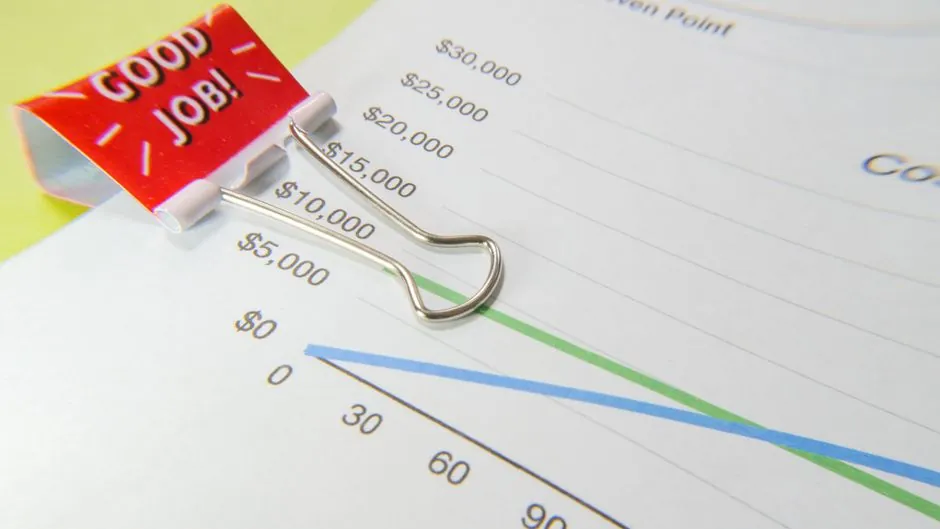
Sensors that appear cheaper initially can incur higher ownership costs over time because of frequent calibration, maintenance, and replacement expenses.
Inductive, capacitive, ultrasonic, optical, and connected proximity sensors serve different detection duties, so purchase price alone does not identify the lowest-cost installation for machinery, robotics, packaging, and plant applications [S2][S5].
What Proximity Sensor TCO Includes
Total cost of ownership comprises the purchase price plus installation, calibration, maintenance, downtime, and replacement expense [S1]. For connected sensor deployments, the same calculation expands to hardware, connectivity, software subscriptions, installation, and ongoing maintenance over a deployment period commonly modeled as five years [S4].
Price Drivers That Affect Each Sensor Type
Inductive proximity sensor pricing rises with sensing range, housing material, connection method, and manufacturing complexity [S3]. Longer-range units require more advanced materials and technology, while small housings can cost more because they are harder to manufacture [S3].
Inductive proximity-sensor prices vary with quality, brand reputation, technological advancement, sensing distance, and operating temperature. A higher quotation therefore does not automatically provide better application fit, and lower-priced products can perform equally well when their specifications satisfy the actual duty [S3].
Technology Selection by Decision Criteria

Capacitive sensors detect metal and nonmetallic targets for switching and short-range measurement, inductive sensors detect metal targets for switching and short-range measurement, and ultrasonic sensors cover object detection and longer-range distance measurement [S5]. This makes target material and required range the first screening criteria, before price enters the comparison.
Inductive versus optical sensing should also be judged by target material, installation geometry, sensitivity to contamination, calibration burden, and service interval. A permanently installed sensor can be more cost-effective than a replaceable sensor, although it has disadvantages in calibration, maintenance, and downtime. The proximity sensor reference provides the principal technology context, while photoelectric sensors require separate evaluation of optical operating principles and installation conditions.
Installation, Commissioning, and Integration Costs
Wired proximity sensors can cost more to install than their purchase price because the budget must cover mounting, cabling, site work, and commissioning [S4]. Pre-provisioned devices registered against device profiles reduce commissioning to mounting and a signal check, while conventional installations require site survey, gateway placement where applicable, device naming, and dashboard setup [S4].
Proximity sensors support both discrete switching and continuous measurement functions in industrial automation. The proximity sensor types comparison provides a useful framework for separating switching duties from continuous distance or position measurement before lifecycle costs are calculated.
Maintenance, Downtime, and Replacement Exposure
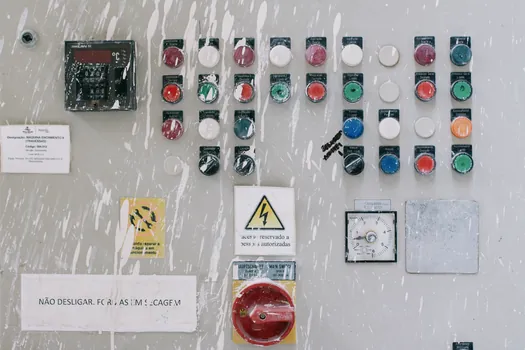
Calibration labor, calibration equipment, and process downtime belong in the operating-cost model rather than being treated as exceptional events [S1]. A permanently installed probe can be less expensive than a replaceable unit, but servicing it may require full disassembly, whereas a ready-to-use replacement reduces restoration time [S1]. The same logic applies to proximity sensors mounted in inaccessible machinery.
Wireless and IoT deployments add battery replacement, firmware updates, failed-device swaps, and staff checks for interrupted data flow [S4]. Silent reporting failures carry two costs: the missing measurement and the operational incident that remains undetected [S4]. The model should therefore include expected replacements over five years, not merely the unit price [S4].
Connected Sensors Add Recurring Cost Layers
A five-year connected-sensor model is 5-year TCO = (hardware + installation) + 60 × (monthly connectivity + monthly software) + expected battery and replacement cost over five years [S4]. This structure makes recurring fees visible and prevents a low hardware price from masking subscription or backhaul costs [S4].
Connectivity fees can vary substantially with the chosen wireless technology, and a battery-powered LoRaWAN sensor can allow hundreds of devices to share a single gateway. Battery-powered LoRaWAN sensors can operate for years on one battery, and hundreds of devices can share one gateway, reducing per-device infrastructure cost as scale increases [S4].
Building the Procurement Decision

The defensible selection starts with target material, sensing range, output type, accuracy requirement, environmental exposure, and mounting access [S5]. It then compares acquisition price, installation labor, calibration frequency, expected service life, replacement exposure, and downtime consequences over a defined five-year period [S1][S4].
The $45-versus-$60 example establishes why lifecycle analysis matters, but it does not support a universal price threshold [S2]. A procurement team should attach labor rates, outage costs, replacement probabilities, and commissioning hours to each candidate, then verify the resulting sensitivity against field maintenance records.
The next trackable signals are the supplier’s quoted calibration interval and five-year replacement profile, followed by the installation and service hours required by the selected housing and output architecture [S1][S3].