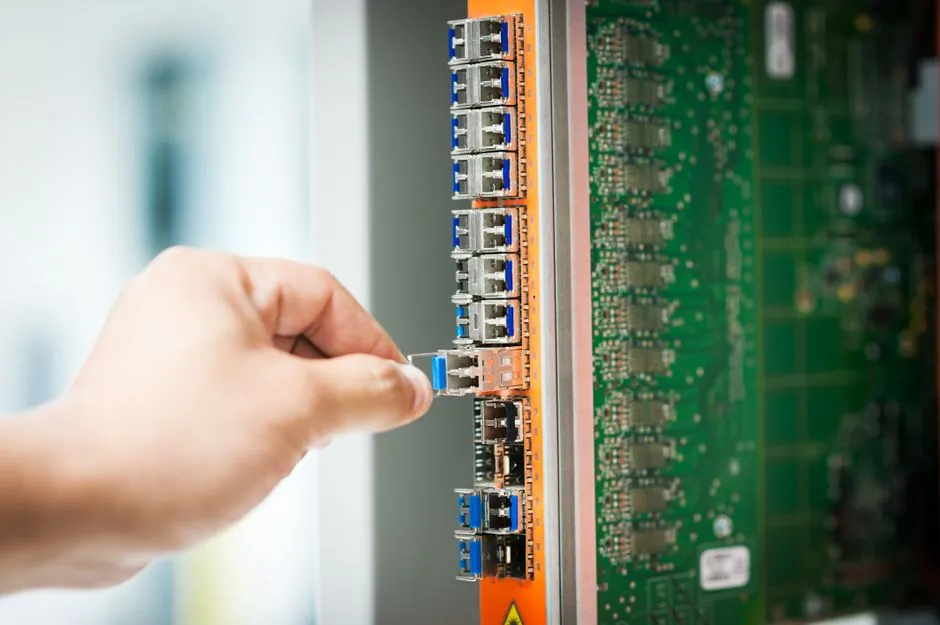
Industrial Ethernet switch TCO includes acquisition, network design, integration, management, maintenance, troubleshooting, training, downtime and depreciation across the equipment lifecycle [S2].
The analysis applies to managed and unmanaged Ethernet switches used in factory automation, transportation, utilities and other operational technology networks, where purchase price represents only one part of the economic decision [S2][S3].
What Industrial Ethernet Switch TCO Measures
Total cost of ownership is the sum of initial capital expenditure and life-cycle operating costs, including direct expenses and indirect costs such as staff time spent adjusting to or operating a system [S2][S3].
For an industrial Ethernet switch, the cost model should extend from purchase through final depreciation. Ethernet switch examples include equipment acquisition, IP-system implementation, network integration, system management, individual engineering changes, maintenance, troubleshooting, repairs, training and losses caused by operational downtime [S2].
A defensible model also separates CapEx from OpEx. The Uptime Institute white paper presents a model for determining the true total cost of ownership for data centers [S1]. Chaffey College applies TCO to facilities and technology, focusing primarily on initial and ongoing operating costs to inform institutional planning and budgeting (2023-08) [S4].
Cost Drivers From Purchase Through Decommissioning
The purchase price covers only the visible hardware cost. PoE integration can remove separate power infrastructure for cameras, access points, sensors and voice terminals, but it also requires a power-budget calculation and compatible standards at the device and endpoint level [S5].
Installation and commissioning can dominate labor costs when each unit requires manual configuration. Standardized switch architectures, automated configuration distribution and plug-and-play mechanisms reduce manual intervention and support scalable deployments [S2]. Integration is not limited to physical cabling: it includes IP-system design, network integration, topology, management access and testing.
Operating expenses include power, licenses, management platforms, configuration changes, monitoring, troubleshooting, replacement, training and disposal. IBM identifies personnel, maintenance, upgrades and electricity as recurring costs for on-premises infrastructure, while indirect adjustment time must also be captured [S3].
For PoE deployments, compare the switch price with the avoided cost of separate power supplies, cable routes, outlets and installation labor. The resulting saving is not automatically realized: an undersized power budget can require more capable switches, additional cabinets or excess capacity, so the calculation must use the planned device count and measured power demand [S5].
Managed, Unmanaged and PoE Options Compared
An unmanaged switch generally minimizes purchase and management layers but offers less scope for monitoring, diagnostics, centralized configuration and controlled changes. A managed switch adds configuration, status visibility and fault-management work, but can reduce troubleshooting labor and unplanned disruption [S2].
A PoE switch combines data and power over Ethernet and can lower infrastructure costs for powered endpoints, while a conventional Ethernet switch may be more appropriate where power is already supplied locally. PoE variants are distinguished by IEEE 802.3af, IEEE 802.3at and IEEE 802.3bt, with the appropriate class determined by endpoint power and distance requirements [S5].
Use four decision criteria: first, lifecycle exposure, including labor, management and downtime; second, installation burden, including manual commissioning and separate power infrastructure; third, fault visibility and recovery; fourth, physical fit, including environmental and certification requirements. The comparison framework used for industrial PC installation can inform cabinet power, heat and cabling assumptions, but the switch remains the network infrastructure component under analysis.
Standardized equipment can reduce duplicated spares and simplify replacement, while high interoperability can avoid application-specific integration work. For Ethernet switches in public-transport networks, TCO covers acquisition, network design, and final depreciation over the product life cycle, while identifying known and hidden cost drivers [S2].
Downtime and Failure Costs
Malfunction-related downtime affects more than the failed switch. In a public-transport network, interruption can create service, revenue and reputational losses, so availability and reliability belong in the TCO calculation [S2].
Topology has a direct effect on availability and reliability, while system monitoring and real-time network status information support managed operation [S2]. Redundant power feeds and redundancy protocols can reduce single points of failure, although they also add equipment, configuration and testing costs [S5].
Failure-cost scenarios should distinguish a failed unit from a failed segment. Include technician travel, replacement logistics, spare inventory, restoration time, lost production, affected services and emergency change work. A price-based comparison that counts only failed hardware will understate the operational impact of an unmanaged or poorly monitored topology.
Environmental qualification should be treated as a lifecycle factor rather than a checkbox. A 2026 industrial PoE guide states that a properly specified hardened switch can maintain full throughput at 70 °C without active cooling, while commercial switches are described as beginning to experience packet loss above 55 °C in automotive assembly testing [S5]. That claim is product-specific evidence, not a universal rating, so plant conditions and manufacturer test data must be checked during selection.
Build the Model With Trackable Inputs

A practical worksheet needs at least 10 cost lines: switch hardware, cabinets and mounting, cabling, power infrastructure, configuration labor, integration, management software, electricity, maintenance and support, training, troubleshooting, downtime, spare units, refresh and disposal [S1][S2][S3].
Assign each line a year, quantity, unit cost, internal labor rate and responsible owner. Keep capital and operating categories separate, then calculate both undiscounted lifecycle cost and net present value. Run the model over the actual service period rather than an arbitrary marketing comparison period, and include the final replacement or depreciation event [S1][S4].
Total cost of ownership works only when assumptions remain visible. The Uptime Institute spreadsheet model makes assumptions transparent so another reviewer can understand and critique the result [S1]. For industrial networks, add the physical environment, deterministic traffic requirements, redundancy design, approved protocols, certification requirements and technician skill constraints to each switch scenario.
When the Cheapest Switch Is Not the Lowest-Cost Option
An unmanaged switch can suit small, stable, low-risk segments where diagnostics and centralized control add little value. It is a poor fit for an expanding production cell, safety-relevant process network or multi-site architecture where outages are expensive and configuration consistency matters [S2].
A managed switch is appropriate when monitoring, remote configuration, fault isolation and controlled change justify the additional hardware and operating effort. A PoE switch is appropriate when many endpoints need both network connectivity and local power, provided the calculated budget remains within the switch capability and cabling plan [S5].
Industrial ruggedness, protocol support and certification are separate selection gates, not interchangeable marketing labels. The PoE comparison guidance identifies industrial capabilities such as wide-input DC power, redundant feeds, fanless convection cooling and protocol-specific support, while also noting IEC 61850, PROFINET and IEC 62443 as distinct certification or technical contexts [S5].
Procurement should compare quoted hardware prices only after confirming that each proposal satisfies the environmental, protocol, certification, redundancy and management requirements. A cheaper unit that requires extra commissioning labor, external power hardware or more frequent troubleshooting may have the higher TCO [S2][S3].
Evidence for the Next Capital Review

The next review should produce a signed TCO worksheet containing device quantities, port classes, PoE budget, service life, labor rates, energy assumptions, downtime scenarios, support terms and replacement timing. Record at least 3 scenarios: unmanaged Ethernet, managed Ethernet and managed PoE, each using the same service period and availability assumptions. [S5]
Two signals provide a practical trigger for recalculation: a change in powered endpoint count or PoE class, and a change in the annual downtime or field-service cost. Track purchase price, commissioning hours, management hours, energy use, spare-stock consumption and outage cost separately, then reconcile those actual values against the approved TCO model.