
Push-in fittings remain the default quick-connect on factory compressed-air and low-pressure fluid lines, with the Festo QS series alone listed across 106 industrial manufacturers and 516 product variants on DirectIndustry in 2026 [S1]. The technology is widely used because it cuts assembly time on pneumatic circuits and OEM machine builds versus threaded compression fittings.
Selection in 2026 is driven by five concrete levers: tube outer diameter (commonly 4, 6, 8, 10, 12, 14 mm), thread type and size (G, R, NPT), body material (PBT polymer, nickel-plated brass, stainless), media compatibility (compressed air, vacuum, water per manufacturer declaration), and pressure/temperature rating [S2][S5]. Buyers should treat these as a checklist, not a brand preference.
Body Material: PBT Polymer vs Nickel-Plated Brass vs Stainless
The Festo QS standard and mini series lists body material as PBT plastic and nickel-plated brass, with operating media declared as compressed air, vacuum and water per the manufacturer's declaration at www.festo.com/certificates [S5]. PBT bodies deliver the lowest unit cost and weight; nickel-plated brass adds mechanical robustness and higher temperature tolerance for the same fitting footprint.
The Festo NPQM metal line is explicitly built as a cost-effective solid-metal brass, nickel-plated variant for body shop, electronics industry and workshop environments, again rated for compressed air and vacuum [S7]. Stainless (typically 316L) push-in fittings exist for corrosive media, hygienic lines and outdoor/exposed installations, but command a 3-10x price multiple over PBT equivalents on the China wholesale market [S3].
Tube OD, Thread and Size Coding
Push-in fitting model codes encode both the thread side and the tube side. The Festo QS-G1/4-8 part (part 186099) reads as G1/4 male thread on the threaded end and 8 mm tube OD on the push-in end, and was listed on the secondary market at roughly US$6.67 per unit in a lot-of-6 pack during 2025 [S4]. The QS-1/4-8 variant (part 153005) uses a 1/4 inch thread format and 8 mm tube OD, sold at US$3.75 per unit in lots of 10 [S6].
Chinese wholesale lines use a similar convention: the PU-4/6/8/10/12/14 zinc-alloy straight union series from Yueqing Yisheng Pneumatic lists six tube ODs in one SKU family at US$0.10-5.00 per piece, MOQ 1 piece [S8]. Buyers should write the required tube OD and thread size on the RFQ; ambiguous specs are the single largest source of wrong-fitting returns on pneumatic lines.
Working Pressure, Temperature and Media Limits
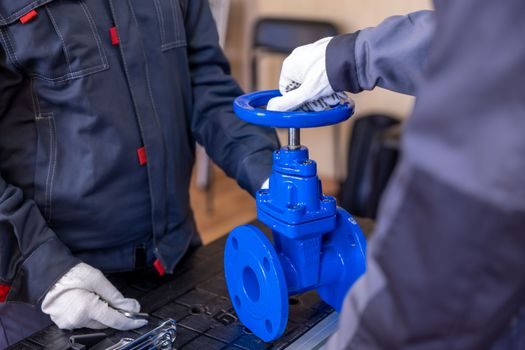
Standard push-in fittings on the pneumatic fittings market are typically rated for working pressures in the -0.95 bar to 10 bar range, with media limited to compressed air, vacuum and water as declared by the manufacturer [S2][S5]. NPQM metal variants share the same compressed-air and vacuum scope and are not specified for aggressive chemicals out of the box [S7].
Operating temperature is bounded by the polymer seal and body: PBT-bodied QS fittings carry a temperature window dictated by the Festo declaration, and the same window constrains any water service. Stainless bodies raise both ceiling temperature and chemical compatibility, but require matching stainless tube (often 316L) and a check of the O-ring compound (NBR vs FKM/EPDM) before specifying for hot water, steam condensate or mildly corrosive media.
Certifications, Drinking Water and OEM Documentation
For drinking-water and food-zone use, push-in fittings are a different sub-class: the Made-in-China "Premium Equal Shape Push-in Fitting for Sprinkler Systems and Drinking Water" line from Zhuji Gede Import & Export is listed at US$1.00-20.00, MOQ 50 pieces, with explicit drinking-water positioning [S3]. These require region-specific approvals (e.g. KTW, DVGW-W270, WRAS, NSF/ANSI 61 depending on market) and matching documentation, which the buyer should request before order release.
For non-food industrial duty, the operative document is the manufacturer's declaration (e.g. Festo's certificate PDFs at www.festo.com/certificates) covering media, pressure and temperature [S5][S7]. The same declaration path is used to confirm RoHS, REACH and, where relevant, ATEX suitability for use in potentially explosive atmospheres, though ATEX push-in fittings are a separate, lower-volume catalogue line.
Comparison: PBT vs Brass vs Stainless on Four Decision Criteria
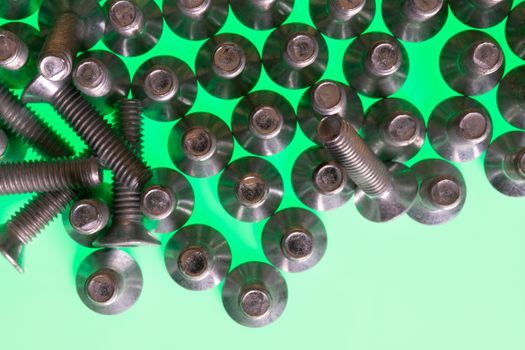
On cost, PBT push-in fittings sit at the bottom of the China wholesale band (US$0.10-0.50 per piece for the common OD6/OD8 sizes), brass in the middle, and stainless at the top with a 3-10x multiple [S3][S8]. On temperature ceiling, PBT is the lowest, brass intermediate, and stainless the highest, with exact limits taken from the manufacturer's declaration rather than a generic table [S5][S7].
On chemical compatibility, only stainless (with FKM/EPDM seals) covers aggressive fluids; PBT and nickel-plated brass are restricted to compressed air, vacuum and water per the OEM declaration [S5][S7]. On weight and electrical conductivity, PBT is lightest and insulating, which matters in certain electronics-handling and ESD-protected cells, while brass is heavier but conductive and dissipates static better in dusty pneumatic cabinets. This four-axis view (cost, temperature, chemical compatibility, conductivity/weight) is a more reliable selection filter than brand comparison.
Who Push-In Fits For — and Who It Does Not
Push-in fittings are built for OEM machine builders, panel shops and end-users running compressed-air distribution at room temperature, plus low-pressure water and vacuum lines up to roughly 10 bar [S2][S5]. They are widely used in body shops, electronics assembly, packaging machinery and workshop compressed-air drops, and the easy-release ring makes field reconfiguration fast.
Push-in is the wrong choice for high-pressure hydraulic service (typically above 10-16 bar, where compression or flare fittings take over), aggressive chemicals (solvents, acids, fuels without a stainless + FKM build), high-temperature steam, and permanent underground burial where a compression or soldered joint is mandated by code. For these duty cycles, spec pipe fittings or pneumatic fittings of the compression/threaded family instead.
Sourcing: Brand, Wholesale and Lead-Time Levers

The 2026 sourcing map splits three ways: tier-1 brand catalogue (Festo QS, Festo NPQM) for guaranteed declaration and traceability; Chinese OEM/ODM lines (Yueqing Yisheng, Made-in-China Audited Suppliers) for lower-cost volume runs; and the secondary market (eBay lots) for one-off repair quantities [S1][S3][S4][S6][S8]. On the wholesale side, the PU series zinc-alloy straight union is listed at US$0.10-5.00 per piece MOQ 1, and drinking-water push-in fittings at US$1.00-20.00 MOQ 50 [S3][S8].
Lead-time and quality-control risk concentrate at the wholesale tier: a 1-piece MOQ is fine for sample qualification, but a 5,000-piece MOQ is common for the cheapest furniture/fittings sub-class on the same platform [S3]. Buyers should request the manufacturer's declaration, a material data sheet, and a sample fitted to the actual tube (OD tolerance and hardness of the tube affect grip and release force) before signing a volume PO. A line-by-line cost-down analysis of the same QS-G1/4-8 function across brand, OEM and surplus is the fastest way to map the 2026 price floor.
Failure Modes and Field Inspection Points
The three most common push-in fitting failures in service are: (1) tube pull-out under vibration, traced to undersized OD or nicked tube ends; (2) leak at the threaded end from incorrect thread sealant or torque, especially on parallel G threads that need a sealing washer; (3) seal swelling or hardening when the media drifts outside the declared list (oil-enriched air, aggressive cleaners, hot water above the declared ceiling) [S2][S5][S7]. A simple annual walk-down to re-tension the release-ring check and to inspect for seal weep is the cheapest preventive maintenance step on a pneumatic manifold.
Two trackable signals to monitor through 2026-H2: (a) Chinese OEM wholesale price drift on the zinc-alloy PU-4/6/8/10/12/14 family, which is a useful leading indicator for the broader pneumatic fitting cost-down trend [S8]; (b) any tightening of the manufacturer's declaration on water service, since drinking-water approvals and PFAS-related seal regulations are the most likely compliance changes in the EU and US over the next 12 months [S3][S5].
For component-level specifications, see linear guide.
For related coverage, see Cable and Wire Price Trend 2026: Copper-Driven Floors, Shielding Premiums and 2026 Outlook.