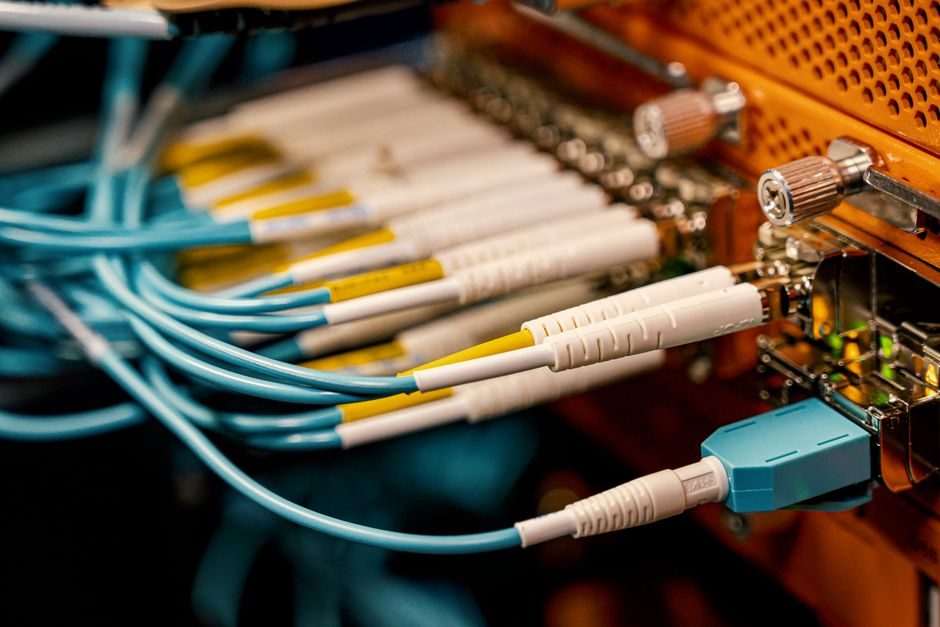
As of mid-2026, the price band for general-purpose power cable on Chinese B2B catalogues sits at US$1.00–10.00 per metre (100 m MOQ) for marine-offshore grades certified to NEK 606 [S2], while drop fibre runs as low as US$0.05–1.00 per metre for FTTH self-supporting constructions [S8].
At the high end, wire-and-cable recycling machinery quotes US$15,000–60,000 per set and copper-tape shielding lines US$9,999–10,000 per set, anchoring the capital-equipment floor for the segment [S3]. CCTV composite cable and 4-core RVVP sit at US$0.30–3.00 per metre (500 m MOQ), with 100-roll commodity CCTV wire at US$0.08–0.11 [S4].
Mid-band Power and Control Cable Floors Hold US$1.00–10.00/m
NEK 606 RFOU / RFCU marine-offshore power cable from Jiangsu Tebaoflex quotes US$1.00–10.00 per metre at 100 m MOQ, covering the 0.6/1 kV to 18/30 kV voltage window that dominates shipboard and platform orders [S2]. Copper-conductor control cable constructions (2×0.5 mm² to 2×2.5 mm²) for telephone and signalling use sit at US$0.10–3.00 per piece, with MOQs starting at 5,000 pieces — typical of the high-volume wire-and-cable tier where conductors, not insulation, set the cost floor [S8].
The floor on these mid-band products is set by LME-graded copper conductor cross-section plus XLPE/PVC insulation, and the ceiling is set by fire-performance sheath (LSZH, SHF1, SHF2) and shield count — values consistent with the broader shielded cable price bands seen in 2026 sourcing guides.
Low-voltage Composite and Consumer Wire Sub-US$1.00/m
RVV/RVVP composite CCTV cable with 4-core 0.75 mm² copper and PVC insulation, braided-shielded for anti-interference use, posts US$0.30–3.00 per metre at 500 m MOQ from Qingdao Aerospace Special Cable [S4]. Commodity CCTV wire and 2-core signal pair cable at 100-roll MOQ hit a US$0.08–0.11 floor — the bottom of the 2026 cable-and-wire spectrum on per-metre basis.
USB and fast-charging consumer data cables — TPU-braided, 27 W and 65 W PD — cluster in the US$0.59–0.64 per piece band at 50-piece MOQ [S6]. These consumer-electronic wires are insulated copper or tinned-copper conductor with PVC/TPU jacket and connector overmould cost; the per-piece floor is below the per-metre industrial cable floor only because of short fixed lengths (1 m, 2 m, 3 m).
Fibre-Optic Drop Cable Floors the Telecom Tier at US$0.05/m
FTTH drop fibre (GJYXCH/GJYXFCH) with FRP or steel-wire strength member runs US$0.05–1.00 per metre at 1 m MOQ, the lowest wire-rod-equivalent optical cable price visible in mid-2026 catalogues [S8]. The upper end of US$1.00/m reflects single-mode G.657 bend-insensitive fibre with LSZH sheath; the lower end reflects 1-core self-supporting bow-type drop with PE jacket.
SMC outdoor optical cross-connect cabinets — the FTTH distribution housings that terminate these drop cables — quote US$1.40–33.00 per piece (1-piece MOQ) on the Ningbo Fibconet listing, a 24× spread that reflects fibre count (24 to 144 core) and adapter type (SC, LC, FC) [S1]. These cabinets and their cabling land as paired buys for last-mile FTTH rollouts.
Capital-Equipment Ceilings: Recycling and Shielding Lines US$10,000–60,000
Cable-recycling capital equipment (wood / cable / tire / electrical wire / pipe / plastic) posts US$15,000–60,000 per set from Genox Recycling Tech, with throughput, motor power and separation stages setting the spread [S3]. Semi-automatic copper-tape shielding machines for high-performance wire and cable sit at US$9,999–10,000 per set — a tight band that suggests mature supply and standardised line configurations in this category.
For buyers specifying an entire cable-and-wire plant, the equipment ceiling at ~US$60,000/set is materially below the process-engineering tier (e.g. automated moulding lines, batching plants) tracked in adjacent 2026 sourcing maps, but the cable-machine floor at ~US$10,000 lines up with the BOM cost of a few hundred metres of mid-band NEK 606 marine cable [S2][S3].
Cabinet Tier: Distribution RMU at US$500–20,000
CNKEEYA fixed-type ring-main-unit cable-branch power-distribution cabinets from Zhejiang Hangya Electric post US$500.00–20,000.00 per piece (1-piece MOQ) — a 40× spread that reflects rated current (typically 630 A to 1,250 A), short-circuit withstand (20 kA to 31.5 kA), and number of ways (3-way to 6-way RMU) [S1]. These cabinets typically house cable gland entries sized to the incoming MV cable, which is why gland and tray spec flow back into the cabinet BOM.
Buyers pairing FTTH drop cable with SMC cross-connect cabinets should also reconcile with the cable tray selection logic seen in 2026 buying guides, because ladder-type and perforated-tray load ratings dictate the support interval and the overall material tonnage behind the cable run.
Specification Levers That Move the Quote
Across the 2026 catalogue listings, four specification categories appear: conductor cross-section (0.5 mm² to 2.5 mm² options are listed in telephone cable products), sheath material (PVC-insulated variants appear in CCTV cable listings), shield architecture (braided shielded options are offered), and standard certification references [S2][S4][S8].
Volume MOQs are the second lever: 1 m MOQ on drop fibre versus 5,000-piece MOQ on 2-core telephone cable versus 100 m MOQ on marine NEK 606 — the same cable from the same mill can print at 2–3 different floors depending on which MOQ tier the buyer lands in [S2][S8].
2026 Outlook: Copper Volatility and Shielding-Premium Compression

Three trackable signals will shape the second half of 2026: LME copper cathode price, which sits inside the conductor cost of every cable on the floor above US$0.30/m; NEK 606 / UL / CE re-certification cycles, which expire annually and reset the per-piece documentation cost; and the marine-offshore order book, where RFOU / RFCU demand tracks the global shipyard order intake [S2][S4][S8]. Buyers hedging 2026 H2 should pre-book copper-heavy marine and control cable now, and defer LSZH-shielded composite orders to capture typical Q4 softening in the consumer-data cable tier.