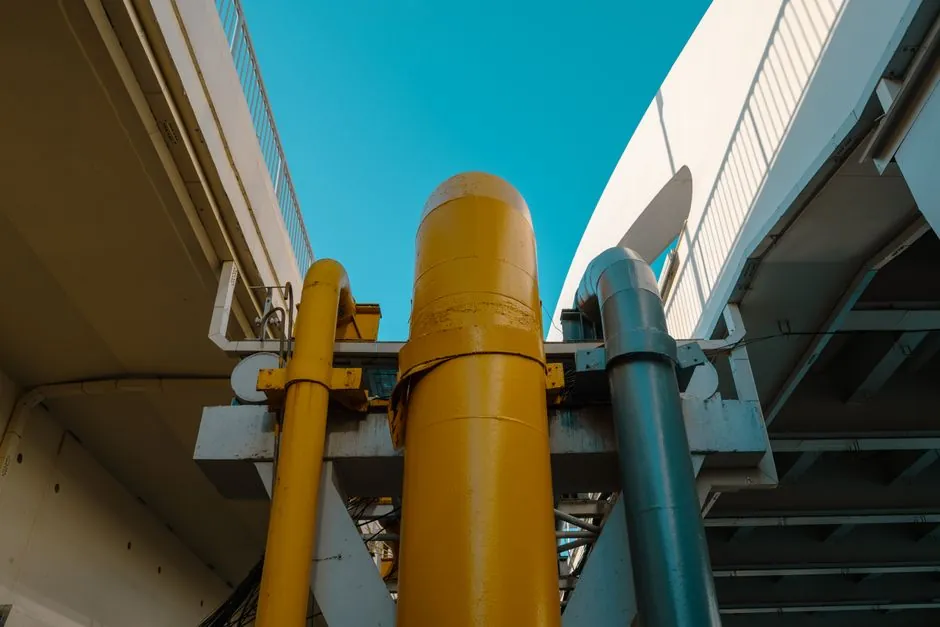
PVC-U (unplasticised PVC) is the dominant plastic pipe specified inside ISO 14644 cleanroom envelopes, primarily because the unplasticised matrix yields a smooth, low-adsorption bore with minimal particle sloughing under steady flow [S2][S7].
Operating envelope, pressure class, and joint method, not resin cost, drive the selection: a SCH 40 PVC-U line at 73°F carries roughly 22% of its rated pressure when heated to 140°F, so hot-water or steam-cleaned runs in semiconductor or pharma suites require CPVC or stainless alternatives instead [S2].
Why PVC-U Fits Cleanroom Service
PVC-U resins are documented as fully compatible with demineralised water, potable water, and unconditioned water conveyance, which is the exact fluid matrix found in semiconductor wet benches, pharma WFI pretreatment loops, and biotech process drains [S7]. The pipe wall does not require plasticisers to remain rigid, eliminating a documented source of organic leachables that would otherwise load HEPA-filtered recirculated air [S2][S5]. uPVC laminate finishes are similarly cited as robust, easy-to-clean surfaces resistant to disinfectants, acids, and corrosives commonly used in cleanroom turnover, with seamless wall-to-ceiling transitions that limit particle traps [S3].
Pressure classes for cleanroom utility branches typically sit at PN9 to PN12 (roughly SCH 40 equivalent), well inside the published design stress band of 10 to 12.5 MPa for PVC-U, leaving margin for occasional surge events from DI pump skid start-stops [S4][S6]. A typical 100 mm nominal PVC-U SCJ line at PN12 retains about a 12 mm wall, sufficient for the 4 to 6 bar working pressure common in fab makeup-water rings.
Cleanroom ISO 14644 Class and Material Boundary
ISO 14644 cleanroom classes (Class 5, 6, 7, 8) are defined by particles ≥0.1 μm per m³, and any pipe material that sheds, outgases, or corrodes inside that envelope will defeat the classification regardless of upstream filtration [S3]. PVC-U is generally acceptable down to ISO Class 7/8 process support and Class 5/6 sub-fab utility chases, provided joints are solvent-cemented (not threaded, which creates a lubricant and chip source) and the line is flushed to a resistivity endpoint before tie-in [S2][S7].
For higher classifications (ISO Class 5 and above in the active production zone), most spec sheets push non-shedding process fluids to PVDF or stainless 316L because PVC-U's 60°C ceiling rules out the hot DI rinses used between batches [S2][S4]. The 0 to 60°C window and the 0 to 60°C brittleness transition below 5°C also mean PVC-U should not run through unheated interstitial spaces in cold climates without tracing or insulation [S4][S5].
Spec Comparison: PVC-U vs PVC-M vs CPVC for Cleanroom Runs
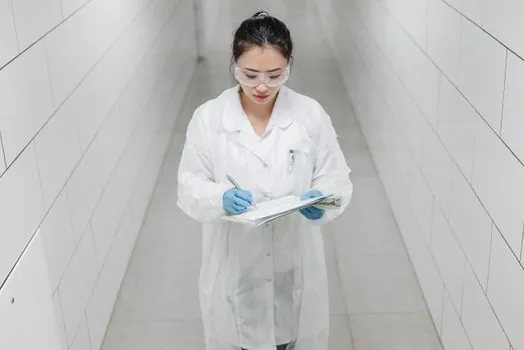
Specifying engineers typically weigh three thermoplastics for cleanroom service: PVC-U, PVC-M (modified/high-impact), and CPVC. PVC-M offers 5 to 10× higher impact resistance and survives -20°C, with a design stress of 15 to 17.5 MPa and 40 to 50% higher burst pressure, but its lower UV resistance and the absence of a long cleanroom-track record keep it out of most fab specs [S4]. CPVC extends the upper temperature to 200°F (93°C), enabling hot sanitisation cycles, but the chlorinated resin carries a different extractables profile that requires its own qualification [S2].
Across the four selection criteria that matter to cleanroom projects, PVC-U lands as follows: temperature (0 to 60°C, adequate for cold loops, fails hot sanitation), pressure (PN6 to PN16, covers typical utility branches), particle/shedding behaviour (low, well documented for DI water), and installed cost (10 to 15% below PVC-M, well below CPVC or stainless) [S4][S5]. For a deeper dive on industrial-facility PVC-U selection outside the cleanroom envelope, see this PVC-U pipe selection for industrial facilities: spec-first decision map. Where the run carries compressed air, vacuum, or specialty gas, plastic pipe families and the relevant pipe fitting standards need a separate review because PVC-U is not rated for those services.
Joint Method, Support Spacing and Cleanroom-Specific Detailing
Solvent-cement welding (SCJ) is the dominant PVC-U joint for cleanroom work because the weld eliminates the threaded-lubricant and metal-chip contamination of screwed connections and the micro-gaps of rubber-gasketed couplings [S6]. SCJ PVC-U dimensional tables show outside-diameter tolerances held tight enough (±0.2 mm on small bores) that a properly cemented joint meets the leak-rate targets of a Class 5/6 sub-fab chase without secondary wrapping [S6]. Threaded transitions should be limited to instrument taps and equipment terminations, never used in the main distribution loop.
Support spacing follows the PVC-U manufacturer's cold-bend table, typically 1.0 to 1.5 m for DN50 horizontal runs at 20°C, with closer hangers near valves and any point where the line crosses a cleanroom wall sleeve [S1]. All wall penetrations need a smooth stainless or PVC sleeve with a cleanable sealant bead: rough caulking or expanding foam will shed into the controlled space. Pipe clamp selection should favour polypropylene or stainless-lined clevis hangers over bare metal, which corrodes under repeated isopropyl or H₂O₂ wipe-downs and drips rust onto the floor.
Certifications, Cleaning Chemistry and Failure Modes
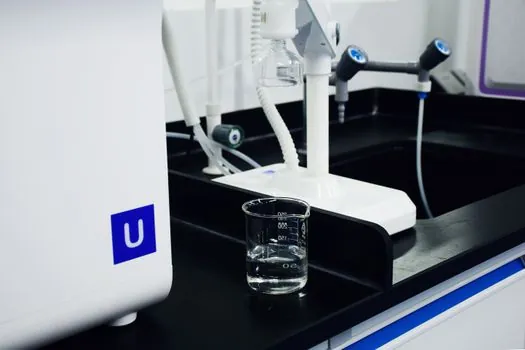
NSF/ANSI 61 certification, marked as NSF-pw on the pipe print line, is the baseline drinking-water safety standard and is also accepted as a cleanroom utility-water benchmark because it constrains metal and organic leaching into the conveyed fluid [S1]. UPC (Uniform Plumbing Code) certification is a parallel building-code signal that should appear on submittals for any U.S. cleanroom build. For European and APAC projects, equivalent national potable-water approvals (WRAS, ACS, DVGW) satisfy the same extractables screening [S1][S7].
Cleaning chemistry inside a cleanroom is aggressive: sporicidal peracetic acid, 70% isopropyl, and quaternary ammonium compounds are routine. PVC-U is documented to resist many acids, alkalis, and salts, but aromatic solvents, ketones, and chlorinated hydrocarbons will swell or craze the wall; any wipe-down SOP should be cross-checked against a chemical compatibility chart before the line is commissioned [S5][S7]. The two most common in-service failures are (a) cold-cycle cracking below 5°C in unheated chases, fixable by switching that segment to PVC-M or adding trace heating, and (b) UV-driven surface chalking on exposed utility racks, addressed by grey-pipe UV-stabilised compound or by relocating the run inside a chase [S1][S4][S5].
When PVC-U Is the Wrong Choice
PVC-U is not the right material when any of three conditions hold: the fluid exceeds 60°C on a sustained or sanitisation basis (push to CPVC or stainless), the line lives in an ISO Class 5 active zone where zero extractables are tolerated (push to PVDF or 316L), or the installation is outdoors or in a cold interstitial with no thermal control, since the 0 to 60°C window and 5°C brittleness threshold are non-negotiable material limits [S2][S4][S5]. For buried cleanroom service-water laterals that may transition to site water mains, PVC-U pipe standards still apply at the building side, but PE pipe typically takes over outside the foundation because of its flexibility and freeze tolerance.
Three signals are worth tracking into late 2026: any revision to ISO 14644-7 (cleanroom ancillary equipment) covering plastics extractables, a potential NSF/ANSI 61 extractables update that tightens ortho-phthalate screening for plasticised components, and Chinese-fab PVC-U resin price movement, which has shifted ±20 to 40% on sourcing programmes through 2024 to 2026 [S1][S4].