
Steel-plastic composite pipe (SP-CP) is a galvanised internal-plastic-coated composite steel pipe manufactured via pretreatment, preheating, internal coating, levelling and post-treatment, classed as an upgraded traditional galvanised pipe and typically threaded for jointing [S3].
For warehouse procurement, the headline trade-off is that bare steel pipe needs a moisture-controlled environment to prevent rust, while plastic pipe needs temperature control to avoid warping, and SP-CP bridges both gaps with a polymer inner/outer skin bonded to a steel substrate, extending design life up to 50 years versus uncoated galvanised stock [S3][S4]. Composite-pipe system demand supports that direction: the global market was USD 7.5 billion in 2025 and is projected to reach USD 12.3 billion by 2035 at a 5.0% CAGR [S5].
What SP-CP actually is, and how it differs from plastic-coated steel
The first distinction is structural, not cosmetic: plastic-coated steel uses a steel substrate with a single anti-corrosion plastic layer welded to inner and outer surfaces, whereas SP-CP is a pretreated, preheated, internally coated galvanised composite pipe designed as a system, with a 50-year design life, oxygen-barrier performance suitable for direct drinking water, and applications spanning petroleum, natural gas, industrial/mining, drinking water and drainage [S3].
The second distinction is family: SP-CP sub-types include steel-belt-reinforced, seamless-steel pipe-reinforced, perforated steel-strip and steel-mesh-skeleton variants, all sharing the same composite interface [S3]. Within the wider plastic composite pipe universe, common combinations are plastic-aluminium, plastic-steel (SP-CP), plastic-fibre and plastic-copper, each tuned for pressure, temperature and chemical exposure [S2]. Selection criteria that apply across all sub-types include resistance to vibration, water hammer, thermal expansion and contraction, plus recyclability and cost-effectiveness [S2].
Selection criteria for warehouse stock
SP-CP must withstand vibration, impact, water hammer and thermal cycling without bursting, especially in cold-climate warehouses where ice expansion risks failure, which is why SP-CP is specified over plain PE in many unheated logistics halls [S2].
Three quantitative criteria anchor the warehouse spec: (1) diameter range DN15 to DN200 covers domestic risers, fire mains and small-bore process lines stocked by most distributors; (2) the inner plastic layer gives an oxygen barrier, qualifying the same SKU for direct drinking water without a separate barrier pipe; (3) service life up to 50 years lowers total cost of ownership versus galvanised steel, which typically needs replacement inside 20-25 years in humid stores [S3]. China supplies most of the global volume: the 2026 top-10 plastic composite pipe manufacturers list is dominated by mainland producers, with Pipelife International, Wavin and Polypipe cited as the international cross-check [S6][S5].
Comparison: SP-CP versus galvanised steel versus PE/PVC in warehouse duty
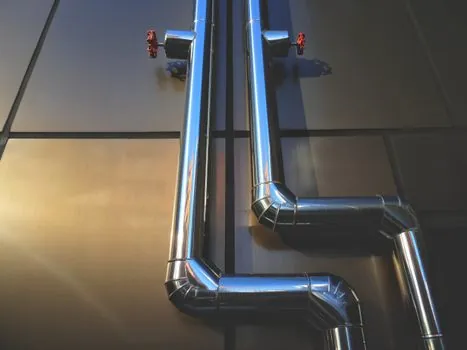
On four warehouse decision criteria, SP-CP sits in the middle of the field: corrosion resistance is intrinsic (no rust, no internal scaling), strength is high (steel substrate, water-hammer tolerant), installation requires threading (not push-fit), and unit weight at DN15-DN50 lands at roughly 1.5-3.0 kg per metre for a 6 m stick, which fits standard cantilever racks [S3][S4].
Versus bare galvanised steel pipe, SP-CP trades a small price premium for the elimination of internal scaling, no corrosion bleed into stored potable water, and the option of using one SKU across hot and cold lines; versus PE pipe, SP-CP trades flexibility for fire performance and a higher pressure ceiling, since plain PE softens and burns far more readily [S3]. On trenching and routing, bare steel needs wider, deeper, straight trenches and lifting gear, while SP-CP and PE both use narrower trenches, but only SP-CP keeps the steel-grade strength for above-rack fire risers [S1].
Warehouse storage system requirements
Steel-plastic composite pipe must be stored dry, off the ground, on cantilever racking with heavy sections at the low levels, and plastic-finished or light tubes above, because moisture will attack any cut end or thread sealant that is not intact, and the polymer skin will warp above roughly 60 degrees Celsius [S4].
Concrete floors crack pipe ends; a rubber mat or raised base provides cushioning and drainage, and the storage system weight limit must be marked and inspected for uneven load distribution [S4]. Vertical storage works for sections under 12 feet (about 3.6 m) and requires dividers to stop pipe-on-pipe abrasion, while horizontal cantilever racking handles long 6 m sticks without front-column obstruction [S4]. Operators handling 6 m SP-CP sticks must use mechanical assistance, hard hats, cut-resistant gloves and safety glasses, since sharp thread ends and swinging lengths are the two dominant injury vectors in pipe yards [S4].
Use cases that fit, and where SP-CP is the wrong pick
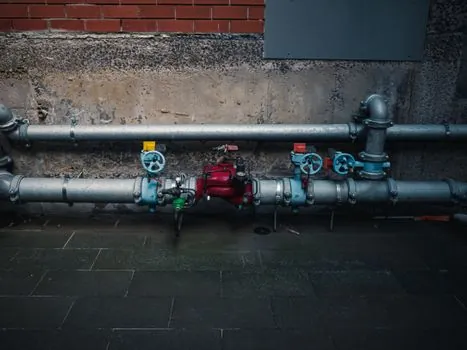
SP-CP is right for warehouse projects that mix potable water risers, compressed-air manifolds, light fire-protection mains, and HVAC condensate lines, because one SKU can serve all four duties with a 50-year life and a polymer skin that meets hygiene requirements [S2][S3].
SP-CP is the wrong pick when the line must be repeatedly bent on site, because the manufacturer prohibits field bending, and thermal processing, electric welding or cutting requires the cut face to be repaired with the non-toxic room-temperature-curing glue supplied by the maker [S3]. It is also the wrong pick for pure drainage of aggressive chemicals at high temperature, where FRP or engineering plastic liners outperform, and for long horizontal runs where plain PE's flexibility and push-fit jointing cut install cost [S1].
Sourcing, standards and trackable signals
Bulk buyers should anchor orders to the same harmonised criteria used in municipal and industrial tendering: 50-year design life, oxygen-barrier inner layer, threaded connection, and a mill certificate covering the galvanising pretreatment, preheating and internal-coating sequence [S3].
Trackable signals over the next two quarters: the 5.0% CAGR forecast for the composite-pipe system market between 2025 and 2035 implies roughly USD 7.9 billion of new revenue by 2027, and the 2026 top-10 Chinese manufacturer list will be reissued in the second half as capacity in plastic-aluminium, plastic-steel, plastic-fibre and plastic-copper variants continues to rebalance toward higher-pressure SKUs [S5][S6]. For warehouse specifiers pairing pipe runs with new automated handling, see how PVC-U pipe selection for industrial facilities and PE pipe selection for school sitework map the adjacent polymer-pipe decisions for the same racking footprint.