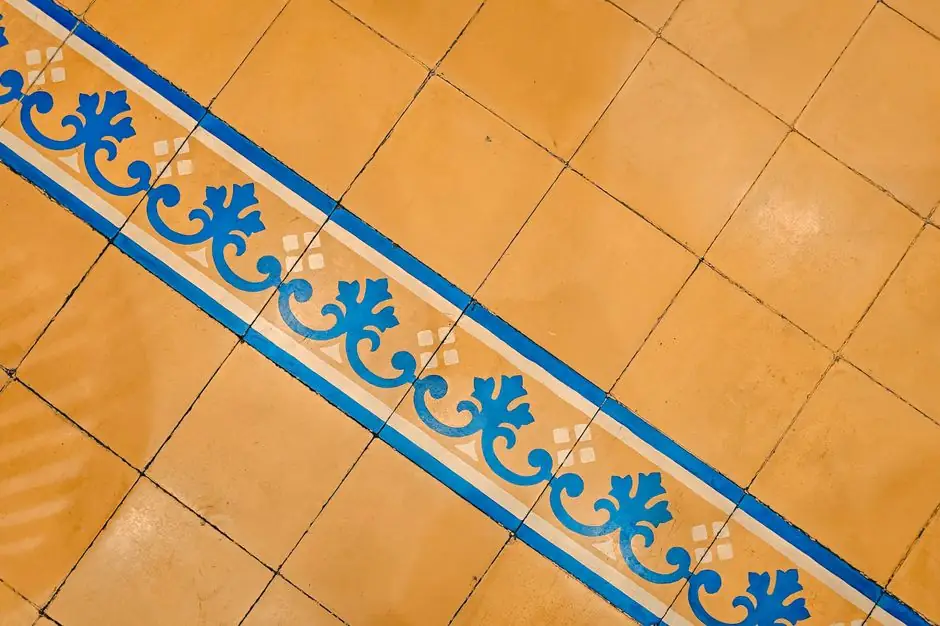
Unglazed quarry tile is the stronger default for industrial kitchens because its through-body ceramic construction resists grease, abrasion, moisture, and harsh cleaning chemicals [S1][S2].
Quarry tile is a hard, extremely durable ceramic tile made from clay, shale, and other natural ingredients that are extruded, dried, and kiln-fired.
Quarry tile is an unglazed ceramic floor tile made from clay, shale, and related mineral ingredients that are mixed, extruded, dried, and kiln-fired above 2,000 degrees Fahrenheit [S2]. Its color extends through the body, so there is no surface glaze to scratch or wear away, while the dense, low-absorption body provides resistance to moisture, abrasion, impact, chipping, and staining [S2].
Glazed ceramic tile is also a ceramic product, but its visible surface is covered by glaze. That distinction matters because an undamaged glaze can provide a smooth cleanable surface, while wear or damage exposes a more absorbent ceramic body and changes cleaning, appearance, and replacement decisions. Quarry tile is not vinyl or another resilient floor covering; it belongs to the ceramic family and is distinguished by extrusion and its unglazed body [S2].
Compare chemical resistance and kitchen exposure
Quarry tile is well suited to heavy-use commercial interiors because its dense, kiln-fired body resists oil, grease, heavy traffic, moisture, and frequent spills.
For glazed ceramic tile, chemical compatibility must also be checked for the glaze, glaze-body interface, grout, and cleaning regimen rather than inferred from the word “ceramic.”
Quarry tile is stain-resisting, and grout paired with quarry tile in a commercial kitchen must resist harsh cleaners, grease, and similar conditions.
Compare safety, wear, and maintenance
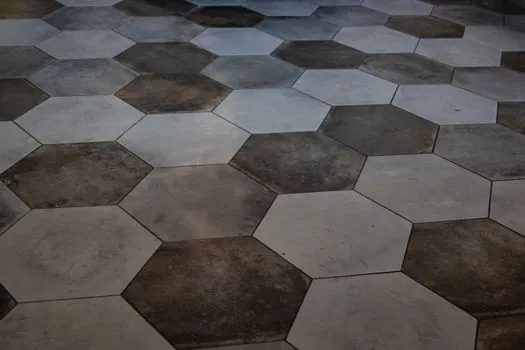
Quarry tile usually provides the more conservative safety and wear solution because its naturally textured face, or a manufactured abrasive face, does not depend on a thin decorative coating remaining intact [S1][S6]. These figures are product-specific and cannot be transferred automatically to every quarry tile or glazed ceramic tile.
Glazed ceramic tile can provide a uniform, scrubbable surface in kitchens where the slip-resistance class is suitable. It may also be easier to coordinate visually with wall tile because the same ceramic family can include both floor and wall formats [S2]. Its weak point is the glaze: scratching, impact chipping, and worn glaze alter appearance and can increase maintenance over time [S2].
Glazed ceramic also supports routine mopping, but alkaline, acidic, abrasive, and grit-bearing cleaners must be checked against both the glaze and grout. In either system, abrasive pads and unremoved grease can damage the finish or joints.
Select the installation system, not the tile alone
A quarry-tile floor performs as an assembly, so adhesive, grout, sealer, transitions, and substrate preparation carry equal specification weight. The grout must resist the same cleaners, grease, and moisture as the tile [S8].
This detail can affect thresholds, equipment loads, and accessibility at cooking-line interfaces. Shaw Contract offers Fieldstone quarry tile in a Tumble style, and its slip-resistant surface is particularly effective in commercial areas exposed to moisture, cleaning agents, spills, or heavy foot traffic.
Adhesive selection should account for the service conditions and tile format. The distinction between C1 and C2 tile adhesives is useful at specification stage, but neither classification by itself establishes chemical, thermal, or heavy-traffic suitability. Substrate movement, thickness, downtime, and cleaning exposure should be reviewed with the adhesive and grout manufacturers before installation.
Match the option to the kitchen zone
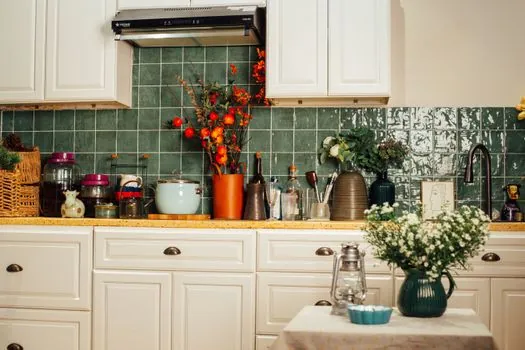
Use unglazed quarry tile where hot water, grease, impact, abrasive traffic, frequent mopping, and harsh cleaners dominate. It is suited to commercial kitchens, back-of-house restaurant areas, cafeterias, janitorial rooms, receiving zones, and other high-impact spaces where long service life and a slip-resistant surface outweigh design variety [S1][S4].
Use glazed ceramic tile where visual coordination, a smooth washable face, and lower-thickness transitions matter more than severe abrasion or impact. It is a reasonable option in preparation, storage, and less demanding service areas when the manufacturer’s chemical-resistance documentation and tested slip classification cover the actual cleaning and spill regime.
Quarry tile is the better choice for a heavily worked production kitchen, particularly around cooking, washing, receiving, or dish-handling zones. Glazed ceramic is the better choice for a low-abrasion zone where the design intent must remain uniform and the floor does not receive heavy impacts. Neither option is a good shortcut for a mixed kitchen: specify zones separately when a heavy-duty quarry field meets a smoother glazed field.
Limitations that affect service life
Slip performance depends on the tile surface, maintenance, footwear, environmental conditions, and spills; no flooring can guarantee that every user will avoid a fall [S2]. Quarry tile may also stain despite its through-body color, so grease, pigments, and reactive spills require prompt removal and a compatible sealer [S2].
Glazed ceramic fails differently. Surface scratching, glaze chipping, and uneven wear can make cleaning harder and produce conspicuous repairs. Quarry tile can chip at exposed edges or suffer grout deterioration when joints are not chemically durable [S2][S8]. Concrete movement, water migration, or an unsuitable substrate can also damage either ceramic system, so a drainage design, movement joints, and substrate specification remain essential.
Cost should be evaluated over service life rather than purchase price alone. Quarry tile may cost more initially than some alternatives, but its wear resistance and relatively simple sweeping-and-mopping maintenance can reduce life-cycle expense [S1]. The complete estimate must include labor-intensive joint preparation, tile cutting, transitions, sealer, downtime, cleaning chemistry, and expected replacement of grout lines.
Set a defensible purchase specification
Require a written chemical-compatibility schedule that lists every cleaner, degreaser, acid, sanitizer, and spill-control product used in the kitchen, then map each product to the tile, glaze, grout, adhesive, and sealer manufacturer’s documentation [S1][S8]. Do not accept a generic “chemical-resistant” statement because acid concentration and exposure duration materially change the result [S2].
Also require the product’s nominal thickness, face texture, absorption or body classification, slip test data, exterior suitability where relevant, factory dimensions, trim details, and transition method. Metropolitan Ceramics cartons illustrate why quantity planning must use actual coverage: 6 x 6-inch quarry tile is supplied as 28 pieces covering 7 square feet, while 8 x 8-inch tile is supplied as 16 pieces covering 7.1 square feet [S2].
The final acceptance test should include inspection after the first heavy cleaning cycle, checking sheen loss, color change, grout discoloration, residue accumulation, edge damage, and traction at the specified maintenance condition. Quarry tile with a compatible grout and penetrating sealer is the preferred assembly for a demanding industrial kitchen; glazed ceramic is justified only when its tested finish, slip level, chemical compatibility, and joint system match the actual zone.