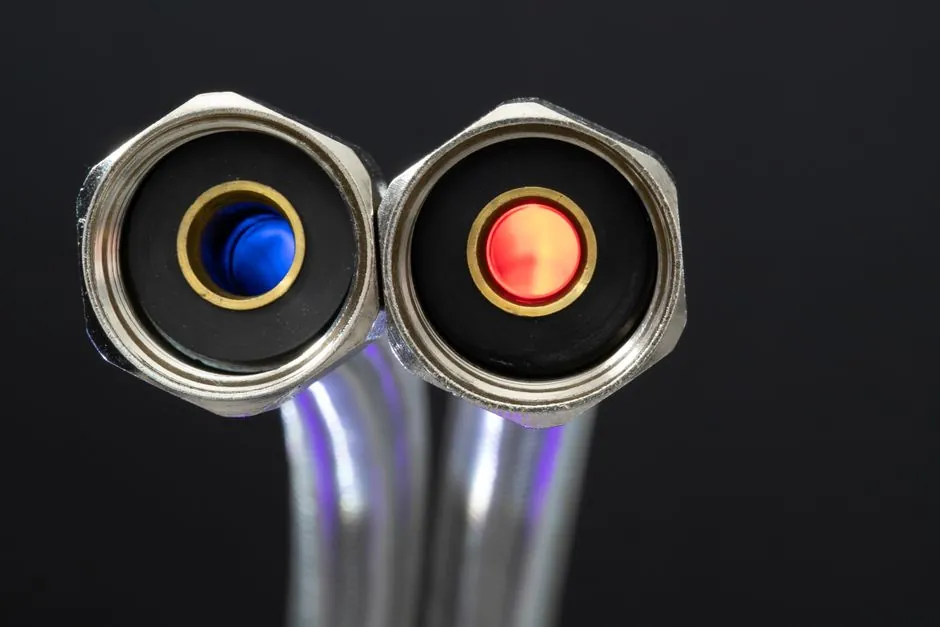
A coaxial chemical anchor system uses concentric chambers and a common mixing nozzle, while a side-by-side system uses adjacent chambers and separate fluid paths.
Coaxial packaging commonly reaches 410 ml at 10:1, while side-by-side systems extend to 1500 ml and cover 1:1, 2:1, 3:1, and 10:1 ratios [S4].
Cartridge geometry, ratio, and dispenser matching
Dispenser compatibility depends on cartridge geometry, nominal volume, component ratio, barrel dimensions, plunger arrangement, and the thrust needed for viscous resin. A shared 300 ml, 380 ml, or 410 ml label does not establish compatibility because coaxial and side-by-side cartridges require different piston arrangements [S1].
A coaxial cartridge places component A in the outer chamber and component B in the inner chamber. The dispenser must drive both piston systems simultaneously so the streams enter the static mixer in the specified ratio. Side-by-side packaging places the components in adjacent chambers, but each chamber still requires an independently driven piston within a matched dual-plunger tool [S4].
Common chemical anchor ratios include 1:1, 3:1, 5:1, and 10:1. These are catalog values for discrete anchor-cartridge systems, while practical dispenser selection must also cover the ratios printed on the filled cartridge, including 2:1 where specified by the manufacturer [S1][S3].
Static mixing is part of the dispensing system rather than a separate material property. A narrow nozzle with internal baffles folds the two streams together, but correct geometry, equal-ratio drive, and a fresh mixer are required to produce a homogeneous cured mass [S2].
For installation decisions, treat the dispenser as a controlled component of the chemical anchor system. Hole diameter, cleaning, working temperature, gel time, and cure time must come from the filled product's technical data sheet rather than inferred from cartridge size [S1].
Coaxial systems: compact packaging and narrower selection
C-CN coaxial cartridges are available in 150 ml, 380 ml, and 410 ml sizes at a 10:1 ratio, and they use a specialized applicator for the 380 ml and 410 ml formats [S4]. This makes coaxial packaging most straightforward where the anchor manufacturer specifies a 10:1 product and the installation quantity aligns with a 380 ml or 410 ml cartridge.
The 150 ml coaxial format is the exception because it can be used with a standard mastic gun. The larger formats require simultaneous movement of the inner and outer pistons, so cartridge diameter, length, and nozzle geometry must match the dispenser specification [S4].
Coaxial packaging has a narrower ratio envelope than side-by-side packaging in the cited product families. If the filled anchor uses 1:1, 2:1, 3:1, or 5:1, a coaxial cartridge cannot be selected merely because its outer shape resembles the side-by-side pack. The ratio and chamber arrangement must both match [S3][S4].
Coaxial hardware is not the right choice for a contractor carrying several unrelated 2K anchor formulations unless every cartridge has been verified against the same gun. A dedicated 10:1 coaxial tool can be highly efficient for one product family, but it adds a tool-specific inventory constraint compared with a qualified multi-format dispensing platform [S1][S4].
Side-by-side systems: ratios, volume, and dedicated tooling
S-SN side-by-side cartridges span 345 ml, 385 ml, 400 ml, 585 ml, 600 ml, 825 ml, 900 ml, 1125 ml, and 1500 ml, with 1:1, 2:1, 3:1, and 10:1 options [S4]. This range makes the format more practical when one site uses several anchor products, larger holes, or more anchors per shift.
A dispensing tool must be compatible with the cartridge design and component ratio, and the 150 ml C-CN coaxial cartridge may be used with a standard mastic gun [S1] [S4].
A specific example is the L77-345 manual applicator, which is a 10:1 tool designed for 345 ml side-by-side chemical anchoring cartridges [S6]. That model illustrates why capacity, ratio, and format must be matched as a set: a 345 ml nominal cartridge does not justify ordering a coaxial 380 ml gun or an unrelated 400 ml side-by-side dispenser.
Side-by-side systems also appear in the broad expansion anchor tooling ecosystem, but a mechanical anchor gun is not a chemical anchor dispenser. Chemical anchor equipment must meter both resin components and feed them through a static mixer, rather than mechanically driving an expansion sleeve [S8].
Decision comparison across the main selection criteria
Coaxial versus side-by-side selection can be reduced to four controls: available ratio, maximum volume, dispenser complexity, and packaging diversity. Coaxial formats cited in the 150–410 ml range concentrate on 10:1 products and offer a relatively compact package, while side-by-side formats extend to 1500 ml and provide a broader ratio range [S4].
The decision rule is direct: use coaxial when the approved anchor is a 10:1 coaxial cartridge and its dimensions match the gun; use side-by-side when the approved product set includes different ratios, larger cartridge volumes, or a supplier-supported dual-cartridge range. If neither format matches the label and technical data sheet, change tools or cartridges, not the mixing ratio [S1][S2].
Manual, pneumatic, and cordless dispensing

Pneumatic guns use compressed air to drive the piston and provide adjustable output pressure. They suit sites with existing compressed-air service and repetitive anchor installation because they reduce manual fatigue and provide more consistent thrust than a hand-operated frame [S2].
Cordless guns use a motor and battery to dispense, combining controlled thrust with no compressor or hose requirement. Manual tools remain practical for occasional work and small jobs, while pneumatic or cordless equipment is the stronger choice for sustained production where fatigue threatens dosing consistency [S2].
Powered equipment does not resolve cartridge incompatibility. A motor can supply high thrust, but it cannot compensate for incorrect chamber geometry, an unmatched ratio, worn mixing nozzles, or pistons that do not advance together [S1][S2].
Installation controls and failure modes
Wrong ratio, incomplete mixing, and cure inside the nozzle can produce a soft or inconsistently bonded mass that fails to reach the rated load. Low temperature increases viscosity and extrusion resistance, while the 10:1 example gun specified for chemical anchoring confirms that high-ratio formats can demand dedicated hardware rather than a general sealant gun [S1][S6].
Use a fresh static mixer for each work session or whenever the product instructions require it. Replace the nozzle rather than attempting to clear cured material with a tool that can contaminate or damage the mixing passage. Proper piston seating and a matched barrel are equally important because leakage or uneven drive directly compromises ratio control [S2].
For a structural installation, verify the filled cartridge against the anchor manufacturer's technical data sheet and assessment documentation. Installation variables such as hole diameter, hole cleaning, working temperature, curing time, and substrate condition remain product-specific controls; the cartridge format does not establish structural suitability [S1].
Anchor cartridge volume also affects inventory planning because the theoretical fill does not equal the usable volume after static-mixing losses. For volume-based estimating and anchor-count calculations, use the separate chemical anchor cartridge size and anchor count guide alongside the filled product's yield data.
Standards, qualification, and procurement records
ISO 9001 and CE are listed for one empty-cartridge packaging supplier, but they are not a substitute for qualification of a filled structural anchoring product. The same supplier lists 150–585 ml side-by-side and coaxial shells in 1:1, 3:1, 5:1, and 10:1 ratios, with bodies available in polypropylene, polyamide, PBT, and polyethylene [S3].
One packaging source states that a 0.012 in crack-width dowel application is tested under ICC-ES AC308 for seismic rating. This is an application-specific test claim, not blanket approval for every cartridge, resin, substrate, or installation [S3].
Procurement records should identify cartridge format, filled and nominal volume, component ratio, barrel length and diameter, required thrust, piston configuration, mixer type, and the exact anchor formulation. Retain the filled product's technical data sheet and evaluation documents with the gun specification. For broader system boundaries, compare the chemical anchor package against capsule installation and the dispensing controls required by each delivery method.
A controlled dispenser specification should state the approved cartridge dimensions and ratio, not merely a nominal volume. Record the gun model, mixer replacement practice, service checks, and operating temperature for each installation crew, because cartridge geometry and resin viscosity determine the minimum practical tool performance.