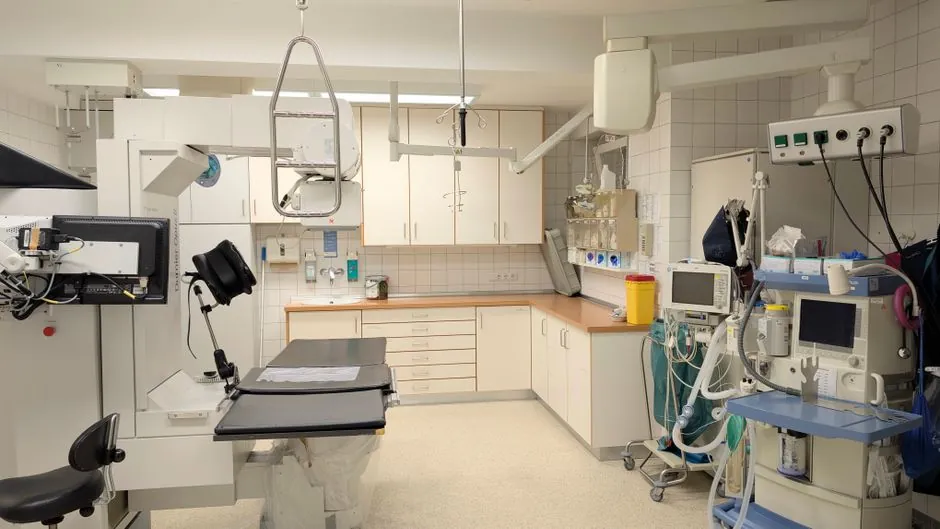
Fused quartz and engineered quartz surfaces occupy two distinct roles in medical hardware: the former serves as an implantable-grade, optically transparent ceramic in diagnostic and microfluidic components, while the latter dominates nonporous healthcare interior surfaces. Both are governed by the same FDA risk-based biocompatibility framework covering material composition, manufacturing route, and intended anatomical contact [S1].
Specifiers in 2026 typically narrow quartz choices across four decision gates: ISO 10993 cytotoxicity/sensitization/irritation data for the finished, sterilized part; sterilization-method tolerance (steam autoclave at 121–134 °C, gamma at 25–40 kGy, or EtO); mechanical or optical performance (CTE, UV transmittance, flexural strength); and supplier-grade documentation including USP Class VI, USP Class III, or FDA Drug Master File cross-reference [S4][S3].
Fused quartz vs engineered quartz vs quartz-filled composites
Fused quartz (SiO₂ ≥ 99.95%) delivers a coefficient of thermal expansion near 0.55×10⁻⁶/°C across 20–300 °C, optical transmission above 80% in the 260–2500 nm band, and continuous service temperatures above 1000 °C, which is why microfluidic chips, UV sterilization lamp envelopes, and analytical cuvettes rely on it rather than borosilicate [S5]. The same purity profile supports bio-inert behavior in ISO 10993-5 cytotoxicity panels when parts are cleaned and packaged to controlled residuals [S1].
Engineered quartz surfaces (resin-bound quartz aggregate, typically 90–93% crystalline quartz with 7–10% polymer binder) are nonporous, GREENGUARD Certified for low VOC, GREENGUARD Listed for microbial resistance, and carry NSF/ANSI 51 food-contact certification on most colors, which is why they appear at reception desks, nurse stations, and lab benchtops rather than inside the device [S2]. Fire rating is Class I (A) per the manufacturer datasheet [S2].
Quartz-filled PEEK and quartz-reinforced epoxy compounds sit between the two extremes, trading the optical clarity of fused quartz for higher fracture toughness and moldability, but they inherit polymer-matrix limits on sterilization cycles and must be qualified per ISO 10993-1 contact-duration tables (limited, prolonged, or permanent) before any clinical use [S3][S4].
Biocompatibility and sterilization gates
FDA's risk-based biocompatibility review weighs material identity, manufacturing process, intended anatomical contact, and exposure duration together, so the same quartz grade can clear a Class II diagnostic handle but fail an implant filing if leachable residuals shift [S1]. ISO 10993-1 contact-duration tiers drive the test panel: limited (≤24 h), prolonged (24 h to 30 days), or permanent (>30 days) [S3].
Steam autoclaving at 134 °C for 18–20 minutes is benign for fused quartz but can cloud resin-bound engineered surfaces above 150 °C; gamma irradiation at 25–40 kGy can discolor standard polymer binders; and EtO leaves residues that demand a 24–72 h post-sterilization aeration cycle, which is why material-supplier EtO residue data is a hard prerequisite rather than a footnote [S3][S4]. Fused quartz tolerates all three modalities without measurable optical or dimensional drift at the typical medical-dose ranges [S5].
Material-grade certificates matter: medical-grade plastics must ship with full traceability and ISO 10993 or USP Class VI test data, while industrial-grade equivalents of the same base resin do not, and the difference shows up at the regulatory submission rather than on the data sheet [S4].
Where each quartz form fits in a medical device
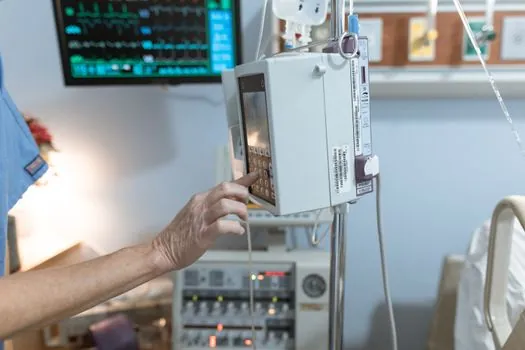
Implantable and invasive applications, including diagnostic windows, endoscopic light guides, microfluidic lab-on-a-chip substrates, and analytical flow cells, are dominated by machined fused quartz because purity, CTE, and UV transparency compound into measurably better signal-to-noise [S5]. The same quartz material family underpins lamp envelopes for 254 nm germicidal sources used in water and surface disinfection skids.
Non-invasive device exteriors, instrument housings, and clinical-surface countertops shift toward engineered quartz and glass quartz composites for scratch resistance (Mohs ~7), zero sealant maintenance, and documented microbial resistance under GREENGUARD [S2]. Patient-room casework, lab benchtops, and reception desks are the visible deployment zone [S2].
Hybrid parts, including quartz-filled PEEK spinal cages and quartz-loaded epoxy imaging-coil formers, sit in the regulated-implant tier: they must clear full ISO 10993 panels for permanent contact and ship with mechanical-fatigue data (typically 10⁷ cycles at 5–10 Hz) tied to the finished sterilized geometry, not the neat resin [S3][S4].
Comparison: fused quartz, engineered quartz surface, quartz-filled polymer
Three criteria line up the main options for specifiers: purity, sterilization tolerance, and typical deployment. Fused quartz wins on SiO₂ purity (≥99.95%), CTE (~0.55×10⁻⁶/°C), and continuous service temperature (>1000 °C), accepts all three standard sterilization modes, and is specified for implantable diagnostics, UV lamp envelopes, and microfluidic chips [S5]. Engineered quartz surfaces deliver 90–93% crystalline quartz in a resin matrix, are nonporous with GREENGUARD microbial-resistance listing and Class I (A) fire rating, and are used for healthcare interior surfaces rather than for device internals [S2]. Quartz-filled polymers trade some purity and thermal ceiling for fracture toughness and moldability, pass ISO 10993 panels appropriate to their contact duration, and are deployed in load-bearing implant and imaging components where optical clarity is not required [S3][S4].
Cost and lead-time track inversely with purity: engineered quartz surfaces are stocked in hundreds of colors with short lead times, fused quartz custom parts are quoted at 4–8 week lead times for prototype geometries, and quartz-filled PEEK compounds carry premium resin pricing and require mold-flow analysis before tooling release [S4][S5].
Selection criteria that drive the final call

Body-contact duration is the first filter: limited-contact diagnostics accept a wider quartz grade set than permanent implants, which force full ISO 10993 panel data plus fatigue and wear evidence on the sterilized finished part [S1][S3]. Sterilization mode is the second: any polymer-bound quartz grade must be qualified against the exact cycle the hospital or contract sterilizer will run, not a generic autoclave or gamma dose [S4].
Mechanical and thermal load are the third filter: fused quartz remains dimensionally stable across cryogenic to 1000 °C swings, while resin-bound surfaces are limited to roughly 150 °C continuous, and quartz-filled polymers sit between depending on resin matrix [S5]. Optical and surface requirements, including UV transmittance for diagnostic windows, scratch resistance for high-touch interior surfaces, and reflectivity for imaging coils, sit on top of the first three and usually decide the final grade [S2][S5].
Supplier documentation closes the decision: USP Class VI or USP Class III test reports, FDA Drug Master File letters of authorization, lot-level traceability, and sterilization-validation summaries are the artifacts a regulatory reviewer expects, and the absence of any one of them forces requalification at the OEM's cost [S3][S4][S6]. For teams weighing broader advanced material and finishing material choices alongside quartz, the same ISO 10993 and sterilization gates apply, so quartz tends to survive the trade study only when purity, CTE, or UV transparency are non-negotiable.
Standards and sourcing reference
Core documents: FDA guidance on materials in medical devices and the 2021 discussion paper on conveying materials information (docket FDA-2021-N-0334) frame the US regulatory expectation [S1]; ISO 10993-1 governs the biocompatibility risk-based approach with contact-duration tiers, USP Class VI covers plastic biocompatibility testing, and NSF/ANSI 51 governs food-contact surfaces relevant to clinical kitchens and lab benchtops [S2][S3][S4]. Sterilization compatibility is verified per ISO 11137 (gamma), ISO 17665 (steam), and ISO 11135 (EtO) against the candidate quartz grade [S3].
Trackable signals to watch: FDA's materials-information framework moving from the 2021 discussion paper toward a finalized labeling rule, ISO 10993-1 updates that re-tier contact duration, and any new GREENGUARD or NSF/ANSI 51 revisions affecting engineered quartz surfacing. For procurement teams running a broader spec exercise across chemical material and copper-bearing components, the same documentation discipline applies; quartz stays in the build only when its purity, thermal, or optical profile cannot be matched by a polymer or metal substitute. Engineers weighing material options for adjacent device subsystems can compare selection logic against broader spec-first material guides and industrial finishing choices when quartz is not the binding constraint.