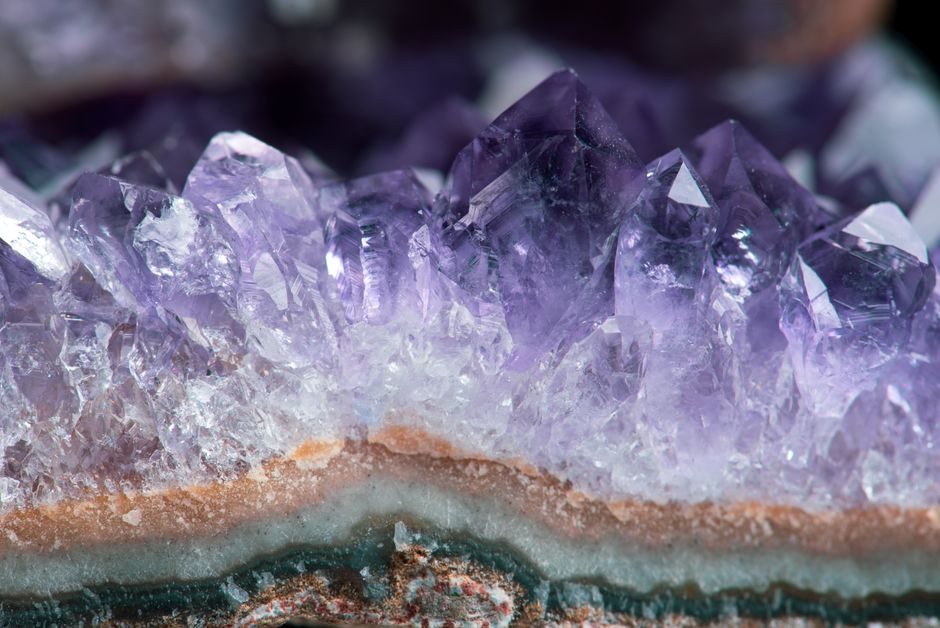
Quartz material in B2B specification work is not one product but four working families — natural crystalline quartz, fused quartz, fused silica, and sintered quartz ceramic — each pinned to different purity, thermal-shock and impurity ceilings that decide which process they enter [S1].
Industrial ceramic-grade quartz is built from high-purity silica in crystalline form, with thermal and chemical stability chosen for environments that punish ordinary glasses and metals [S1]. Semiconductor-grade material extends that envelope further, with typical applications including quartz crucibles for silicon single-crystal growth, quartz-glass bell jars for lithography, and quartz tubes/boats/holders for IC epitaxy, diffusion and lithography lines [S3].
Defining the Four Working Families
The most useful working split is by manufacturing route, not by brand name, because the route fixes the impurity floor and the maximum working temperature.
Quartz ceramic is described as primarily high-purity silica in crystalline form, with thermal and chemical stability chosen for environments that require resistance to heat and corrosion and where structural integrity under extreme conditions is non-negotiable [S1]. For semiconductor process work, the same high-purity silica concept shows up as quartz crucibles for Si single-crystal pullers, bell jars over lithography tools, and tubes/boats/holders that ride the diffusion and epitaxy furnaces [S3].
Selection Criteria That Actually Move a Spec
Three parameters separate one quartz family from the next in a buyer-facing spec: purity (especially Fe, Na, K, Cu, Li, OH), maximum continuous service temperature, and thermal-shock tolerance. GlobalSpec's product description ties quartz ceramic to "exceptional thermal and chemical stability" as the load-bearing selection rationale, not to any single numeric ceiling [S1].
Reference standards also use quartz as a calibration artefact rather than a process material. Sigma-Aldrich's BCR068 is a JRC/BCR-certified quartz-particle-size reference at 160–630 μm, in a series that also covers BCR067 at 2.40–32.00 μm, BCR069 at 14–90 μm, and BCR070 at 1.20–20.00 μm — the gradient exists so labs can validate sieving, laser-diffraction and sedimentation methods against a traceable material [S2]. For the quartz material families used in process hardware, the same SiO2 chemistry is repackaged, not redefined.
Quartz vs Fused Silica vs Quartz Ceramic: Side-by-Side
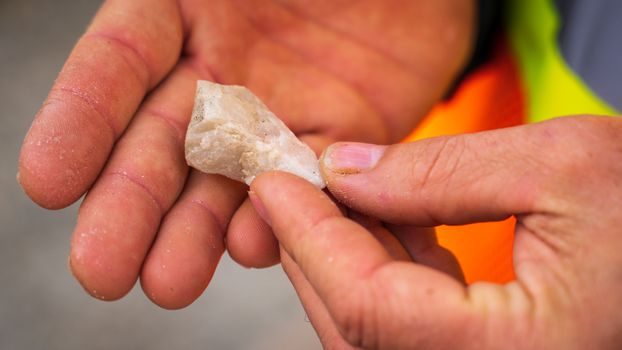
Fused silica synthesised from SiCl4-type precursors gives the lowest trace-metal floor and the cleanest UV/IR transmission, which is why semiconductor OEM datasheets steer EUV and DUV lithography bell-jar work to fused silica rather than natural fused quartz. Natural crystalline quartz remains the only option where piezoelectric coupling is required — for SAW filters, resonators, and timing crystals the alpha-quartz lattice is non-negotiable, and the related piezoelectric crystal subcategory is built specifically around that lattice behaviour. [S3]
Quartz ceramic sits at the other end of the form-factor axis: it is a sintered body, so it can be cast as plates, tubes, crucibles and custom furnace furniture that fused silica cannot be economically drawn or slumped into. The trade-off is that sintered bodies carry some residual porosity and a lower thermal-shock rating than a monolithic fused-silica bell jar. For reference-material work — particle-size standards, XRF fusion discs, cosmetic/pharma calibration — only the bulk chemistry of the SiO2 matters, which is why the BCR068-series references are simply described as "quartz particles" with no claim of crystal form [S2].
Who Quartz Is For — and Where It Is the Wrong Pick
Quartz-family materials are the right call for semiconductor hot zones (crucibles, bell jars, diffusion tubes), high-purity analytical labware, UV/IR optical windows, piezoelectric timing devices, and high-temperature thermal-shock structural parts where metal alloys would creep or contaminate [S1][S3]. They are also used as the substrate for sieve calibration and as a cosmetic/pharmaceutical reference particulate when a defined size bracket between 1.20 μm and 630 μm is required [S2].
Quartz is the wrong pick for hydrofluoric-acid service (HF attacks SiO2), for molten alkali-metal work, for any application above the devitrification ceiling of fused silica, and for structural load cases that need toughness rather than hardness.
Standards, Sourcing and Reference Signals to Track

There is no single ISO or ASTM number that defines "industrial quartz ceramic" as a material class in the research reviewed; instead, quartz ceramic is described generically by composition and property set, and compliance is shown against application-specific standards (semiconductor OEM specs for crucibles and bell jars, optical-grade specs for transmission windows, JRC/BCR for reference particulates) [S1][S2][S3]. For traceability, the JRC BCR® series at 160–630 μm particle size, supplied as 100 g packs at $381.00 per unit, is one of the few certified-reference artefacts a lab can cite by catalogue number [S2].
The next trackable signals are the semiconductor-process roadmaps that move bell-jar and crucible specifications — EUV pellicle and DUV hard-pellicle adoption tend to tighten fused-silica trace-metal and OH specs first, and the natural crystalline quartz side moves with SAW/BAW filter volumes used in 5G and Wi-Fi front-end modules.
Component reference pages worth checking: magnetic material.