
The five commercial permanent-magnet families — ferrite, NdFeB, SmCo, Alnico, and rubber-bonded — divide roughly 85% of the cost-weighted market between ferrite, SmCo, and NdFeB alone, with sintered NdFeB holding the highest energy product per unit volume [S2].
Material choice is constrained by four engineering axes: magnetic output (Br, HcJ, BHmax), service temperature range, corrosion and mechanical behaviour, and unit cost. A spec-driven map of these families is laid out in Magnetic Material Types and Classifications, and the corresponding handling and field-check rules are covered in Magnetic Material Installation: Spec Gates, Handling Rules, and Field Checks.
Ferrite (Ceramic) Magnets: Lowest Cost, Limited Output
Ferrite magnets use SrO/ BaO and Fe2O3 as the base composition and remain the lowest-cost permanent-magnet option, with abundant raw material supply and a fully established manufacturing base [S2][S3]. They exhibit excellent high-temperature performance — grades are routinely rated for continuous service to 250 °C — and outstanding corrosion resistance without surface coating, but their magnetic output is markedly lower than the rare-earth families, and low-temperature performance is generally limited to about –40 °C [S2]. Mechanical behaviour is brittle: ferrite magnets chip and lose corners easily under impact or clamping stress, and their weak magnetic force relative to NdFeB or SmCo rules them out where compact, high-flux-density assemblies are required [S3]. On a tonnage basis ferrite is dominated by flexible grades used in sound-deadening and gasketing, while rigid sintered ferrite serves motors and actuators [S2].
NdFeB: Highest Energy Product, Weakest Thermal and Corrosion Margins
Sintered NdFeB delivers the highest maximum energy product (BHmax) of any commercial permanent magnet, with a favourable price-to-performance ratio and the ability to be machined into special shapes [S2][S3]. The trade-off is hard limits: NdFeB is not resistant to high temperature — common grades lose irreversible flux above roughly 80–200 °C depending on grade — and it is highly susceptible to corrosion, so nickel, zinc, or epoxy coatings are standard, and it is mechanically brittle [S3]. These constraints push designers toward SmCo or Alnico for elevated-temperature or chemically aggressive environments, and toward ferrite where cost dominates and flux density is not critical. Sintered NdFeB is also limited to relatively simple geometries; injection-molded bonded NdFeB trades energy product for shape flexibility, while bonded variants are also available in extruded, compression-bonded, and roll-formed forms [S2].
SmCo and Alnico: Heat Resistance and Stability, at a Price
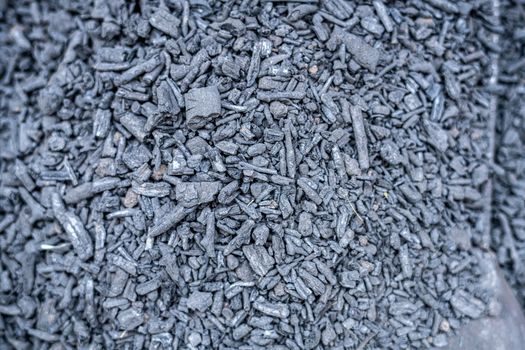
SmCo magnets carry the rare-earth premium but buy high heat resistance, good temperature stability, and intrinsic corrosion resistance without coatings, making them the default pick for aerospace, military, and high-temperature motor applications above the NdFeB ceiling [S3]. Their cost per kilogram is the dominant penalty — typically several times NdFeB — and they remain brittle like other intermetallic magnets. Alnico magnets offer excellent temperature characteristics and corrosion resistance but suffer from poor interference resistance: they are easily magnetized or demagnetized by stray fields, and they have been largely displaced in new designs by NdFeB and SmCo where higher coercive force is required [S3].
Soft Magnetic Materials: Where Ferrites and Amorphous Ribbons Sit
Soft magnetic materials — including Mn-Zn and Ni-Zn ferrites and amorphous metallic ribbons such as Metglas 2605CO (Fe80B20) — are selected for high-frequency magnetic circuits, not for remanent field strength [S6][S7]. Ferrites are ceramics featuring very high resistivity (between 10⁶ Ω·m and 10¹² Ω·m), which allows them to be used at frequencies where eddy-current losses for metals become excessive and makes them ideal soft magnetic materials at very high frequencies; their disadvantages are low magnetic saturation (typical range 0.15 T to 0.6 T), low Curie temperature Tc (330 °C to 585 °C), and poor mechanical properties including hardness and brittleness [S7]. Amorphous ribbons extend the option set with very low core losses across a frequency range that overlaps switched-mode power and pulsed transformer designs [S6]. The relevant process context for magnetic sensor signal-conditioning front ends and electromagnetic flowmeter magnetic circuits is the same trade-off curve: high resistivity, low loss, limited saturation.
Selection Criteria: Matching Output, Temperature, Geometry, and Cost
MMPA Standard 0100-00 is the reference specification for permanent magnet materials, covering definitions, classification, magnetic and thermal properties, mechanical characteristics, dimensions and tolerances, and inspection/testing for alnico, ceramic, rare-earth, and iron-chromium-cobalt families [S4][S5][S8]. Sintered fully dense anisotropic magnets give maximum energy product for a given size and weight but are limited to simple geometries and require careful handling because of brittleness; injection-molded magnets accept complex geometries, insert and over-molding, and tight tolerances, but the magnetic phase is diluted by the binder, reducing energy product [S2]. A practical comparison for design review:
Material | Energy product class | Max service temp (typical) | Corrosion behaviour | Cost band | Geometry flexibility [S2][S3] Ferrite (sintered) | Low | to 250 °C | Excellent, uncoated | Lowest | Simple shapes, brittle NdFeB (sintered) | Highest | up to ~200 °C (grade-dependent) | Needs Ni/Zn/epoxy coating | Medium | Simple shapes only NdFeB (bonded) | Medium | lower than sintered | Coating usually required | Medium | High (injection molded) SmCo | High | 250–350 °C | Excellent, uncoated | High | Simple shapes, brittle Alnico | Medium | 600 °C+ | Excellent | Medium | Cast, simple shapes Rubber-bonded | Very low | magnetic force drops at 100 °C | Corrosion-resistant | Low | Flexible, foldable, cuttable
Failure Modes and Spec Pitfalls in the Field
Magnetic output changes with temperature, and at the extremes a wrong material grade can cause irreversible demagnetization and device failure [S2]. Alnico's low coercive force makes it vulnerable to stray-field demagnetization during shipping, handling, and assembly, so magnet-circuit designers should specify keepering or shielded packaging; NdFeB's corrosion sensitivity means a damaged coating on a sintered part will propagate rust and can crack the magnet, so epoxy or Ni-plating integrity is a routine receiving-inspection item; SmCo's brittleness produces chipping under point loads, and clamping forces on SmCo or sintered NdFeB should be distributed through non-magnetic pole shoes [S2][S3]. For the magnetic drive pump and magnetic level gauge product classes, where rare-earth magnets operate inside wetted or hazardous-area envelopes, the spec must lock both material grade and surface protection together, not one or the other.
Standards Reference and Sourcing Notes
MMPA 0100-00 remains the advisory standard for permanent magnet materials and is the citation engineers should include on drawings and procurement documents; the standard describes definitions, classification, magnetic and thermal properties, surface characteristics, mechanical characteristics, dimensions, tolerances, and inspection/testing across alnico, ceramic, rare-earth, and Fe-Cr-Co families [S4][S5][S8]. For permanent-magnet applications that also interface with magnetic-particle inspection or magnetic-sensor instrumentation, see magnetic particle tester and magnetic sensor reference pages. Two trackable signals to watch in the next sourcing cycle: SmCo price movement relative to NdFeB on a per-mega-gauss-oersted basis, and any new low-coercivity-loss NdFeB grades that extend the upper temperature ceiling without forcing a switch to SmCo.