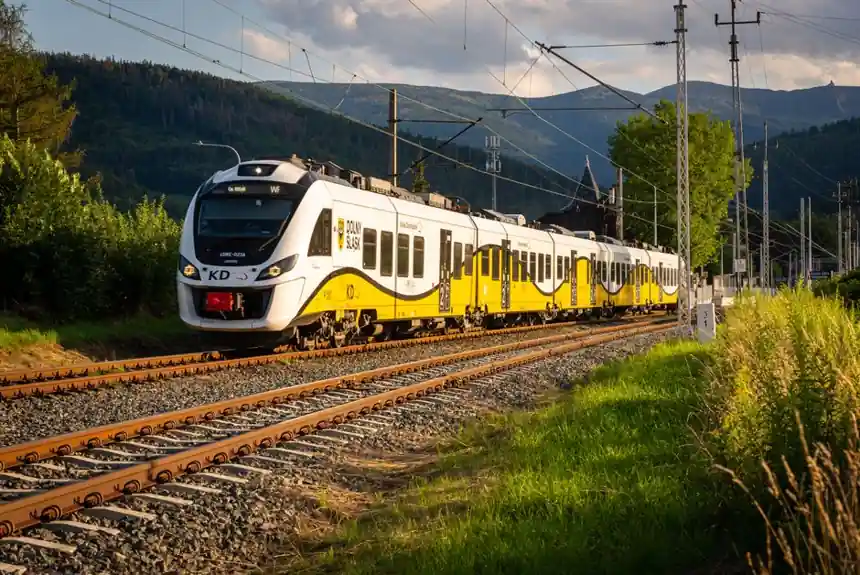
Rail orders announced in 2026 include up to 90 Stadler locomotives for Infrabel and 63 Tango Nordic trams for Helsinki, while Alstom has started manufacturing 32 additional three-car driverless Chennai trainsets.
The order book spans passenger multiple units, metro and tram systems, freight wagons, sleeping coaches and engineering locomotives, with several contracts including maintenance or options for additional vehicles [S1][S5].
Passenger fleet orders cover cities, regions and overnight travel
Alstom began manufacturing 32 additional three-car driverless trainsets for Chennai under a €135 million contract that also includes 15 years of maintenance, following an earlier 36-trainset order for the city’s Phase II network [S1]. The follow-on order shows how framework delivery, phased network opening and long-term service obligations can convert an initial fleet need into repeat procurement.
The €135 million contract for 32 additional three-car driverless Chennai trainsets includes 15 years of maintenance.
A Chinese rolling-stock procurement covers 140 locomotives and 35 intercity EMUs. These quantities show that 2026 procurement was not confined to single demonstration projects: regional trainsets, intercity fleets and sleepers were all active order categories.
Locomotive procurement is split by operational duty
Infrabel selected Stadler for a framework covering supply and maintenance of up to 90 locomotives for its engineering fleet [S5]. The procurement targets infrastructure-service vehicles rather than mainline passenger haulage, so traction, work equipment, crew compatibility and engineering-site operating conditions belong in the award assessment.
China’s procurement package combined 140 locomotives with 35 intercity EMUs [S1]. That combination matters to suppliers because passenger and freight orders can share manufacturing, testing and delivery infrastructure while imposing different acceptance requirements, including traction performance, passenger-carriage systems or freight-wagon loading arrangements.
Tram and metro orders add options beyond base quantities
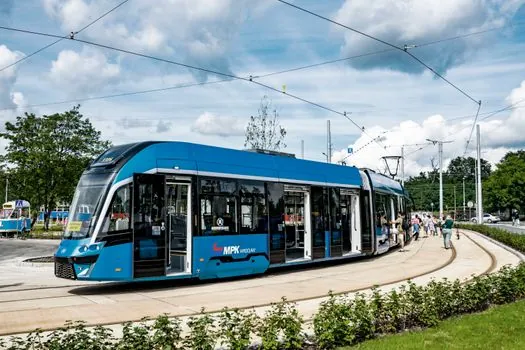
A joint order for 50 low-floor trams was awarded to Škoda Group for operators in Essen, Krefeld and Oberhausen, with options for 29 additional vehicles [S5]. The base-to-option ratio is 50:29, which makes option pricing, delivery slots and supplier capacity material to the commercial comparison.
Helsinki’s transport authority signed a contract with Stadler for 63 Tango Nordic trams on November 11, 2026, following legal challenges by the losing bidder [S5]. Separately, Sporveien increased its order for CAF M4000 metro trainsets [S5]. These transactions cover different urban geometries and passenger capacities, so route loading, platform length, accessibility, ventilation and maintenance responsibility must be evaluated separately.
For procurement teams comparing tram and metro suppliers, base quantity alone is insufficient. The 50-tram German package includes 29 options, the Helsinki contract covers 63 vehicles, and the Oslo award is an increase to an existing M4000 order [S5]. Track record, vehicle length, platform compatibility and the validity of escalation clauses matter as much as the headline unit count.
Freight orders provide scale but face different delivery constraints
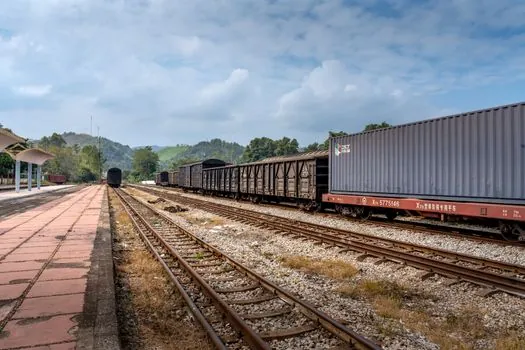
The comparison is sharp: nearly 3,000 Indian wagons form a large domestic manufacturing commitment, around 4,000 ERMEWA wagons represent a leasing extension, and 56 MWA wagons form a focused steel-sector order [S1]. These models differ in ownership, financing, industrial demand and potential production scale, so their commercial value cannot be ranked by wagon count alone.
The trial links battery propulsion and autonomous freight handling with a defined 35 km route, providing a test environment rather than immediate proof of broad commercial deployment.
California reduction shows order scope can change
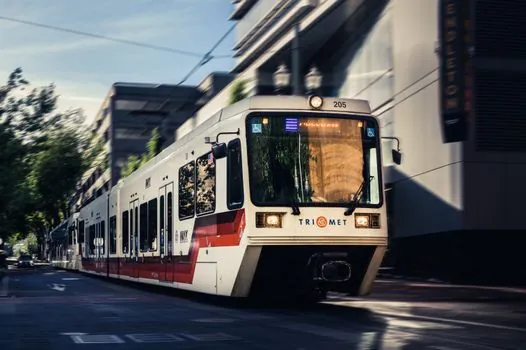
The change is a direct warning for project sponsors: nominal fleet quantity does not guarantee final vehicle count when domestic-content rules alter sourcing, production arrangements or the commercial definition of a train.
For investors, suppliers and operators, the relevant signal is not only whether an order was announced, but how many trains remain inside the funded and compliant scope.
The United Kingdom’s Railway Industry Association estimated in July 2023 that 30,000 jobs could be at risk when the existing rolling-stock order book was completed in 2026, while the sector contributed £1.8 billion to the economy (2023-07) [S4]. That warning identifies 2026 as a potential production-cliff year for one national supply chain, even while other markets record new passenger and freight orders [S4].
Evaluation criteria depend on vehicle class and contract structure
For passenger and metro fleets, compare delivered unit price, passenger capacity, platform compatibility, accessibility, route performance, delivery schedule and maintenance term; for freight wagons, compare payload design, axle load, loading gauge, braking performance, ownership and lease availability; for locomotives, compare duty cycle, power supply, tractive effort, crew training, maintainability and whether maintenance is bundled [S1][S5].
Contract structure materially changes the comparison. Alstom’s Chennai package covers 32 three-car trainsets and 15 years of maintenance, Infrabel’s framework covers as many as 90 locomotives plus maintenance, and the German tram order includes options for 29 vehicles [S1][S5]. A lower vehicle price can therefore be outweighed by poor availability provisions, rigid option terms or weak after-sales coverage.
Procurement should also test delivery credibility against the supplier’s stated workload. Alstom’s Chennai package followed 36 trainsets, Stadler’s Kazakhstan contract covers 557 vehicles and 20 years of maintenance, and Porterbrook is supplying 56 wagons to GBRF [S1]. These figures provide a clearer basis for checking production loading than a headline contract value.
Track award conversion, options and delivery milestones
The key 2026 signals are the number of firm vehicles, the number held as options, maintenance duration and the delivery schedule. Infrabel’s up-to-90-locomotive framework, Škoda’s 50-tram order with 29 options, and California’s reduction from six trains to three separate firm quantities from headline opportunity [S2][S5].
Follow delivery execution across the Chennai, Helsinki, Astana-Almaty and freight-wagon programs, while checking whether framework quantities become binding orders. The February 2026 delivery deadline for testing cited in the rolling-stock news stream, the 2031 target for Denmark’s four Stadler RS Zero railcars, and California’s revised three-train scope are trackable procurement milestones [S2][S5].