Semiconductors represent more than 95% of a leading AI server rack's content value and 50–70% of the capital expenditure required to build and operate an AI data center [S2].
Power Capacity Sets the Demand Ceiling
AI infrastructure is constrained by more than processor supply. Every new server enclosure also requires power conversion, distribution, protection, and control semiconductors, so grid-access delays can postpone component demand as well as compute deployment.
Yole Group's press-release title states that data centers are set to drive a $1.5 trillion semiconductor market by 2031. These forecasts are market estimates rather than order guarantees, but they establish the scale of the power conversion opportunity tied to AI capacity.
Silicon, SiC and GaN Serve Different Conversion Stages
Silicon remains the baseline material for power transistors, rectifiers and power integrated circuits used in data center servers and power supplies, while silicon carbide and gallium nitride address high-voltage, high-efficiency and high-density conversion [S5]. Silicon MOSFETs remain the mature baseline for many server power-supply stages, but the material comparison is driven by voltage, efficiency, thermal performance and switching frequency rather than by one universal device winner.
Silicon carbide combines high breakdown strength, high thermal conductivity and lower conduction loss at high voltage, making it suitable for high-power AC/DC and DC/DC conversion. Gallium nitride supports high-frequency switching and compact power density, which can reduce passive-component volume, although device cost, gate-drive design and thermal integration remain engineering constraints.
The comparison is material against architecture: silicon offers cost and manufacturing maturity; SiC targets high-voltage, high-efficiency conversion; GaN targets high-frequency, compact conversion. IDTechEx expects the power electronics market to grow to $65.2 billion by 2036, representing a 10% CAGR over the forecasting period, while silicon carbide and gallium nitride enable high-voltage operation and new power architectures such as 800VDC data centers.
800VDC Changes the Power Conversion Stack
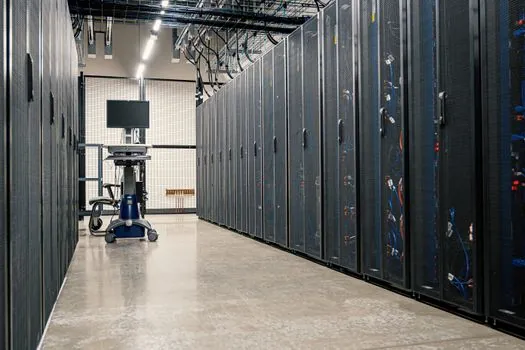
IDTechEx says silicon carbide and gallium nitride have the potential to enable high-voltage operation and new power architectures, including 800VDC data centers. Compared with a conventional lower-voltage AC distribution chain, an 800VDC architecture shifts part of the conversion burden toward rack-level and server-level power electronics, increasing the semiconductor content associated with rectification, inversion, switching and protection.
A single AI server rack contains more than 4,500 packaged chips representing approximately 20,000 individual dies [S2]. This matters for power-device planning because power semiconductors are numerous, functionally diverse and distributed across compute, storage and networking systems rather than concentrated in a few accelerator packages.
The transition also changes procurement boundaries. Omdia tracks power transistors in silicon and wide-bandgap devices, power rectifiers and multiple IC types across server and power-supply applications for a five-year forecast period [S5]. Buyers therefore need separate device forecasts for silicon discretes, SiC, GaN, rectifiers and power ICs instead of applying one aggregate data center semiconductor growth rate to every category.
Servers, Racks and Facilities Create Different Demand Loads
AI servers require compute, storage, memory bandwidth, power distribution and networking, and each function contributes a different semiconductor load [S2]. The server layer includes accelerators, ASICs, FPGAs, CPUs, DPUs, networking chips, HBM, DRAM, SRAM and NAND. The facility layer adds power semiconductors in UPS systems, busways, switchgear, rectifiers and rack power distribution.
The rack is the relevant unit for power-design decisions because density changes conversion requirements. Intelligent rack PDUs add monitoring and control functions, but the upstream demand signal remains tied to new server deployment and the electrical architecture chosen for each facility. A processor order does not translate into one-for-one power-device demand because one power component may serve multiple loads, while protection, redundancy and conversion stages multiply the device count.
For facility operators, grid access, transformer delivery and interconnection queues are practical leading indicators. For semiconductor suppliers, the relevant order indicators are server shipments, rack configurations, PSU architecture, 800VDC adoption, and the share of SiC or GaN specified in each platform. Omdia's five-year database separates server and power-supply demand by device class, providing a more useful framework than a single demand total [S5].
Wide-Bandgap Adoption Has Cost and Supply Conditions

SiC wafer prices have fallen sharply amid aggressive competition from Chinese manufacturers, and oversupply challenges have emerged [S3]. Lower wafer pricing can improve the economics of SiC power devices, but it does not remove qualification time, device-yield variation or the need to redesign gate drives, magnetics and thermal systems around a different switching technology.
GaN development is tied to two process milestones: commercialization of 300 mm GaN-on-silicon and development of vertical GaN for high-voltage applications [S3]. IDTechEx expects global GaN production volume to increase and costs to decline, with wafer prices approaching silicon prices over the forecast period. Commercial adoption still depends on performance in the complete power stage, not wafer cost alone.
Ultra-wide-bandgap candidates include diamond, gallium oxide and aluminum nitride, but IDTechEx's published material benchmark treats them as emerging technologies alongside established silicon, SiC and GaN [S3]. For 2026 procurement, that supports staged qualification: mature silicon for established footprints, SiC for high-voltage conversion where system efficiency justifies it, and GaN where high-frequency density is the dominant design target.
Grid Access and Architecture Choices Bound the Forecast
Grid access has become a central bottleneck for AI chip deployment because data center capacity requires both electrical supply and semiconductor-intensive compute [S6]. Power semiconductor demand can therefore exceed a near-term order forecast when projects have secured chips but lack energized capacity. Conversely, announced capacity does not guarantee shipments when permitting, interconnection, transformer availability or customer utilization remains unresolved.
The primary limitations are infrastructure timing, architecture uncertainty and forecast sensitivity. A shift toward 800VDC can raise demand for high-voltage devices while changing the mix among silicon, SiC and GaN. Changes in accelerator utilization, rack design or facility redundancy can alter device content per megawatt. Market projections therefore need segmenting by power level, application and device technology, rather than applying the 88.8% CAGR projected for 2022–2028 to the full 2026–2031 period [S2].
Track Orderable Conversion Demand
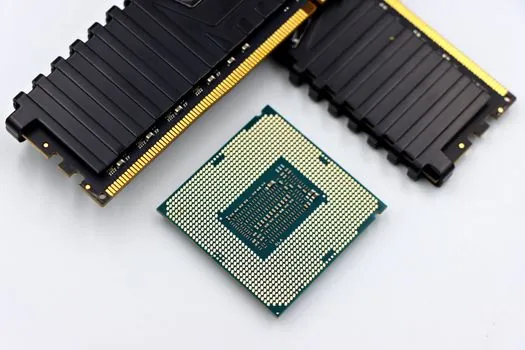
Three indicators provide a practical demand check: whether projects secure grid power, whether server and PSU vendors qualify 800VDC platforms, and whether SiC or GaN content rises in shipped power systems. The 123 GW power requirement projected for 2027, the $2.8 trillion semiconductor share of planned infrastructure through 2028, and the $1.5 trillion data center semiconductor market projected for 2031 form the broader demand envelope [S1][S2][S4].
Engineers should also verify the operating point of each proposed device at the rack level, including input voltage, conversion topology, switching frequency, thermal design, isolation and protection requirements. A power quality analyzer supports electrical verification, while power meters can verify load and energy behavior at system level. Device selection should follow those measured conditions rather than headline revenue forecasts alone.