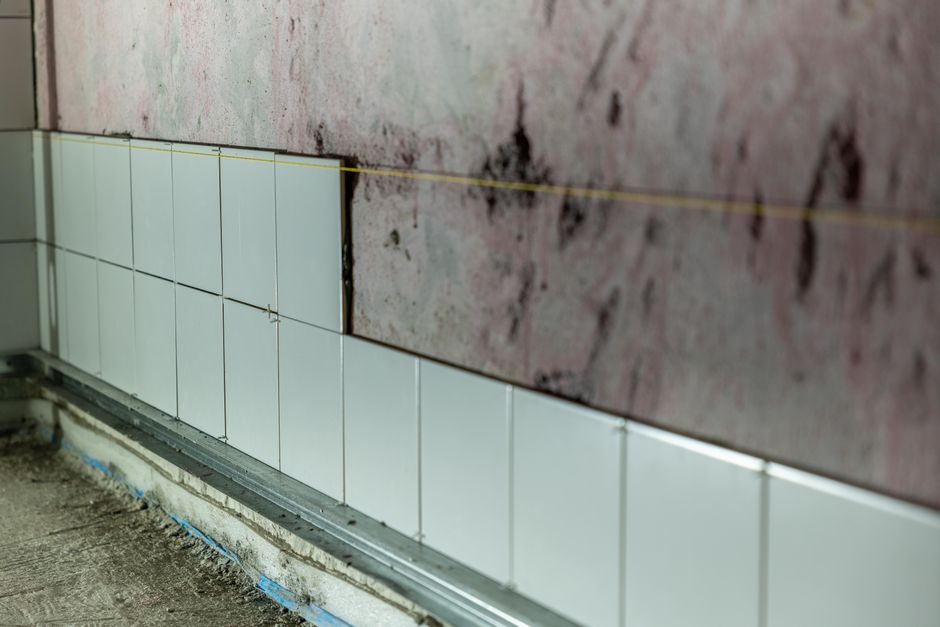
Renovation pours on existing slabs demand admixture packages that combine water reduction, controlled set, and bond-promoting workability in one drum, with polycarboxylate high-range water reducers (HRWR) paired with Type C accelerating or Type D water-reducing+retarding blends being the dominant 2026 supplier pattern [S1][S2].
Three Chinese admixture manufacturers — Xuzhou Singular, Beijing Jiankai, and Sobute — together list naphthalene-based, PCE, aminosulfonate, and aliphatic superplasticizer families explicitly aimed at retrofit, repair, and water-conservancy reuse, with annual output and registered-capital lines that put Singular above 1 million tons capacity once its new line completes [S1][S2][S4]. MAPEI's 1937-founded chemical-admixture catalogue continues to set the European benchmark for restoration mortars, including historic-structure repair systems [S5].
PCE vs Naphthalene vs Aminosulfonate: When Renovation Pours Need Each
Naphthalene-based ZM-1 (Singular) and sodium naphthalene sulfonate (Jiankai) remain specified where mix temperature is held under 25°C and slump retention beyond 60 minutes is not required, because they have lower cost per cubic metre and predictable air-content behaviour but noticeably shorter slump life than PCE [S1][S2].
Aminosulfonate-based ZM-2 (Singular) and aliphatic ZM-1 variants (Singular) sit between the two on cost and slump retention, and are often used on partial-depth slab repairs where air-entrainment has to be matched to the parent slab to avoid scaling under freeze-thaw cycling [S1]. PCE dominates new renovation specifications in 2026; naphthalene persists on cost-driven civil-renovation tenders [S1][S2].
Set-Control Logic: Accelerator, Retarder, and Antifreeze Pairings
Type C accelerating admixtures — such as Singular's ZM-8 accelerator (liquid, flash-setting) and ZM-3B compound early-strength antifreeze — are the default for cold-weather renovation pours where substrate and ambient both sit below 5°C, because they drive 24-hour compressive strength above 15 MPa and shorten stripping time for re-shores [S1].
Type D water-reducing+retarding admixtures such as Singular's ZM-5 set-retarding superplasticizer are used on hot-weather or mass-pour renovation overlays (typically >1.0 m section thickness) to delay initial set beyond 4 hours, which keeps pump pressure within the 16–25 MPa working band of a concrete batching plant feed [S1].
Pumping aids ZM-3 and ZM-3C (PCE-based) are deployed when a renovation pour must traverse long hose runs or reach upper-floor decks through a concrete vibrator consolidation chain; they hold cohesiveness without bleeding, which the renovation spec sheet typically calls for in the 100–180 mm slump range at the point of placement [S1].
Renovation-Specific Constraints: Bond, Shrinkage, and Fiber Tie-Ins
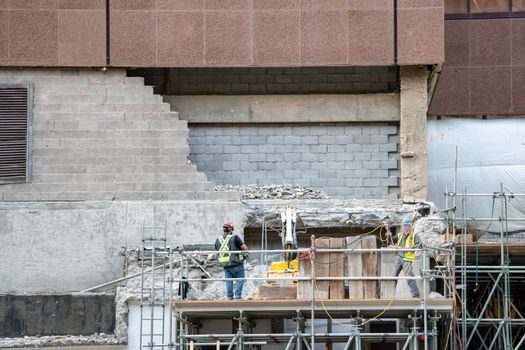
ZM-6 multi-purpose expansion agent (Singular) compensates for drying shrinkage on bonded overlays by generating ettringite-driven restrained expansion in the first 24–72 hours, which is the mechanism renovation engineers rely on to keep the new layer from debonding from a substrate that is dimensionally stable but moisture-sensitive [S1].
For slab-on-grade renovation where the existing slab is cracked, the admixture package is normally combined with structural concrete fiber reinforcement at 0.6–1.0% by volume; the PCE component must be compatible with the fiber surface (non-coated or alkali-resistant glass) to avoid slump loss greater than 30 mm in the first 30 minutes.
Where the renovation includes a bonded topping over a waterproof membrane or a curing-sensitive substrate, the spec must lock in a concrete curing compound that matches the admixture's set profile; a Type C accelerator under a solvent-based curing compound can produce a 4–6 MPa surface tensile-strength shortfall at 7 days if the two chemistries are not pre-qualified together.
Substrate and Exposure-Class Decision Matrix
On a dry, sound, interior slab at 15–25°C, the lowest-cost working spec is ZM-1 naphthalene HRWR at 0.8–1.0% by cement weight with no accelerator and no air entrainer; on a saturated, exterior slab at 5–15°C the same contractor would switch to ZM-4B PCE at 0.20% plus ZM-3B early-strength antifreeze at 2–4% [S1].
For renovation exposed to de-icing salts or marine spray, an air-entraining component (ZM-7 from Singular's catalogue) at 4–6% target air content is mandatory to keep the hardened layer within freeze-thaw durable limits, because PCE alone does not entrain stable air voids at the dosage levels renovation mixes use [S1].
Standards, QC, and What to Verify on the Certificate
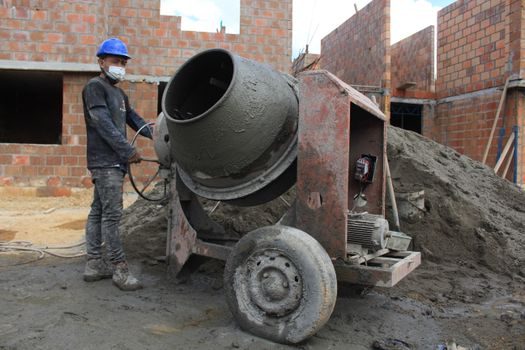
ASTM C494 Type A–G and EN 934-2 are the two reference standards renovation engineers cite for chemical-admixture compliance; Chinese suppliers Singular and Sobute publish ISO 9001 factory certification alongside CRCC (China Railway) and 3C (China Compulsory) marks on their admixture lines, which is the typical evidence package contractors attach to renovation submittals [S1][S4].
For deeper context on adjacent selection workflows, see the 2026 spec map for high-rise concrete admixture selection and the parallel prefabricated-construction admixture map — both reach the same conclusion: PCE dominates, set-control is the lever, and substrate class decides the rest.