
Polycarboxylate ether (PCE) high-range water reducers, paired with engineered set retarders and viscosity-modifying admixtures (VMA), are the dominant chemical package for plant-cast prefabricated elements as of 2026-08-02, with precasters in Singapore, China, and the US Midwest converging on the same four-component system [S2][S5].
Singapore's Building and Construction Authority defines Prefabricated Prefinished Volumetric Construction (PPVC) as free-standing volumetric modules built in an accredited fabrication facility before site installation, a workflow that compresses concrete placement to a 6-12 h window and forces admixture selection around demould strength rather than 28-day cube results [S7].
Why Demould Strength, Not 28-Day Strength, Drives Admixture Choice
Prefabricated elements are typically stripped at 18-24 h and lifted at 30-40 MPa cube strength, so the admixture package must deliver high early-age strength without sacrificing the 4-6 h working life needed for rebar congestion, vibration, and surface finishing [S2].
Premiere Concrete Admixtures, a US admixture producer active for 19 years, lists accelerator and superplasticiser families specifically mapped to precast yard cycles where ambient temperatures swing from 5 °C in winter to 38 °C in summer, forcing the same mix to behave differently across seasons [S4].
Premiere supplied admixtures for the largest bridge deck pour in North America, a project where precast segment match-cast tolerances are typically held to ±1.5 mm, and any set-time drift beyond ±30 minutes causes segment-stack mismatch on the erection gantry [S4].
Polycarboxylate Ether (PCE) Superplasticisers: The Workhorse
For precast yards producing wall panels at 4-6 m height, PCE slump-retention profiles are tuned to 90 min working life at 30 °C, with slump loss held below 30 mm across the placement window, a level lignosulphonate admixtures cannot sustain [S2][S5].
Set Retarders vs Set Accelerators: Switching by Element Type
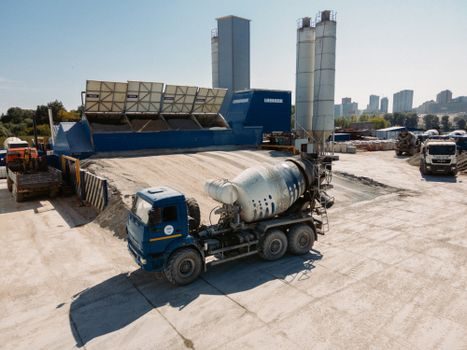
Fritz-Pak's product range explicitly maps set delay and set accelerator chemistries to separate precast applications, recognising that beams and columns need retarded initial set (4-6 h open time) while hollow-core slabs and stairs need accelerated early strength to free formwork within 12-16 h [S5].
Fritz-Pak's product range is distributed to precasters, ready-mix producers, and concrete pumpers as distinct customer segments, reflecting the industry split between accelerated precast cycles and retarded ready-mix delivery windows [S5].
For volumetric modules, retarder dosage is typically held at 0.2-0.5% by mass of cement to keep the mix fluid through 90-120 min of vibration; for accelerated elements, calcium-nitrate-based accelerators at 1.0-2.0% dosage can move demould strength to 6-8 h [S5].
Viscosity-Modifying Admixtures (VMA) and the Self-Compacting Concrete (SCC) Pivot
Most modern precast plants have shifted to self-compacting concrete (SCC) to eliminate vibration noise and labour, a transition documented across the European and Singaporean PPVC supply chain where vertical elements with dense rebar cages cannot be conventionally vibrated [S7].
For SCC in precast beams, VMA dosage of 0.05-0.15% by mass of cement is combined with PCE at 1.0-1.4% to give a spread of 650-750 mm with segregation resistance below 5% at 30 min, the typical Singapore PPVC acceptance window [S7].
Fritz-Pak's air-entrainer and detrainer families are frequently co-dosed in precast SCC to hold 4-6% total air content; below 3% the mix segregates, above 7% the 28-day strength drops by 8-12% [S5].
Carbon and Cost Trade-Offs in the Plant Setting
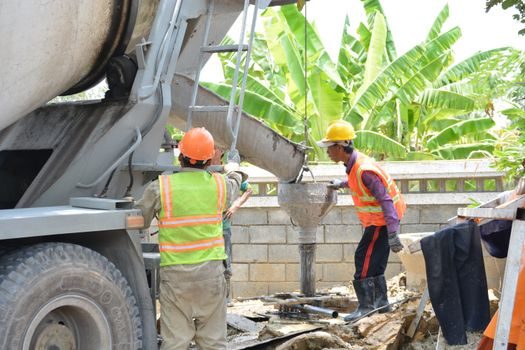
A 2023 ScienceDirect study on prefabricated concrete composite plates found that prefabrication rate correlated significantly with carbon emissions per unit area, material cost, and structural height, and the admixture system that lets a plant raise its daily output from 4 to 6 element cycles is a direct lever on per-m² embodied carbon [S3].
The same study concluded that materialization-stage carbon policy guidelines need to credit the admixture-enabled precast productivity gain, rather than penalising precast purely on cement content, a position that is now being written into regional green-building procurement frameworks (2025-08) [S3].
Who This Admixture System Is — and Is Not — For
PCE + retarder + VMA is the right fit for precast yards running 4-6 daily cycles on heated or climate-controlled beds, where demould time of 18-24 h at 20-40 MPa strength is the binding constraint, and where SCC placement eliminates a vibration crew [S5][S7].
It is the wrong fit for site-cast tilt-up panels in cold weather below 5 °C without heated beds, where accelerator-only systems outperform; for small batch architectural precast with 8-12 h open time, where plain retarders are cheaper; and for low-slump roller-compacted mixes used in paving, where neither superplasticiser nor VMA applies [S4].
Admixture selection is also driven by production volume, since the largest North American bridge deck projects carry over 1.2 million m³ of precast concrete and demand redundancy from multiple admixture suppliers to avoid line-stoppage risk [S4].
Selection Criteria: A 4-Factor Comparison

Across the main chemical families used in prefabrication in 2026, the comparison reduces to four decision criteria: water reduction (%), set-time control window (h), cost per m³ (USD), and compatibility with SCC placement. [S2]
Standards, QC, and Failure Modes to Watch
Acceptance testing for precast admixtures follows EN 934 (European admixtures for concrete) for European-sourced material and ASTM C494 for North American material, with separate slump, air content, and set-time reporting required on every shipment [S5].
The most common failure mode in PPVC plants is a 1-2 h set-time drift when a new PCE batch interacts with a cement that has shifted alkali or C₃A content, producing cold joints between lifts in thick wall elements; this is why leading precasters run trial mixes on every cement delivery rather than relying on the cement mill's certificate alone [S7].
Air-content drift above 1.5% across a pour is the second-most-common failure, caused by PCE-VMA incompatibility, and is detectable only with a fresh-concrete air meter at the formwork rather than at the batcher [S5].
Track these signals over the next two reporting cycles: (1) any shift in the Singapore BCA PPVC acceptance list toward higher-strength PPVC modules above 40 MPa, which would push PCE dosage above 1.5% and force viscosity-modifier reformulation [S7]; and (2) any US Federal Highway Administration update to precast segment match-cast admixture specifications, where current draft language tightens set-time tolerance from ±30 min to ±15 min [S4].
The underlying component specifications are covered under concrete admixture, concrete fiber, and concrete vibrator.
See also our earlier report, Impact Drill Selection for Landscaping Crews.