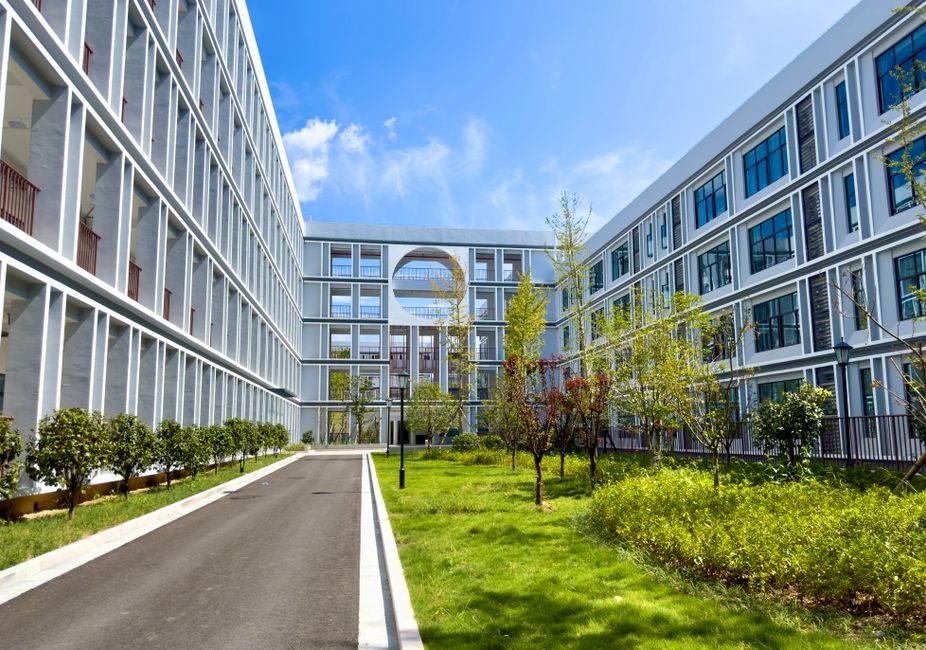
The school segment — K-12 campuses, dormitories, and lecture-hall slabs — differs from industrial pours chiefly on two axes: lower structural loads but much higher exposure to pedestrian abrasion, de-icing salts at entries, and long open-air curing windows during summer break pours; this favors packaged powder admixture kits from regional blenders like Trumix in Birmingham, Alabama [S3], and full-spectrum suppliers such as Premiere Concrete Admixtures, which has supplied admixtures to the largest bridge in North America across 19 years of U.S. operation [S5].
ASTM C494, C260, and C1017 — the three codes governing school pours
Type B (set-retarding) and Type D (water-reducing + retarding) are layered on for hot-weather slab pours where initial set beyond 90 minutes is needed; for winter pours below 5 °C ambient, Type C (accelerating) or Type E (water-reducing + accelerating) is substituted, with non-chloride accelerators preferred to protect embedded rebar from chloride-induced corrosion [S7] (2022-09).
ASTM C1017 covers flowable concrete admixtures and is increasingly referenced for self-consolidating concrete (SCC) used in heavily-reinforced beam-column joints at gymnasium and auditorium headers. Cold-weather admixture practice per ACI 306R-16 guidance requires that the concrete temperature at placement stay above 5 °C (40 °F) and that accelerating admixtures be non-chloride where metal deck or welded wire reinforcement is present [S7] (2022-09).
Water-reducer chemistry: lignosulfonate, PNS, and PCE side-by-side
Poly Naphthalene Sulfonate (PNS / BNS) superplasticizers are the workhorse Type F chemistry and dominate the Chinese export supply chain — Shandong Dingtaiji International Trade Co. lists Poly Naphthalene Sulfonate Superplasticizer as a primary main product, registered in 2009 from Wenhua, Dezhou, Shandong [S2].
Sobute New Materials of Nanjing, Jiangsu supplies a comprehensive concrete admixture line covering water-reducing admixtures, concrete agents and superlasticizer variants aimed at infrastructure and high-rise applications, with daily-use and service-grade product tiers [S4]. Trade-off: PCE costs roughly 2–3× PNS per kilogram and is more sensitive to sand fines and cement alkali content, so trial batching is mandatory before any school-floor pour above 5,000 m².
Air-entrainment, durability, and the school-slab freeze-thaw question
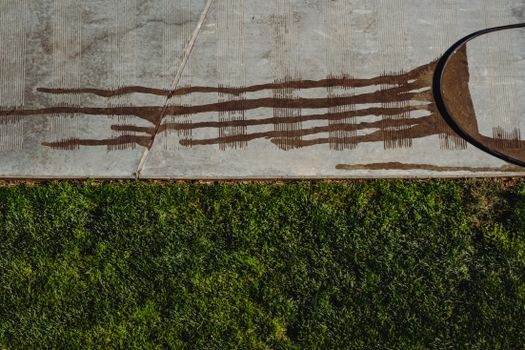
For school entry aprons, loading-dock aprons, and stair treads subject to de-icing salt, the spec often calls for the upper half of that air range plus a low w/c (≤ 0.42) plus a water-reducer to hit 35 MPa at 28 days — the durability floor ACI 318 Chapter 19 sets for freeze-thaw-exposed concrete in severe climates.
Interior school slabs (classroom corridors, cafeteria floors) generally do not need AEAs but still benefit from a Type A water reducer to keep w/c ≤ 0.45 and limit drying-shrinkage cracking during the long summer cure window. Xuzhou Singular Building Materials Technology, founded 2009 with 24 million yuan registered capital, runs a 90,000 m² facility and is positioned as a national high-tech enterprise serving civil, water-conservancy, highway and bridge concrete admixture needs [S6]; for school projects their retarder / accelerator blends are typical for summer pours where placement-to-finish windows exceed 60 minutes.
Bag-and-blend powder systems for remote and small-batch school pours
Powder admixtures in water-soluble bags are increasingly specified for school additions, renovation pours, and remote-site campus work because they remove the need for liquid dispensing equipment at the batch plant. Trumix Chemical in Birmingham, Alabama operates a blending and packaging facility for powder admixtures in water-soluble bags ready for direct use in ready-mixed, precast, and contractor operations, with parallel wholesale distribution for dry repair concrete and mortar applications [S3]. The bag-and-blend format also helps quality control on small pours — a 30-bag school entry-apron pour does not justify a liquid admixture drum delivery.
Powder admixtures do, however, require longer mixing time (typically 60–90 s of wet mixing versus 30 s for liquid admixtures) and may underperform in cold weather unless the powder is preconditioned above 10 °C. The cost premium for powder bagging is roughly 10–20% over the same chemistry in liquid form, but for schools this is frequently offset by the elimination of drum rinse-out, on-site containment, and frozen-liquid handling during winter pours.
Supplier landscape: domestic vs. import for K-12 and higher-ed pours
For U.S. school projects specifying Buy America provisions or domestic-content clauses, Premiere Concrete Admixtures explicitly markets American ownership and 19 years of U.S. operation as a counterweight to European-owned incumbents, and lists supply to the largest bridge in North America as a reference credential [S5]. For general commercial-construction admixture specs, the related Concrete Admixture Selection for Commercial Buildings: 2026 Spec Map walks through the same chemistry tiers for office and retail pours.
For school infrastructure where the spec is written to international standards or the project sits on a federal-aid route, the import supply chain remains substantial: Shandong Dingtaiji (PNS superplasticizer, crude/industrial naphthalene) [S2] and Sobute New Materials (water-reducing admixtures, superlasticizer variants) [S4] anchor the Chinese export tier; Industrial Corporation of India (ICOI) in Mumbai provides a full specialty-chemical line covering admixtures, concrete repairs, waterproofing systems, engineering grouts, industrial flooring, mould releasing agents, and a fibre reinforcement system suitable for school repair and retrofit work [S1]. For projects adjacent to hospital campus construction, the Hospital Concrete Admixture Spec Map: 2026 Pours carries the closely-matched hospital-grade durability and cleanability requirements; for industrial-vocational-school shops and heavy-equipment labs, the Industrial-Facility Concrete Admixture Spec Map: 2026 Selection Guide adds abrasion- and chemical-resistance overlays.
Decision matrix: which admixture package for which school pour
For a heavily-reinforced gym header beam-column joint: Type F HRWR (PNS or PCE) per C494 plus Type B retarder if summer pour, plus C1017 flowable concrete admixture if SCC is specified. For a winter pour below 5 °C on a metal-deck school roof: Type C or Type E non-chloride accelerator per C494, AEA at the low end of the range to avoid strength loss, no chloride-bearing admixtures. For a renovation / patch pour at an occupied school: powder bag-and-blend system (e.g., Trumix-format) per [S3] to skip liquid dispensing and limit site contamination.
Two trackable signals for the next planning cycle: ACI 318-25 Chapter 19 durability revisions currently under public comment, and ASTM C09 Subcommittee work on revised AEA dosage reporting, both of which will tighten school-slab durability documentation in 2027 cycles.
The underlying component specifications are covered under concrete admixture, concrete fiber, and concrete vibrator.