
Resin sand molding line selection in 2026 is driven by six quantifiable gates: flask size envelope, hourly sand throughput, mold hardness target, resin-cure cycle, automation level, and reclamation yield, with decision weight shifting toward reclaim efficiency once annual sand consumption passes 3,000 t.
Buyers specifying a new resin sand line are typically foundries running 800-12,000 t/year of steel, iron, or large non-ferrous castings; the gate logic below applies to the no-bake (furan/phenolic/alkaline phenolic) self-hardening family, the dominant chemistry for heavy-section castings where shakeout reclaim and dimensional stability matter more than cycle speed.
Gate 1 - Flask Envelope and Annual Casting Tonnage
Flask size is the first hard filter: sand-box dimensions set the maximum casting envelope, and undersizing the box is the single most common rework root cause in foundry retrofits [S1]. For a 1,000 mm × 1,000 mm × 500/500 mm flask the typical casting weight ceiling sits at roughly 250-400 kg per mold, while a 2,500 mm × 2,500 mm box supports 1.5-3 t single-piece pours for mining, cement, and power-industry wear parts.
Match box size to the upper-quartile of the casting mix, not the average; oversized boxes waste resin and sand and drop compaction uniformity. Annual casting tonnage then drives flask count: a 3,000 t/year foundry at 200 kg average casting weight needs 15,000 molds/year, or roughly 14-18 molds per operating hour on a single-shift basis, and that hour-rate is what the rest of the line has to feed.
Gate 2 - Sand Throughput, Mixer Sizing, and Cure Time
Continuous mixers for furan/phenolic no-bake systems commonly deliver 5-30 t/h of prepared sand, with throughput governed by resin dosage (typically 0.8-1.6% of sand weight for furan, 1.5-2.5% for phenolic) and the binder-catalyst reaction window. A 10 t/h mixer is the workhorse for mid-size foundries producing 2,000-4,000 t/year of castings, while 25-40 t/h twin-shaft units serve high-mix jobbing shops above 8,000 t/year. [S1]
Cure time on a synthetic resin no-bake system runs 8-25 minutes depending on resin system, ambient temperature, and hardener dosage; cold-shop operation below 10 °C can stretch cure to 35-45 minutes and force heated aggregate or accelerated hardener packages. The molding line cycle has to be timed against this cure window, not against a fixed takt, because under-cured molds deform during rollover and over-cured molds crack on strip.
Gate 3 - Mold Hardness and Compaction Method
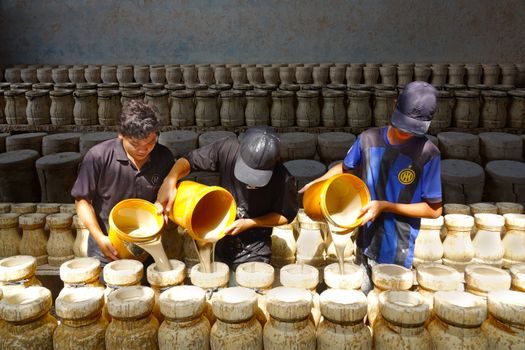
Mold hardness on a resin-sand system is typically specified at 80-95 (Brinell-equivalent, 10 mm ball, 1 kg load, depth-of-impression converted to hardness number); railway, mining, and crusher foundries often mandate 90+ to control hot-tearing and burn-in on heavy sections. Compaction method drives whether that hardness is achievable across the box: jolt-squeeze, sand-slinger, and gas-flow-aided pressing each have different hardness-versus-density profiles. [S2]
For very large flasks, sand slingers throwing 25-40 kg/s at 25-30 m/s are standard, but they hit only 75-85 hardness at the corners of deep pockets; foundries running >90 hardness on large boxes increasingly layer vibration tables or rollover-and-press stations after slinging. The trade-off is cycle time: a hard 2,500 mm box needs 60-90 seconds of compaction, versus 25-40 seconds for a 1,000 mm box at 85 hardness.
Gate 4 - Automation Level: Manual, Carousel, or Robot Cell
Three discrete automation tiers dominate 2026 foundry bids: (1) manual/flask-on-track with operator compaction, viable below 5 molds/h; (2) carousel/turntable lines with automatic sand-slinger, rollover-strip, and shakeout at 8-20 molds/h; (3) robot-cell or automatic molding line configurations with flaskless or tight-flask molds, sand-blowing compaction, and 25-60 molds/h on small-to-medium castings. [S3]
Capital cost tracks that order non-linearly: a manual station with a 15 t/h mixer lands in the low six figures, a mid-size carousel line with shakeout and reclamation is the next order of magnitude, and a robot cell with sand-blowing and inline pouring is a third step higher, so the gate is annual labor savings plus casting-mix repeatability, not cycle speed alone. Operators should also flag that shell molding machine cells overlap this segment for small high-precision parts and are not a 1:1 substitute for heavy-section resin-sand work.
Gate 5 - Reclamation, Sand-to-Resin Ratio, and Emissions
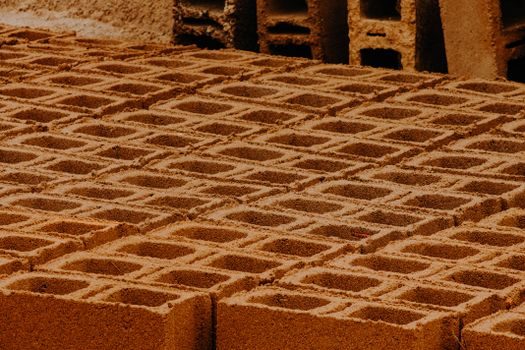
Sand reclamation is where resin-sand lines differentiate in 2026, because fresh silica sand cost, landfill fees, and dust/emission exposure drive operating cost more than resin price does. Mechanical attrition reclamation (vibratory + air) typically hits 90-95% reusable fines at 0.3-0.8% LOI on the returned sand; thermal reclamation at 700-850 °C can push LOI below 0.3% but adds 15-25 kWh/t of energy and a wet scrubber for thermal-oxidizer exhaust. [S1]
Foundries above 5,000 t/year of casting output generally need a closed-loop reclamation circuit, because virgin sand at 150-300 RMB/t (silica) or 400-800 RMB/t (chromite/olivine) plus disposal cost makes a 4,000-6,000 t/year virgin-sand bill a six-figure operating line item. On the chemistry side, alkaline phenolic systems emit less free phenol than acid-catalyzed furan at the same binder level, which is why European steel foundries are migrating to static-pressure molding machine + alkaline-phenolic cells for export-bound heavy castings.
Gate 6 - Comparison of Resin-Sand Line Options
Three line archetypes cover roughly 80% of 2026 resin-sand procurement: (a) manual flask-on-track with continuous mixer and shakeout, suited to 1,000-3,000 t/year job shops; (b) carousel automatic lines with slinger and reclamation, the default for 3,000-8,000 t/year steel and iron foundries; (c) robot-cell tight-flask lines with sand-blowing and inline pouring, the right pick above 8,000 t/year or where casting-mix repeatability is the business case. [S2]
Compared on four decision criteria, the manual option wins on capex and grade-mix flexibility (typical flask change 10-20 min, resin system change 30-60 min) but loses on labor and consistency; the carousel option is the cost-performance sweet spot for most mid-size Chinese steel foundries and tracks 85-90 mold hardness with 1.0-1.4% furan resin; the robot cell wins on cycle, labor, and reclaim yield above 90% but demands a narrower casting envelope and tight flask tolerances. Buyers specifying material-handling equipment should cross-reference gear-coupling and clutch-brake selection gates because mixer and shakeout drivetrains are common failure points on lines above 5,000 operating hours/year.
Limitations, Failure Modes, and Standards

Resin-sand lines have three structural failure modes buyers should spec against: (1) thermal expansion mismatch on chromite/silica mixes above 200 °C preheat, which cracks molds on rollover; (2) resin build-up on reclaim screens, which drops usable yield by 8-12% within 200 operating hours; (3) amine-cured cold-box carryover on no-bake lines, which contaminates furan chemistry and forces sand disposal. Each is mitigated by procedural discipline, not by equipment choice, and buyers should expect a 6-10% first-year yield loss to commissioning ramp. [S3]
Applicable standards include ISO 9001 for foundry quality systems, ISO 1083 for cast-iron grade verification on the casting side (not the line itself), and VDG P34 / P37 (German foundry association) or equivalent Chinese GB/T 25138 + GB/T 2684 for sand-testing procedure (permeability, green/hardness, moisture). Buyers specifying for European OEM castings should also pre-confirm that the chosen resin system meets customer-specific FPI/SPI limits on free phenol, formaldehyde, and BTEX, which are typical contractual pass-gates rather than statutory limits.
Specifying engineers should treat the total capex budget, the casting-mix forecast, and the reclamation circuit as one tied decision rather than three separate line items, because the cheapest manual station plus a thermal reclaimer almost always loses on 5-year TCO to a carousel line plus a mechanical reclaimer. The next trackable signal for 2026 is a fresh round of alkaline-phenolic OEM approvals on EU rail and mining castings, which will push more Chinese steel foundries off acid-catalyzed furan within the next two procurement cycles.