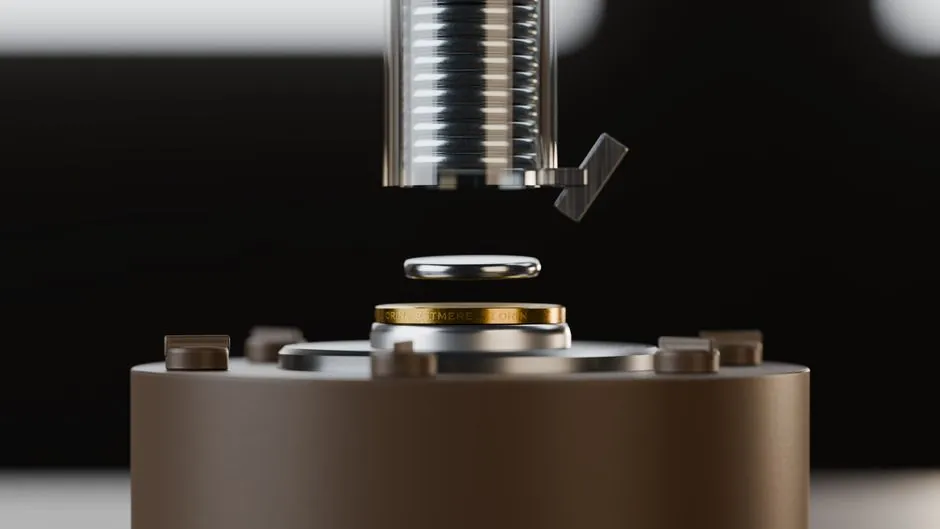
A silicon resonant reference sensor provides lower long-term drift than a piezoresistive device, with cited annual residual drift of 0.001%–0.01% versus 0.01%–0.05% full scale [S6].
The comparison applies to the reference element inside a pressure calibrator: resonant silicon favors accuracy-critical transfer standards, while piezoresistive silicon favors economical workshop instruments.
Technology choice by stability and application
Piezoelectric pressure sensors can be classified according to whether electrostatic charge, resistivity, or resonant frequency is measured, with the corresponding sensor called electrostatic, piezoresistive, or resonant [S3].
Resonant technology is the stronger choice when the reference sensor must preserve its value over long intervals, withstand substantial temperature variation, or support high-pressure measurements. A silicon resonant microsensor designed for 175 °C and 175 MPa demonstrated frequency sensitivities of 723.56 ppm/MPa and −436.60 ppm/MPa for its two sensing resonators [S1].
Piezoresistive technology is the stronger choice when first cost, circuit simplicity, and widespread construction capability outweigh the lowest drift. The actual value of the reference voltage is important because it is used for comparison with the measured value, and periodic comparison is needed [S8].
Stability, temperature, and pressure performance
Resonant silicon is favored for calibration references because its output depends on physical resonance properties rather than the resistivity change of a stressed resistor [S2]. The practical result is a stability advantage: resonant sensors are cited at 0.001%–0.01% annual residual thermal and packaging-stress drift, compared with 0.01%–0.05% full scale annually for piezoresistive devices [S6].
That advantage becomes measurable in a calibrator because reference uncertainty propagates directly into the uncertainty assigned to every calibration point. The temperature-insensitive reference resonator in one high-temperature design reduced dependence on external oscillator stability and maintained better than 0.02% full-scale accuracy over 0–36 MPa with a low-stability oscillator at 125 °C [S1].
Piezoresistive elements are not limited to low-accuracy work, but their specification must account for residual thermal drift, packaging stress, and reference-voltage stability [S6][S8]. If these terms are not bounded over the recalibration interval, a sensor with good static accuracy at 20 °C can still limit the usable transfer-standard uncertainty.
Comparison of the two reference technologies

Cost favors piezoresistive silicon because it is an established low-cost MEMS route and the supporting electronics use familiar resistance or voltage measurement [S2][S7]. Stability favors resonant silicon through lower cited annual drift, while temperature behavior can be superior when a pressure-insensitive reference resonator and frequency-ratio measurement are used [S1][S6].
Pressure-range capability favors resonant designs in specialized geometries: the cited silicon resonant microsensor operates up to 175 MPa at 175 °C [S1]. Resonant pressure-sensor implementations can use a frequency-ratio measurement scheme with a pressure-insensitive reference resonator to reduce dependence on external crystal-oscillator stability [S1].
Lifetime and recalibration frequency should be judged from stated drift over the actual calibration interval, not from headline accuracy. A resonant reference at 0.01% annual drift accumulates substantially less open-loop uncertainty than a piezoresistive reference at 0.05% annual drift, assuming the same interval and no other error source [S6].
Recommended use cases
Use a resonant silicon reference for laboratory transfer standards, high-accuracy calibrators, high-temperature service, and applications where drift between calibrations directly limits traceability. The frequency-ratio approach is particularly suitable when external clock stability is weak, as demonstrated with better than 0.02% full-scale accuracy at 125 °C across 0–36 MPa [S1].
Use a piezoresistive reference for routine portable calibrators, lower-cost pressure calibrators, and applications dominated by static pressure checks rather than long-term transfer accuracy. This technology is also sensible where the instrument already has mature bridge or voltage-conditioning electronics and where annual recalibration can contain residual drift [S3][S8].
Do not select resonant silicon merely because it is more accurate at a laboratory reference point. Package the sensing resonator, pressure port, reference cavity, and electronics as one metrological assembly, then confirm the full assembled drift and uncertainty. Pressure alone does not describe the calibration condition; media, mounting orientation, temperature, and precompression can change the mechanical response.
System-level calibration constraints
Sensor technology cannot remove mechanical installation error.
Static and dynamic requirements also lead to different architectures. The working principles of calibration distinguish static reference methods from dynamic excitation, while the resonant element itself contains a silicon structure designed to vibrate at a specific frequency [S9]. A static laboratory calibrator does not need the fast-response constraints associated with piezoelectric dynamic sensors, whose rise times can reach 0.2 μs and whose output behavior depends on charge decay and discharge time constants [S4].
When the calibrator handles transient pressure, validate the complete loop rather than inferring performance from the reference sensor alone. A 2024 calibration review covers static and dynamic working principles, including resonance-based sensing, and should be used to define the test waveform, reference method, acquisition bandwidth, and uncertainty treatment [S9].
Procurement and acceptance criteria
Specify the reference technology only after defining the required uncertainty, pressure span, media, temperature range, recalibration interval, and interface. Request full-scale or span-specific accuracy, temperature coefficients, residual drift, pressure-range limits, over-range capability, mounting details, and calibration traceability rather than accepting a generic sensor grade [S1][S6].
For resonant silicon, ask the supplier to identify whether the output is absolute frequency or a frequency ratio and whether a pressure-insensitive reference resonator is included [S1]. For piezoresistive silicon, request bridge or voltage specifications, reference-voltage behavior, residual thermal drift, and packaging-stress limits [S3][S8].
For both options, verify the assembled calibrator against a traceable reference across at least three points spanning the intended pressure range, with repeatability and hysteresis separated from accuracy. The pressure calibrator should be assessed as a complete pressure standard, while the associated pressure sensor datasheet should be treated as evidence for only one part of its uncertainty budget.
Use resonant silicon when annual drift dominates the error budget; use piezoresistive silicon when acquisition cost and electronics simplicity dominate. Validate both choices against the required temperature, pressure span, media, mounting method, and recalibration interval.