Food-contact basket strainers on process lines must be specified to ASME B16.34 design with 304 or 316 stainless steel wetted parts, sanitary surface finish ≤0.8 µm Ra, and tri-clamp or butt-weld end connections; standard cast-steel simplex baskets flanged to ANSI 150 with 40 mesh (400 µm) 304 SS screen [S5][S10] are the baseline that food-grade RFQs either keep or tighten.
Industrial basket strainers from manufacturers like Domos cover sizes 1/2" to 60" at ASME 150# to 900# classes in cast steel, stainless, duplex, and copper [S10], while petrochemical-grade units from Shenyang Xinlian ship with ISO 9001 and ASME certifications [S2]; food-contact builds sit at the lower end of that size and pressure range but demand tighter metallurgy and documentation than the general industrial offering.
Material and Wetted-Part Specification
FDA 21 CFR food-contact compliance requires the wetted basket, screen, and body to be 304 or 316 stainless steel with material test certificates (EN 10204 3.1) traceable to heat number; carbon-steel bodies in cast-steel simplex builds [S5] must be upgraded to SS for any open-process or wash-down food line, and 316L is preferred for chloride-containing CIP fluids above 60 °C.
Specify the mesh explicitly: 40 mesh = 400 µm is the petrochemical baseline [S5], but dairy, brewing, and beverage lines typically tighten to 60 mesh (250 µm) or 80 mesh (177 µm) to protect downstream fillers and pasteurizers; multi-layer sintered or wedge-wire screens replace plain weave when clean-in-place cycles exceed 30 minutes at 80 °C.
Request a separate line for gasket and seal materials: EPDM is the food-grade default for hot water and CIP, FKM (Viton) is required for oil-contact or high-temperature sugar lines above 150 °C, and PTFE envelopes are used where both chemical and temperature resistance are needed. Refineries, bottling plants, and pharmaceutical lines serviced by Keckley-style duplex baskets [S3] confirm that seal selection is the single most requote-causing line item on food RFQs.
Surface Finish and Sanitary Connection Standard
Electropolished wetted surfaces at Ra ≤0.8 µm (32 µin) meet 3-A sanitary standard 78- (for filters/strainers used in milk and milk-product equipment) and EHEDG Doc. 2 guidelines for cleanability; mechanically polished 0.8 µm is acceptable for non-product-contact utility water, but any line wetted by raw ingredient or finished product must carry the electropolish callout and a passivation certificate per ASTM A967. [S1]
End connections drive sanitary compatibility: tri-clamp ferrules to ASME BPE (typically 1.5" to 4" for in-line food baskets), butt-weld ends to ASME B16.25 with autogenous orbital welding, and DIN 11851 or SMS 1145 threaded couplings for European dairy lines. Flanged ANSI 150 RF [S10] is permitted only on utility side or when a spacer spool isolates the strainer from the product stream.
Document the cover and basket retention system: quick-release covers with knurled knobs (Keckley duplex designs use knob-type covers for tool-free basket removal) [S3] are preferred over bolted covers on food lines to shorten opening time during allergen-changeover and CIP inspection; bolt covers in 304 SS with PTFE-encapsulated EPDM gaskets are acceptable for large-diameter (≥6") sanitary strainers where tri-clamp geometry is impractical.
Mesh Rating, Open Area, and Pressure Drop
Open area ratio and differential pressure capacity are the two numbers that separate a correctly specified food strainer from an undersized one: industrial simplex baskets are rated for 1.5 to 2× the line flow of equivalent-size Y-strainers because the cylindrical basket geometry provides larger screen area for the same line size [S3].
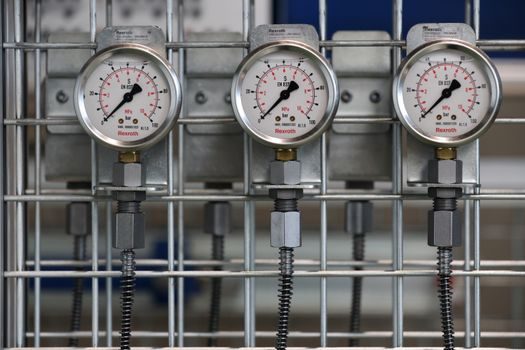
Spec the clean pressure drop target at the design flow rate — typically ≤0.15 bar (≈2 psi) clean across the basket at v = 1.5 to 2.0 m/s line velocity; the dirty pressure drop at which the basket must be removed is conventionally 0.7 to 1.0 bar differential, and the strainer body must be rated to withstand that full blocked-basket condition without permanent deformation.
Anchor mesh choice to a verifiable micron-to-mesh conversion rather than the supplier's marketing copy: 40 mesh = 400 µm, 60 mesh = 250 µm, 80 mesh = 177 µm, 100 mesh = 149 µm, 200 mesh = 74 µm — each step roughly halves the particle retention size but also halves the open area, so the pressure-drop calculation must be redone at every mesh tightening.
RFQ Line-Item Checklist and Requote Traps
Write the RFQ in this order to avoid the most common requote cycles: (1) size, line size, end connection, and connection standard; (2) body and basket material with ASTM/UNS grade (e.g. A351 CF8M / 316); (3) screen mesh in micron and mesh count, plus support basket perforation; (4) cover type and seal material with FDA / USP Class VI citation; (5) surface finish with Ra value, electropolish Y/N, and passivation standard; (6) design pressure and temperature envelope; (7) differential pressure rating and clean ΔP at design flow; (8) certificates — EN 10204 3.1, FDA, 3-A, EHEDG, AD2000, PED category as applicable. [S10]
Optional fields that inflate quotes when omitted and corrected later: orientation (vertical vs horizontal), drain or blow-down port size and thread, davit arm or quick-lift cover for ≥6" units, magnet inserts for ferrous-tramp capture in flour or grain lines, and CIP spray-ball compatibility (verify internal clearance between basket and shell accepts a 1/2" spray ball).
Spec mistakes that force a requote: mixing imperial mesh count with metric micron rating without the conversion noted; specifying "stainless" without an ASTM grade (default vendors substitute 304 when 316L was needed for chloride CIP); requesting a flanged cover without stating the standard (ASME B16.5 vs EN 1092-1 vs JIS B2220); and failing to state the differential pressure rating, which determines whether the body needs a heavier wall class than the line flange class.
Standards and Documentation Stack

Design and manufacture to ASME B16.34 (valves and strainers), with face-to-face per ASME B16.10 and flange ends per ASME B16.5 for cast builds [S10]; this is the baseline adopted by Shenyang Xinlian and other ASME-certified manufacturers for process-grade baskets [S2], and it is the same stack that food-grade RFQs inherit by default.
Layer the food-specific stack on top: 3-A Sanitary Standards 78- for in-line filtration equipment (covers materials, surface finish, cleanability, and construction), EHEDG Doc. 2 for hygienic design, FDA 21 CFR for elastomer and metal food-contact compliance, and for European plants, EU 1935/2004 framework regulation plus material-specific directives. Buyers who walk into a supplier call with only the ASME stack and add the food stack mid-quote routinely see lead-time extensions of 4 to 8 weeks.
For pharmaceutical-adjacent or biotech food lines, add ASME BPE (Bioprocessing Equipment) for the surface finish and dimensional standard, USP Class VI for elastomers, and the European Pressure Equipment Directive (PED) category for the body — Domos and similar manufacturers already list RF and BW ends with ASME B16.5 / B16.10 dimensions [S10], so the geometry is standard; the documentation, finish, and certification line items are where the food-grade premium lives.
Comparison of Basket Strainer Options for Food Service
Three configurations dominate food RFQs. Simplex cast SS baskets (ASME B16.34, 150# to 300#, 304/316 body, tri-clamp ends, 0.8 µm Ra electropolish) suit batch lines that can be isolated for cleaning; Keckley simplex builds ship in 304/316 with quick-release covers [S3] and are the cheapest food-grade entry. Duplex baskets with two simplex chambers and a flow diversion valve allow continuous duty on CIP skids and filler supply lines, at roughly 2.2 to 2.8× the simplex cost and a meaningful footprint premium.
Wedge-wire or sintered mesh elements replace perforated baskets when CIP cycles exceed 30 minutes, line temperatures exceed 90 °C, or the product is viscous (chocolate, syrup, dairy cream) — open area is 2 to 3× plain weave at the same micron rating, so clean ΔP drops by 30 to 50% at the cost of 2.5 to 4× the element price. A separate side-by-side cost-vs-cleanability breakdown is laid out in the cyclone-separator vs basket-strainer decision matrix, which covers the cases where a basket is the wrong technology altogether.
For solids-laden raw intake (grain, sugar, fruit pulp) where tramp metal is a concern, magnetic inserts or a magnetic rod retrofit downstream of the basket adds 5 to 10% to cost and is generally cheaper than a separate industrial valve magnet trap; the precision filter buying guide lines this up against finer 1 to 25 µm absolute filtration for the polishing stage downstream of the basket.
Who Should Use This RFQ Spec — And Who Should Not
Use this spec for any basket strainer that contacts raw ingredient, intermediate product, finished product, or CIP/SIP fluid in a dairy, beverage, brewery, sauce, bakery, or pharmaceutical-food line where 3-A, EHEDG, or FDA documentation is required; simplex units handle 80% of these builds, duplex handles continuous-duty CIP loops, and wedge-wire handles viscous or high-temperature clean cycles [S3][S10].
Do not use this spec for pool-pump baskets, ABS kitchen sink strainers [S1], or rice-washer colanders [S7] — those are commodity consumer or light-commercial items with no ASME body, no surface-finish callout, and no food-contact certification stack. Likewise, do not specify a basket strainer for trace-removal polishing below 25 µm absolute; switch to a precision filter or a cyclone separator upstream for that duty.
Verify before ordering: the supplier holds the ASME / 3-A / EHEDG certificates (not just the material certificates), the basket removal is tool-free or uses food-grade grease-free fasteners, the CIP spray ball physically fits inside the shell, and the cover seal groove is not a harborage pocket. These four checks catch the majority of food-line strainer field failures and should be on every buyer's inspection plan before sign-off.
Next verification step: pull the supplier's ASME B16.34 design validation document and the 3-A 78- certificate number, and confirm the cover gasket is listed for repeated steam-in-place exposure at 121 °C for at least 30 minutes per cycle — both data points appear on compliant vendor datasheets and are the shortest audit path to a food-grade basket strainer that will not require a field retrofit.
For component-level specifications, see basket strainer.