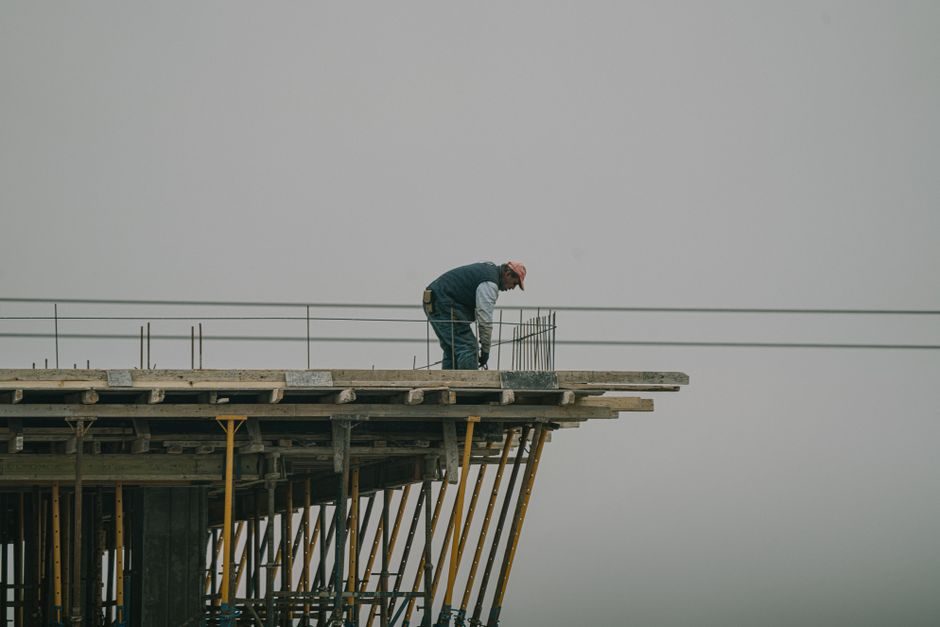
Ringlock (disc/rosette) scaffolding is listing at US$3-17 per piece on Chinese wholesale platforms in July 2026, with FOB Tianjin full-system packages around US$9-12 per piece and individual ledgers and verticals running from US$4.87 to US$16.87 depending on tube diameter and finish [S2][S4].
The two dominant tube diameters are φ48 mm (the EN 12810/12811 standard scaffold size) and φ60 mm (the heavier Layher-Allround style), both supplied in Q235 or Q345 steel with hot-dip galvanizing, electroplate, powder coat or dip-paint finishes [S1][S3]. Production lead times run at capacities of 50,000 pieces per week per major exporter, which keeps 20-30 day FOB lead times realistic for full container loads [S2].
Pricing tiers on Chinese B2B platforms, July 2026
Three price bands dominate the 2026 export market. Budget ringlock (φ48, electroplate or powder-coat, Q235) lists at US$3-6 per piece for mass-produced verticals and ledgers [S4][S6]. Mid-tier (φ48 HDG, Q235/Q345, fully automatic welding) lists at US$9-12 per piece for full system packages, which is the band most project buyers actually transact in [S2][S3]. Premium φ60 / Layher-compatible ringlock (HDG, Q345) lists at US$13-17 per piece, with the Ledger alone running US$4.87-16.87 depending on length and rosette count [S4].
For a working 1,000 m² of façade scaffold at ~3 m lifts, expect 800-1,200 verticals, 1,200-1,600 ledgers, 400-600 diagonals, plus 200+ planks and base jacks — total component count roughly 3,000-4,000 pieces per 1,000 m², which puts a delivered-into-port material bill in the US$30,000-65,000 range at mid-tier φ48 HDG pricing [S2][S3].
What drives the per-piece cost: tube, steel, finish
Tube OD is the single largest cost lever. Steel grade matters less than tube OD on a percentage basis, but Q345 carries roughly 8-15% material premium over Q235 because of higher Mn content and tighter tolerance control at the mill [S3].
Surface finish is the second lever and the one most often missed by first-time buyers. Electroplate is the cheapest finish and the shortest-lived (typically 3-7 years in coastal environments). For a buyer comparing two nominally identical φ48 quotes, the surface finish line is often the only thing explaining a 25% price gap [S3].
System components and what each costs
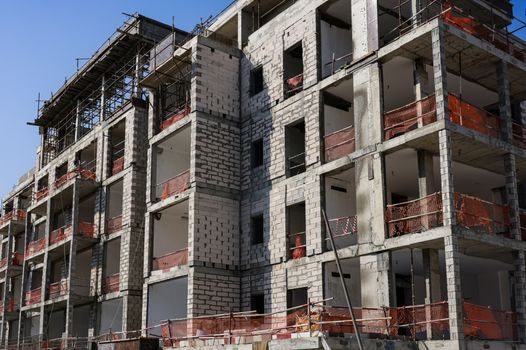
A complete ringlock kit is not a single SKU; it is a bill of materials. The standard component set is Vertical W/O Spigot, Vertical, Horizontal (ledger), Diagonal brace, U-head jack, base jack, and basic socket, plus rosettes welded at 500 mm spacing on the verticals [S1]. On a per-piece basis in July 2026 wholesale: verticals US$8-14, horizontals/ledgers US$4.87-8, diagonals US$6-10, U-head jacks US$11-16, base jacks US$7-12, and rosette-bearing collar pieces US$3-6 [S3][S4].
For buyers comparing a "system" quote against a "components" quote, the rule of thumb from the Made-in-China listings is that the system price runs 10-18% below the sum of individually-quoted components, because the OEM bundles volume discounts and standardized weld fixtures [S2][S3]. For an overview of how these components map to tube, plank and brace selection, the Ringlock Scaffolding Selection: Tube, Steel, Plank and Brace Spec Map reference covers the spec side of the same bill of materials.
MOQ, payment terms and shipping variables
MOQ on full-system packages is typically one piece on the Made-in-China and Okorder listings, but the realistic economic MOQ is a 20 ft container (≈18-22 tonnes of scaffold, roughly 1,200-1,800 pieces mixed) to absorb sea-freight and port handling [S1][S2].
FOB Tianjin is the default port for northern Chinese mills; for southern-China-sourced cargo expect FOB Shenzhen or FOB Shanghai with similar pricing but 4-7 days longer transit to US Gulf or EU North Sea ports. Cold-formed versus hot-finished tube is a secondary cost driver that the export listings rarely disclose — cold-formed Q235 tube can run 8-12% below hot-finished on the same OD/wall combination, but has tighter limits on dynamic load cycles [S3][S5].
Hidden cost silos buyers miss on first orders
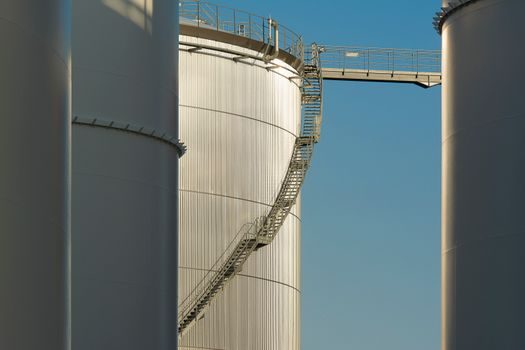
Three cost lines routinely blow first-time buyer budgets. First, planking and toeboards are quoted separately from the ringlock frame in most OEM price lists, and a full timber/steel plank set can add 25-40% to the frame-only quote [S3]. Second, EN 12810/12811 compliance documentation (load tables, design manuals, CE/UKCA marking) is sometimes included, sometimes a separate US$2,000-5,000 line item depending on the OEM [S1]. Third, galvanized fittings require careful handling — every HDG scratch at the jobsite is a corrosion initiation site, so expect to add 3-5% spare fittings versus a powder-coat spec where touch-up is cheaper [S3].
Buyers who have already specced a mezzanine or work platform inside a warehouse and are now adding a façade scaffold will recognize the same per-tier cost logic; the Mezzanine Platform Selection Guide: Load Class, Support Type and Layout Logic reference covers the structural tier decision that mirrors the φ48-vs-φ60 choice here.
How ringlock compares to cuplock and frame scaffolding on cost
On a per-m²-of-facade basis, ringlock lands in the middle of the three common modular systems. Cuplock typically runs 10-15% below ringlock on raw component cost but locks to four directions only at fixed node spacing, which drives higher labour cost on irregular geometry. Tube-and-clamp (fastener) scaffolding is the cheapest per kg of steel but the slowest to erect, and at 2026 wage rates in most OECD markets the labour premium erases the material saving inside two weeks of hire. Frame scaffolding (H-frame) is the cheapest for simple rectangular façades but cannot match ringlock on height above ~25 m without outrigger complications [S1][S4].
Decision matrix: for a simple rectangular façade under 15 m height with no irregular geometry, choose frame or cuplock on cost. For petrochemical and shipyard work where the structure itself is irregular, ringlock is essentially the only economic option, and buyers should budget at the φ60 HDG tier [S1][S3].
Standards, load ratings and compliance
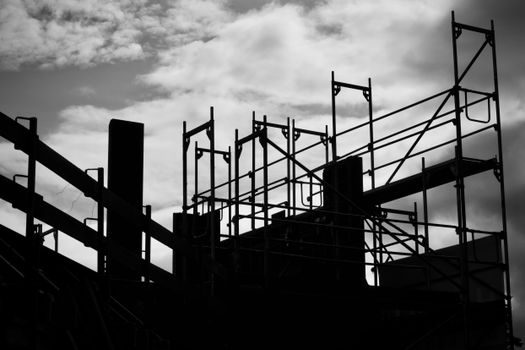
Ringlock exported from China for European and Middle East projects is typically manufactured to EN 12810 / EN 12811 (the European standard for prefabricated façade scaffolds) with a Class 4-6 load rating (3.0-6.0 kN/m² working load), and the system components are CE-marked under the EU Construction Products Regulation [S1][S3]. US-bound product follows OSHA 1926.1402-1926.1404 and ANSI A10.8 for scaffolding, and a buyer should always request the OEM's test report — a 50 kN vertical load test on a single rosette connection is the standard acceptance criterion [S1].
For projects with NACE MR0175 exposure (sour-service H₂S environments) the scaffold itself is not in scope, but the hot-dip galvanizing line on a project with NACE process pipework must be coordinated because HDG runoff can contaminate stainless process pipe [S3]. For scaffolding spec'd on offshore structures alongside pressure transmitter and industrial valve instrumentation, the same project drawing set typically references both EN 12810 and IEC 60079 zone classifications, and the scaffolding OEM usually does not need to be ATEX-certified because the scaffold is not an item of electrical equipment [S1].
Lead-time tracker to watch: Chinese New Year 2027 (mid-February) will close most mills for 10-15 days, and Tianjin port congestion in Q1 historically adds 5-8 days to FOB lead times. Buyers planning a Q1 2027 site mobilisation should place ringlock orders before end of November 2026, and should also pin the surface-finish spec (HDG vs powder coat) on the PO rather than letting the OEM substitute, because the 25% price gap between those two finishes is the single largest avoidable variance in a typical RFQ [S2][S3].