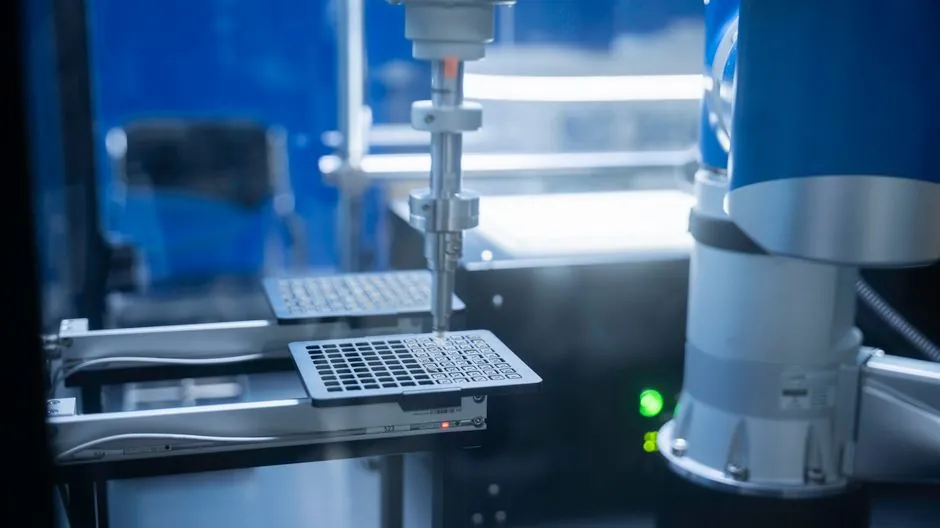
Conventional case packing can reach 85 cases per minute, while robotic top-loading guidance places regular slotted cases at 30–40 cases per minute for flexible production [S2][S7].
The selection depends on effective throughput, not nameplate rate: mechanical equipment leads for one case size, whereas robotic cells recover losses through faster program-based changeovers and mixed-case sequencing [S1][S3].
Cycle Rate by Packaging Method
Robotic case-packing cells can operate continuously at defined cases-per-minute rates, but the realized rate depends on product presentation, picks per cycle, payload, tooling, infeed spacing, and the downstream case sealer [S1].
For delta cells handling flexible pouches, the cited range is 80–180 picks per minute, while gantry systems handling multi-case cycles are rated at 15–35 cycles per minute [S6]. Picks and cases are not interchangeable: one case can require several picks, and a multi-case cycle may close several cases during one indexed movement.
Robotic Cell Cycle Composition
A robotic pick-and-place cycle is constrained by robot motion, end-of-arm tooling, product acquisition, case indexing, and release. In single-pick configurations, each product requires one robot cycle, so fragile, heavy, or irregularly oriented items can reduce throughput even when the robot has a higher nominal motion rate [S1].
Multi-pick tooling can move a complete product grouping in one motion, reducing robot travel relative to repeated single picks. The practical limit then shifts toward product spacing, grasp reliability, drop clearance, case fill pattern, and whether the upstream conveyor can present each group without accumulation [S1].
Vision-supported picking removes the need to mechanically orient every item, but consistently spaced infeed remains important because product spacing affects acquisition reliability. PLC or robot-controller coordination must synchronize pick timing, case indexing, upstream signals, and fault recovery [S1].
Mechanical Speed and Product Geometry

Mechanical case packers use product-dependent guide rails, pushers, stops, and other physical geometry. Changing product dimensions or case formats can require replacement or repositioning of change parts, making these systems faster within a fixed configuration but less efficient across changing formats [S1].
A conventional case packer can run at up to 85 cases per minute [S7].
Model identity, pack pattern, and application therefore matter more than the word mechanical or robotic.
Changeover and Effective Throughput
Robotic case-packing systems adapt to multiple product formats through program changes rather than mechanical changeovers [S1].
The cited cycle advantage of mechanical equipment therefore has to be multiplied by lost changeover time before it becomes average output.
For example, a traditional line averaging 85 cases per minute loses substantial output during every manual format adjustment, while a robotic line averaging 30–40 cases per minute can remain productive during mixed sequences [S2][S7]. These rates should be modeled over a complete production campaign rather than compared as isolated peak values.
Decision Matrix by Production Condition
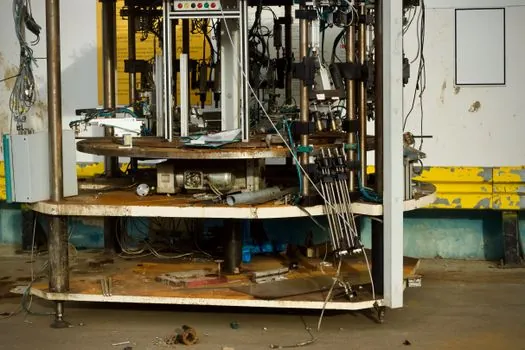
A conventional case packer can run at up to 85 cases per minute [S7].
For frequent changeovers, mixed case sizes, or products arriving with variable orientation, robotic equipment is usually the stronger candidate. Its advantage is software-based format selection and on-the-fly sequencing, not a faster individual pick cycle [S1][S3].
Cost and integration should be evaluated against four criteria: sustained cases per minute, changeover seconds, downstream utilization, and mechanical complexity. The economic comparison must include lost production, labor during setup, tooling storage, vision failure modes, programming controls, and the required carton erecting machine feed [S1][S3].
A useful acceptance test is to run the full SKU sequence with the actual product, cases, conveyors, and downstream closure equipment. The selected system should sustain its rated case rate during mixed production, keep the downstream filling machine and sealer balanced, and meet the planned schedule without unplanned stoppages.
Failure Modes and Application Limits
Robotic cells can lose rate when upstream products are tightly spaced, randomly oriented beyond the vision envelope, too fragile for the grasp, or outside the cell’s payload and reach limits. Mechanical cells can lose rate when product geometry forces additional motions, guide adjustments, or jam intervention [S1].
Case presentation is also a constraint. A robot that picks products into cases still depends on correctly formed and indexed cartons, and downstream sealing must be matched to the cell output. The coding machine and palletizing equipment must also absorb the selected cycle rate without creating accumulation [S1].
Robotic case erectors have fewer mechanical components than traditional systems, but they introduce control, programming, end-of-arm tooling, and robot maintenance requirements. Traditional systems retain mechanical simplicity for a stable format while requiring physical setup and adjustment for each new case size [S3].
Specification and Test Requirements

Require the supplier to state cases per minute, picks per minute, units per case, and multi-pick ratio separately, together with tested product dimensions, case dimensions, payload, infeed rate, and downstream rate. A cases-per-minute claim without these test conditions is not comparable across systems [S1][S5][S6].
For mixed production, record changeover time from command to confirmed first good case, rather than using zero-time software selection as the only changeover criterion. Test random case sequences, damaged or low-quality corrugated blanks, vision recovery, jam clearing, and sustained operation [S1][S3].
The final purchase criterion is effective cases per production hour after all format changes, rejects, and starvation events. For one fixed format, benchmark against the documented 85-case-per-minute conventional maximum and 30–40-case-per-minute robotic range; for mixed formats, include manual adjustment and test cycles in the calculation [S2][S3][S7].
Track two operating indicators after commissioning: effective cases per hour versus nameplate rate, and planned changeover minutes per shift. A line that meets its single-SKU rate but loses output during format changes has not demonstrated robotic flexibility, while a robotic line that repeatedly stops at its lower rate still has an unresolved motion, tooling, or infeed constraint [S1][S3].