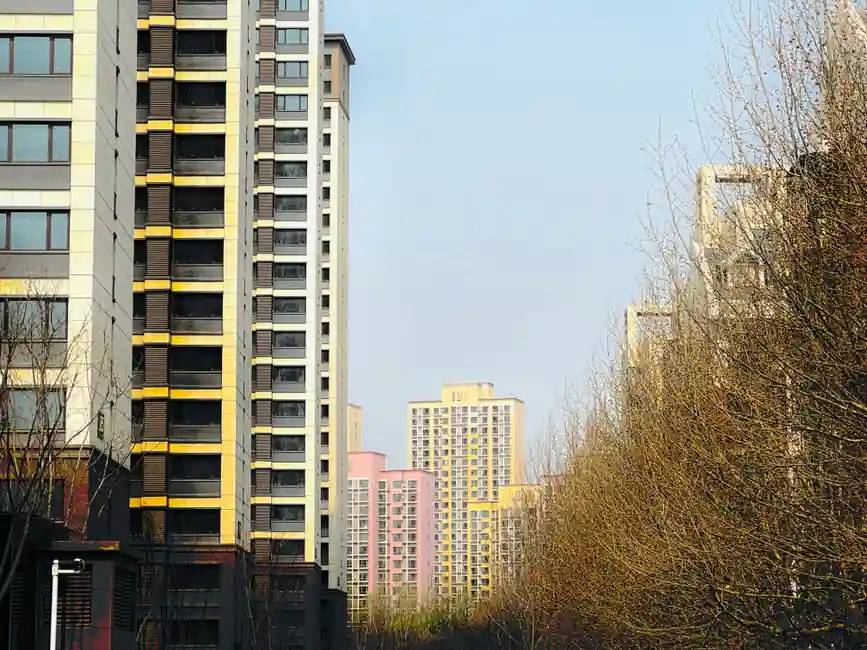
Stone wool insulation rated A1 to EN 13501-1 is the baseline requirement for high-rise external walls, ceilings, and sandwich-panel cores in 2026, with non-combustibility (not thermal R-value) acting as the gating specifier criterion [S1][S2].
Rock wool is spun from molten basalt rock or slag, giving the finished fibres a softening point above 1000 degrees Celsius and an A1 reaction-to-fire classification under EN 13501-1, plus non-combustibility under AS 1530.1 in Australian projects [S5]. The post-Grenfell UK regulatory shift has made mineral-wool EWI the default on high-rise, public-sector, and higher-risk residential builds, displacing polymer-foam systems for anything above 18 metres [S2].
Why A1 Non-Combustibility Is the Hard Gate
A1 to EN 13501-1 is the highest reaction-to-fire class in the European system, rated non-combustible with no contribution to fire load, no flaming droplets, and minimal smoke (s1) [S1]. For structures with high human occupancy such as airports, hospitals, and commercial high-rises, the practical baseline is A1 rock wool across the insulated envelope [S1].
EN 13501-1 also rates smoke production (s1 to s3) and burning droplets (d0 to d2), and the parallel Chinese GB 8624-2012 framework maps the same A1 designation through AQSIQ/SAC, allowing cross-border procurement against a single target class [S1]. A complete mineral-wool EWI build-up, including basecoat, fixings, and render, should still be tested to EN 13501-1 as a system, with at least A2-s1,d0 typically required for high-rise façades [S2].
EN 13501-1 vs GB 8624-2012: Same Gate, Two Frameworks
EN 13501-1 (CEN, Europe) and GB 8624-2012 (China) are the two frameworks most often cross-referenced on international panel procurement, and both use the A1 to F letter scale where A1 is fully non-combustible and F is untested, with s1 to s3 smoke and d0 to d2 droplet sub-classes layered on top [S1].
For sandwich panels specifically, a B3 EPS core sits at the opposite end of the scale from A1 rock wool, meaning it is combustible, produces dense smoke, and can shed burning droplets that propagate fire downward across floors [S1]. Specifying teams working across China, the EU, the UK, and Australia should anchor the data sheet on EN 13501-1 and verify the GB 8624-2012 cross-classification for any product shipped from a Chinese OEM [S1].
Selection Criteria Beyond Fire Class
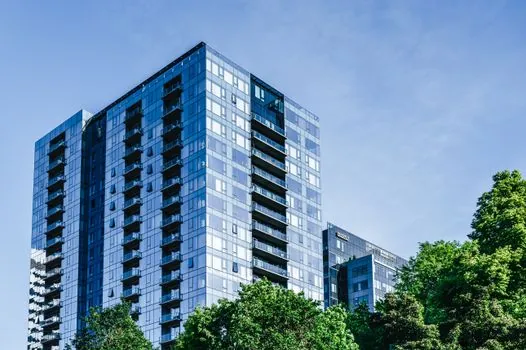
Declared thermal conductivity for stone wool products typically sits in the region of 0.034 to 0.043 W/mK at lower mean temperatures, with conductivity rising gradually as service temperature increases, which is one of the reasons the material is also used on high-temperature plant and process equipment [S5].
Acoustic performance is a secondary but real driver on high-rise residential towers: rock wool ceiling tiles carry high NRC and SAA ratings and are particularly effective at reducing low-frequency noise from plant rooms and external traffic, making them a common choice where the slab above a plantroom meets a dwelling [S3]. Vapour permeability is a third lever, allowing the wall build-up to dry outward, which matters on solid-wall refurbishment and older masonry substrates where trapped moisture would otherwise compromise the render or sheathing [S2].
High-Rise Use Cases: Walls, Ceilings, Sandwich Cores
External wall insulation is the headline application: dense mineral-fibre boards are mechanically fixed or adhesively bonded to the substrate, then covered with a basecoat, glass-fibre mesh, primer, and render or brick-slip finish, and the full system is the unit that gets tested, not the bare board [S2].
Ceiling tiles are the second major use case in residential towers, where rock wool was specified for its superior fire resistance over fiberglass in a recent high-rise residential project, trading a small amount of broadband absorption for a step change in fire protection [S3]. Sandwich panels with a rock wool core are the third, used as architectural cladding and internal compartmentation where A1 fire performance and structural span come from a single factory-bonded panel; the comparison against B3 EPS cores is essentially a comparison between A1 and F on the EN 13501-1 scale [S1].
Comparison: Rock Wool vs EPS vs Fiberglass Ceiling Tiles
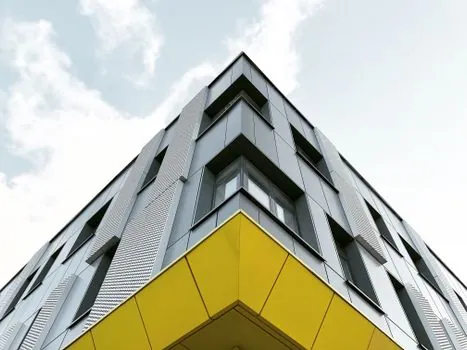
On the four decision criteria that matter on a high-rise project, rock wool leads on fire class (A1), acoustic mass (good low-frequency absorption), and high-temperature stability (softening point above 1000 degrees Celsius), but is heavier per square metre than EPS or fiberglass and requires careful handling of the fibrous edges during install [S5][S1].
EPS sandwich panels score on thermal R-value per millimetre and weight, but rate B3 (combustible) and can shed burning droplets in a fire, which is why they are typically restricted to low-rise industrial sheds, cold storage, and non-occupied service zones rather than occupied high-rise envelopes [S1]. Fiberglass ceiling tiles match rock wool on broadband sound absorption and tend to be lower cost, but do not carry the same high-temperature margin and are usually specified in offices and conference rooms rather than in plant-room ceilings or high-rise residential corridors [S3].
Limitations, Failure Modes, and Specification Pitfalls
The most common system-level failure is testing the insulation board in isolation and assuming the full EWI build-up inherits the same rating, when in fact basecoat, fixings, render, and detailing all have to be assessed together, and a weak link in the system can drag the classification down to A2-s1,d0 or worse [S2].
The second is substituting polymer-foam insulation in refurbishment work on a high-rise to cut cost, which is the failure mode that drove the post-Grenfell regulatory tightening in the UK and is the explicit reason mineral wool is now the default on public-sector and higher-risk residential projects above 18 metres [S2]. A third pitfall is ignoring board density, which drives both acoustic absorption and façade wind-load performance, and a fourth is sourcing a Chinese OEM panel without verifying the GB 8624-2012 A1 cross-reference to EN 13501-1 in the data sheet [S1].
Standards, Sourcing, and Trackable Signals
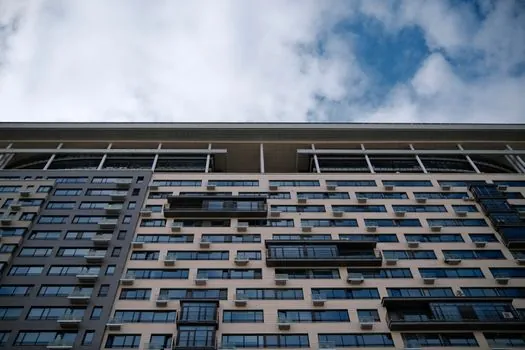
The core specifier references are EN 13501-1 (reaction to fire, A1 to F with s1 to s3 and d0 to d2 sub-classes), GB 8624-2012 (Chinese equivalent), AS 1530.1 (Australian non-combustibility test for stone wool), and the Australian National Construction Code Type A and Type B construction requirements that mandate non-combustible external-wall insulation components [S1][S5].
ROCKWOOL stone wool systems are widely used across residential, commercial, and high-risk buildings where fire performance is critical, and mineral-wool EWI has been continuously developed for UK high-rise since the 1980s, including the first mineral-fibre system developed jointly with Permarock [S2][S4]. For more on adjacent building-envelope choices, see the spec map for rock wool in schools, and for broader industrial-safety spec work, the mining fire hydrant selection 2026 spec map covers plant-side water deluge. Trackable signals over the next 12 months: any tightening of EN 13501-1 system-level façade rules, and any expansion of GB 8624-2012 A1 cross-classification audits for OEM sandwich panels shipped into the EU.
For component-level specifications, see rock wool, high voltage tester, and pressure transmitter.