Rock wool (stone wool) insulation for residential projects spans four functional families in current North American catalogs: thermal batts such as Comfortbatt, rigid continuous-insulation boards such as Comfortboard 80 and Cavityrock, acoustical fire batts such as AFB, and interior fire/sound batts such as Safe'n'Sound [S3][S4].
Published product data shows a typical R-value range of R-3.7 to R-4.3 per inch for rock wool batts and boards, with Comfortboard 80 documented at up to R-21 in a single board for building-envelope applications, and Cavityrock offered in mono- or dual-density thicknesses from 2 to 6 inches [S2][S5]. The material is spun from molten basalt and recycled slag at roughly 1,400 to 1,500 °C, producing a dense, dimensionally stable fiber matrix that does not settle when properly installed [S2].
Material Properties That Drive the Spec
Rock wool is non-combustible and withstands temperatures well above the ignition point of common framing, which is why it is specified in fire-rated wall, floor, ceiling, and fire-stopping assemblies when installed per tested system requirements [S2]. ROXUL Safe 45, 55, and 65 are documented as providing 1- to 2-hour fire-resistance ratings from the interior side, with non-corrosive formulations that resist bacterial, mildew, and fungal growth [S5].
Moisture behaviour is a second-axis decision point: rock wool is water-repellent and vapor-permeable, so assemblies dry to the exterior rather than trapping liquid water, but it is explicitly not a substitute for proper waterproofing or a separate vapor retarder where one is required by climate and code [S2]. Builders report cleaner friction-fit installs, less sagging, and easier cutting around pipes and wiring compared with low-density fiberglass batts, because the higher density holds its shape between studs and joists [S4].
Where Each Product Family Fits in a House
Comfortbatt thermal batts are sized for standard 2x4 and 2x6 wood and steel stud cavities in exterior walls, with a flexible edge engineered to maintain stated R-values and minimize gaps at the stud interface [S3]. Cavityrock semi-rigid boards target exterior cavity walls and rainscreen assemblies, with documented compatibility with multiple cladding attachment systems and approval for use in many NFPA 285-compliant designs [S5].
Comfortboard 80 and Comfortboard 110 are rigid continuous-insulation boards for the exterior side of sheathing, with up to R-21 thermal performance, vapor permeability for fast drying, and use around foundations, under concrete slabs, and in cathedral ceilings where cavity depth is limited [S3][S5]. AFB is a lightweight acoustical fire batt for interior steel- and wood-stud partitions and floor assemblies, with higher density than standard thermal batts to drive STC improvements in shared walls [S3][S5]. Safe'n'Sound is the residential interior fire-and-sound batt for wood- and steel-stud walls, floors, and ceilings where the homeowner wants bedroom-to-bedroom or media-room quiet without a full acoustic build-up [S3].
Selection Criteria for Residential Projects
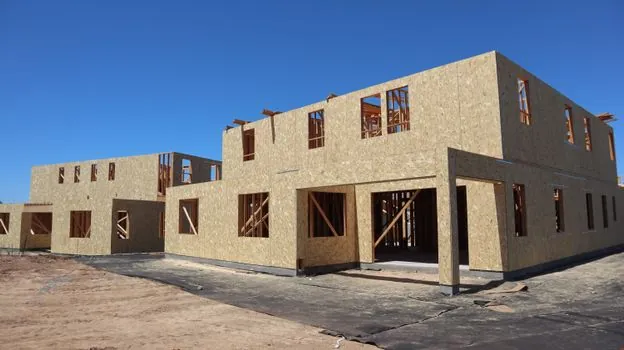
Four criteria consistently drive a correct spec: assembly location, required R-value at the assembly depth, fire rating demanded by code or design, and acoustic target. For a 2x6 exterior wall at 5.5-inch cavity depth, Comfortbatt at R-23 (R-4.2 per inch typical) covers most IECC climate zones without adding exterior continuous insulation, while colder zones layer Comfortboard 80 outside the sheathing to break the thermal bridge through studs [S2][S3].
For zero-lot-line and multi-family assemblies, ROXUL Safe 45/55/65 is specified where 1- to 2-hour fire-resistance ratings from the interior are non-negotiable, with non-combustibility and zero-lot-line clearance documented as a material property rather than an assembly attribute [S5]. For interior partitions around bedrooms, bathrooms, home offices, laundry rooms, and basement theaters, Safe'n'Sound or AFB replaces standard thermal batts purely for the density-driven acoustic gain; R-value is a secondary concern in these partitions [S3][S4].
Comparison of the Main Residential Rock Wool Options
Across current North American product lines, the main residential options line up against four decision criteria as follows: Comfortbatt (R-3.7 to R-4.3 per inch, friction-fit batt, exterior wood/steel stud cavities) versus Comfortboard 80 (rigid board, up to R-21, continuous exterior insulation) versus AFB (lightweight acoustical fire batt, interior steel/wood stud walls and floors) versus Safe'n'Sound (interior fire/sound batt, residential wood/steel stud walls, floors, ceilings) [S3][S5]. Cavityrock sits between Comfortbatt and Comfortboard 80 as a semi-rigid board for rainscreen and exterior cavity walls in 2- to 6-inch thicknesses, with NFPA 285 compliance documented for many cladding combinations [S3][S5].
Cost versus performance is a deliberate trade: rock wool typically runs above standard fiberglass pricing, so many builders adopt a hybrid approach, using standard insulation in low-priority zones and rock wool in bedrooms, bathrooms, shared walls, mechanical rooms, and home theaters where acoustic and fire performance carry the most weight [S4]. For a broader view of how stone wool sits inside the wider insulation category, the rock wool encyclopedia entry summarizes the manufacturing route and core property set.
Installation and Jobsite Considerations
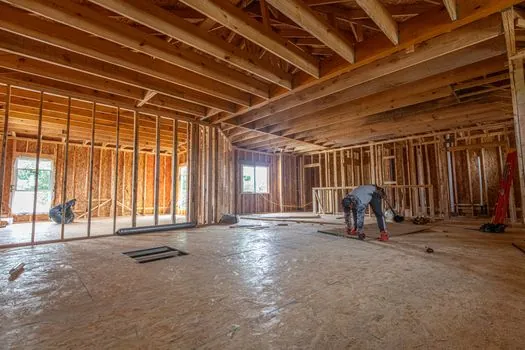
Rock wool must be cut with a serrated knife rather than compressed, because compression reduces both thermal and acoustic performance even though the material is dimensionally stable once installed at the design thickness [S2]. PPE guidance from the manufacturer standard for mineral wool handling applies: long sleeves, gloves, eye protection, and a respirator or dust mask during cutting, since the fiber matrix sheds fine dust during fabrication [S2].
Around electrical, plumbing, and HVAC penetrations, the material's rigidity lets installers split the batt and friction-fit around services without voids, which is one reason builders report cleaner installs and better fit around pipes and wiring than with low-density fiberglass [S4]. For cuts around the right tools, see the construction tools overview for knife and PPE selection used on mineral-wool jobsites. For larger residential projects that also involve exterior sheathing and cladding lifts, the construction machinery and equipment category covers the staging hardware used to move rigid Comfortboard and Cavityrock panels safely.
Limits, Failure Modes, and What Rock Wool Will Not Do
Rock wool is not a substitute for a code-required air barrier, water-resistive barrier, or vapor retarder; it manages moisture within the assembly but does not replace the building envelope's primary water management layers [S2]. Fire ratings are assembly-dependent: a batt on its own does not deliver a 1- or 2-hour rating, it must be combined with the tested wall, floor, or ceiling assembly that the code official is reviewing, including correct fastener spacing, sheathing, and gypsum type [S2][S5].
Acoustic performance is density-driven, so substituting a lower-density mineral wool to save cost will erode STC gains in interior partitions, and the same is true for substituting fiberglass in places where the spec called for AFB or Safe'n'Sound [S4]. The product data sheet should be the source of truth for the exact R-value, fire rating, and density of the specific SKU being installed, because the R-3.7 to R-4.3 per inch range is a typical-product band rather than a guarantee for any individual SKU [S2].
Codes, Standards, and Sourcing Signals
ASTM fire-reaction, corrosion-resistance, and air-erosion compliance is documented for the AFB line, and NFPA 285 compliance is documented for Cavityrock in many cladding combinations, which is the citation a code official will look for on continuous-insulation exterior walls [S5]. For the broader fire-rated-assembly context in food-processing and warehouse occupancies, see Smoke Detector Selection for Food Processing: 2026 Spec Map, which pairs with the firestopping side of a rock-wool spec where detectors and insulation meet in rated assemblies.
Current 2026 sourcing channels in the United States include Capitol Building Supply yards in DE, MD, NJ, OH, PA, VA, and DC carrying Comfortboard 80/110, AFB, ROXUL Safe, and Cavityrock, and Capitol Materials Coastal yards in SC, GA, and FL carrying the same families, with product-finder guidance published by the manufacturer in March 2026 [S1][S5][S9]. Two trackable signals for the next buying cycle: any update to the Comfortbatt R-value-per-inch label as the IECC 2024 cycle is adopted by additional states, and any expansion of the Cavityrock dual-density thickness range beyond the current 2- to 6-inch window, both of which would shift residential wall-assembly math on new builds.