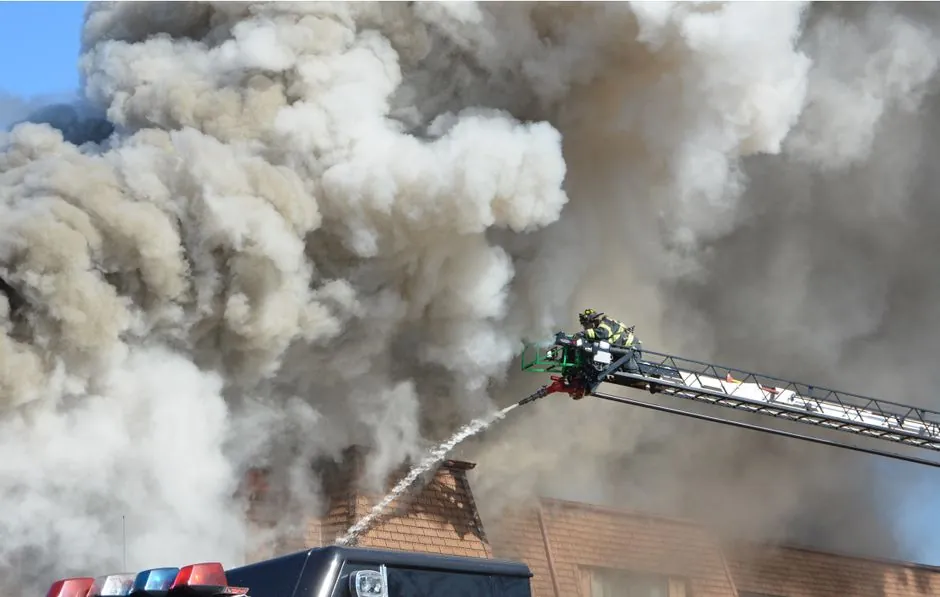
Industrial buyers account for 36.2% of the 2026 global fire hydrant system market (USD 3.5 billion, 4.8% CAGR to 2036), and within that segment dry-barrel hydrants hold 60% of product share, making them the default for any mining site exposed to freezing, dust, or heavy vehicle traffic [S2].
A mining hydrant is not a municipal hydrant in a yellow coat. The duty cycle is harsher: haul-truck side impacts, diesel soot, acidic pit water, and on many sites sub-zero winters at altitude. Procurement has to lock four parameters before price comparison, namely standard family, material stack, working pressure class, and bury geometry, because each of these drives both the unit cost and the 25-year maintenance exposure [S3].
Spec Family: Dry-Barrel Pillar (C502) Versus Wet-Barrel (C503) and Underground (EN 14339)
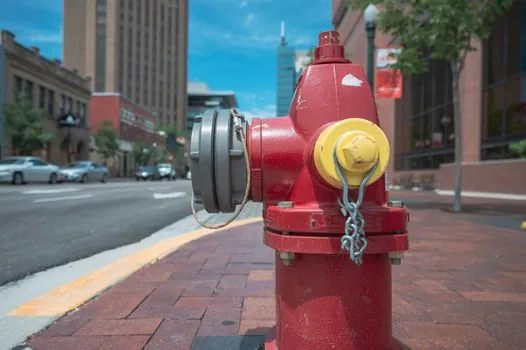
For any open-pit haul road, process plant yard, or underground portal head, ANSI/AWWA C502 dry-barrel pillar hydrants are the engineering default, because the main valve sits below the frost line and the standing barrel drains empty after each use, eliminating the freeze-burst failure mode that kills wet-barrel units in cold service [S3].
Mining sites below the frost line and inside heated process buildings can use ANSI/AWWA C503 wet-barrel hydrants, where each outlet carries its own individual valve, which gives faster hose connection but rules them out anywhere temperature drops below 0°C for any sustained period [S3]. EN 14384 pillar hydrants and EN 14339 underground hydrants are the European equivalents, with flange connections to the main per EN 1092-1, and are the correct reference for African, Australian, and South American operations that follow EU-spec parent-company standards [S3]. Underground (buried) hydrants are generally avoided on haul roads because the bonnet and nozzle sit below grade, where haul-truck dust and pit mud bury them within days; pillar hydrants keep the outlets 600-900 mm above grade for quick coupling [S3][S7].
Pressure Class and Hydraulic Sizing for Mine Water Mains
Mine fire-water mains are commonly run at PN16 (16 bar, 232 psi) working pressure, and high-pressure headers feeding long hydrant runs or pump suction manifolds should be specified as seamless steel pipe to absorb water-hammer shock from sudden hydrant opening, while distribution branch lines can be cost-optimized ERW pipe [S5].
Hydraulic sizing on a mining loop is governed by the Hazen-Williams friction-loss formula, where a smooth, epoxy-lined pipe carries a C-factor of 140 and a degraded black pipe drops to 80, a 43% loss of carrying capacity for the same nominal diameter, which is why internal epoxy or cement-mortar lining is a hard requirement on any buried hydrant main, not an upgrade [S5]. For a single pillar hydrant on a 150 mm main at PN16, the typical certified flow is 450-1,500 L/min through the pumper nozzle depending on bonnet size and main pressure, which is the figure mine fire-water engineers should use when laying out a hose-attack layout, not the nameplate size on the data sheet [S3].
Material Stack: Ductile Iron Body, Bronze or SS316 Internals, FBE Coating
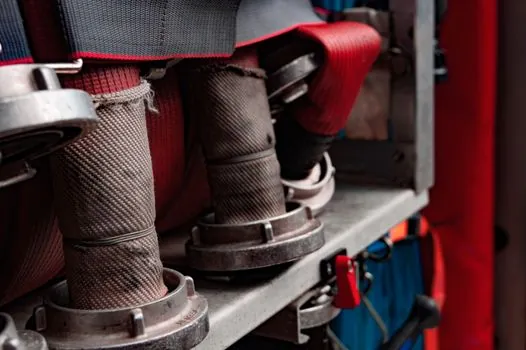
Ductile iron to ASTM A536 is the industry-standard body material for underground and pillar hydrants, because its spherical graphite microstructure gives far higher tensile strength and impact resistance than gray cast iron, which is the property that lets a traffic-model hydrant shear cleanly at the breakaway flange when a haul truck clips the post instead of fracturing the buried barrel [S3][S4].
For the main valve, seat, and drain components, bronze (copper-tin alloy) is the default internal material because it resists corrosion in raw mine water and does not seize after years of dormancy, while SS316 stainless steel is specified for highly aggressive chloride or chemical-exposure environments, with published data showing Type 316 surviving salt spray for over 1,000 hours without rust, which is the relevant benchmark for coastal heap-leach pads or brine-exposed service yards [S4][S8]. External corrosion protection on the buried section is supplied by fusion-bonded epoxy (FBE) coating, with 3LPE used on the connecting pipe; the field failure mode the coating prevents is external soil-side corrosion that pits the ductile iron wall from the outside in, an invisible degradation that turns into a leak only after 10-15 years [S4][S5]. Nozzle caps and operating nuts on the above-grade bonnet are commonly ductile iron with powder coating, or stainless steel for the most exposed sites, and an anti-collision ground hydrant configuration with a ductile-iron body, DN80-DN200 size range, and PN10/PN16 flange class is the typical off-the-shelf SKU for mine-yard installation [S6].
Selection Criteria and a Side-by-Side Comparison
A mining fire hydrant purchase decision is driven by five comparable attributes: standard family, body material, internal trim, pressure class, and coating system, and the table below lines the three realistic options against those criteria. [S3]
Option A, the AWWA C502 dry-barrel pillar hydrant with ductile-iron body, bronze trim, and FBE coating at PN16, is the lowest-risk default for any mine site in a temperate or cold climate with standard soil chemistry. Option B, the same C502 geometry but with SS316 internal trim and a thickened polyurethane external coating, is the correct step-up for sites with acid-leach pad runoff, saline groundwater, or sulphate-rich soil, where bronze dezincification and standard FBE undercutting are the known 10-year failure modes. Option C, the EN 14384 pillar hydrant with the same ductile-iron body and PN16 flanges to EN 1092-1, is the right pick for European-parent-company operations in Africa, the Mediterranean, or South America where the procurement chain already runs on EN documentation rather than AWWA [S3][S4][S8]. On cost, the SS316 trim option typically adds 20-35% to the body price but cuts field maintenance interventions by roughly half over a 20-year life, which is the trade a mining capex/opex team should run before defaulting to bronze on a chloride site [S4][S8].
Where Mining Hydrants Are and Are Not the Right Fit
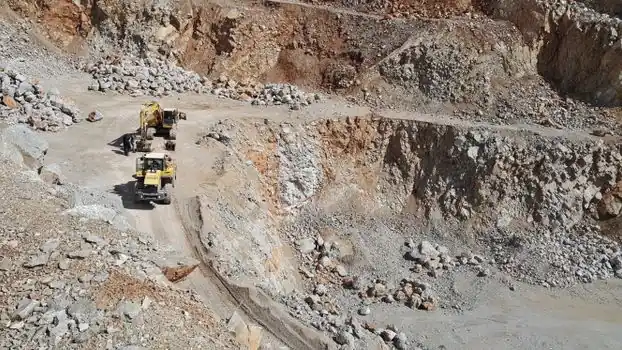
Pillar hydrants are the correct specification for haul-road shoulders at 90-150 m spacing, process plant pipe racks, conveyor transfer houses, crusher stations, and the surface bench of an underground portal, where the bonnet and outlets need to be visible and reachable in under 30 seconds by a hose team in full PPE [S7].
They are the wrong pick for the active face of an open pit, where blast fly-rock and hang-up clearance violate the 1.5 m stand-off, for underground workings where only mine-fire-water hose reels and fixed monitors are usable due to heading height, and for any zone where the water column is at risk of freezing because the pit pump house loses power; in those locations a fixed monitor on a wet riser, or a foam proportioning skid, replaces the pillar hydrant entirely [S3][S7]. Standard ductile iron with FBE coating is also not suitable for direct burial in a sulphide-rich leach pad or a copper-solvent extraction pond bund, where a polyurethane top-coat over the FBE and SS316 internals are mandatory, and the same restriction applies to the diesel-fuelled vehicle maintenance bay floor, where drip pans and hydrocarbon splash demand chemical-resistant external coating [S4].
Installation Geometry, Drainage, and Commissioning Checks
Bury depth on a pillar hydrant must be set so the breakaway flange sits at finished grade, not above it, and the drain valve in the shoe has to be verified to open fully when the hydrant is shut, because a partially closed drain leaves water in the barrel and replicates the wet-barrel freeze failure mode on a unit that is supposed to be dry [S7].
Post height has to clear the deepest expected snow or windblown dust accumulation at the site, with 600-900 mm of bonnet above local grade as the working range, and the base flange has to be anchored to a concrete thrust block sized for the local soil bearing capacity, because an unanchored pillar hydrant on a pumped mine main will walk sideways the first time a pumper connects at full flow [S7]. Pre-commissioning checks should include a 1.5x working-pressure hydrostatic test on the main, a flow test against a pitotless flow measurement or a calibrated test plate to confirm the 450-1,500 L/min pumper-nozzle range, and a drain-down test of at least 5 minutes to confirm the barrel empties with no standing water at the shoe, which is the single most predictive field check for cold-site reliability [S3][S5][S7].
Standards, Listings, and Documentation the Mine Has to Demand
For North American-funded operations the hydrant itself has to carry UL 246 and FM 1510 third-party listings, the hose threads have to conform to NFPA 1963 (NST/NH), the installation has to follow NFPA 24, and the available flow has to be colour-coded to NFPA 291 so the incident commander can read capacity off the bonnet at night [S3].
For European-funded operations the equivalent documents are EN 14384 for pillar hydrants, EN 14339 for underground hydrants, EN 1092-1 for the flange pattern on the connecting main, and EN 1074-6 for the valve hydraulic-test regime, with the material standard ASTM A536 cited on the data sheet for the ductile iron grade [S3][S4]. Beyond the standards, a mining procurement engineer should also require the FM/UL certificate copies, a hydrostatic test report per lot, a coating thickness log for the FBE layer (typical specification 250-400 μm), and a brass-or-bronze certificate for the internal trim, because without these four documents the hydrant will be rejected at site receipt by the owner's QA team, and a 40-unit shipment rejected at the port is the single most common cause of project schedule slip on remote mine builds [S3][S5].
Trackable Signals to Watch Through 2026
The two practical signals a mining fire-water engineer can monitor over the rest of 2026 are: first, the dry-barrel hydrant share of the global USD 3.5B 2026 market, which FMI pegs at 60% and is expected to hold through the 2036 forecast horizon as cold-region mining capacity expands [S2]; second, the publication of revised editions of ANSI/AWWA C502, NFPA 24, and EN 14384, which historically have shifted the breakaway-flange geometry and the drain-valve leakage tolerance, and which a 2026-spec project should confirm against the latest printing before locking the data sheet. A side-by-side read of these documents against the fire hydrant encyclopedia entry and against a current fire safety reference is the most efficient way to catch a standard revision before it lands on the procurement desk, and the same principle applies to portable fire extinguisher specification for the light-vehicle fleet that supports the haul road.
See also our earlier report, Shield machine pairing for snow removal: 2026 selection map.