
On bridge projects the rotary hammer is the workhorse for rebar dowel holes, anchor bolt sleeves, formwork tie-backs, and demolition of cured concrete patches, and the right chuck class and impact-energy band cut cycle time more than any other spec choice [S1][S4].
Three chuck families dominate the 2026 OEM catalog: SDS-plus for holes up to about 32 mm, SDS-max for 32–52 mm heavy drilling and light chiselling, and hydraulic breakers (DSB/DFX-type) mounted on excavators for bridge-pier demolition and bearing-seat removal [S1].
SDS-Plus Class: The Bridge-Site Default for 6–32 mm Holes
Bosch lists the GBH 2-21 Professional SDS-plus rotary hammer at 2.3 kg body weight and 21 mm concrete drilling capacity, the lower bound of the SDS-plus work range [S1]. Festool positions the KHC 18 EB-Basic cordless SDS-plus at 2.7 kg with 2.6 J single-blow energy, sized for serial anchor drilling on site scaffolding [S1]. Lightweight L-shape SDS hammers such as the BBH 12 drop to 1.6 kg and 0.9 J, useful only for 6–13 mm fixing holes in cured deck slabs [S1]. Milwaukee's M18 FHAFOH16 SDS-plus at 3.3 kg integrates a HEPA dust extractor that captures 99.97% of particles down to 0.3 µm, a configuration now common on European bridge jobs where silica-dust rules apply [S1].
For typical bridge tasks — M16/M20 anchor bolts in abutments, 16 mm rebar dowels between deck pours, 25 mm formwork ties — a 2.5–3.5 kg cordless SDS-plus in the 2.0–3.5 Joule band covers the bulk of daily cycles without operator fatigue [S1].
SDS-Max and High-Energy Class: 32–52 mm Drilling and Chiselling
Festool's KHA 18 LTX BL 40 cordless SDS-max at 6.9–7.9 kg is the current benchmark for cordless heavy drilling, sized for 40 mm anchor sleeves in pier caps and 32–40 mm utility core-outs [S1]. Makita's GRH07Z 40V max XGT SDS-max cordless rotary hammer runs 1-1/8" (28.6 mm) capacity and is marketed for heavy-load applications where crews previously had to run corded [S1].
DEWALT's DCH273B SDS-plus at 6.8 lb (3.1 kg) sits between the two classes and includes AUTOSTOP kickback control, a feature bridge crews value when drilling overhead for cable-tray and seismic bracing attachments [S1]. For pure demolition — removing temporary formwork, breaking out bearing-seat concrete, chipping drainage scuppers — a demolition hammer in the 11–16 J class is more cost-effective than a rotary hammer, because rotary hammers sacrifice impact energy to keep the rotary drilling mode functional [S1].
Hydraulic Breakers for Bridge Pier and Bearing-Seat Work
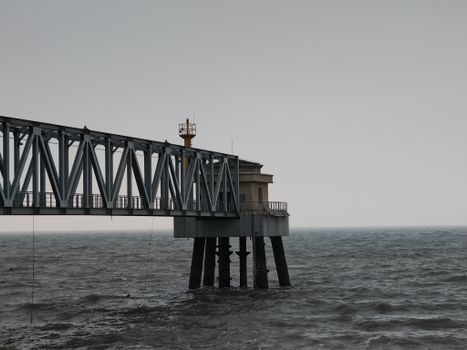
DSB and DFX hydraulic rotary hammers from the DirectIndustry catalog mount on any single-acting hydraulic system and accept high back-pressure circuits common on mid-size excavators already on site for earthworks [S1]. Tool class on a 20–30 ton excavator typically covers bridge-pier demolition where impact energy in the 400–800 Joule per blow band is required — a range no electric or cordless rotary hammer reaches [S1].
For confined pier-cap work where a hydraulic breaker cannot reach, a 1,500 W SDS-max corded rotary hammer with vibration-damped handles remains the standard bridge-site tool, typically paired with a dust extractor to keep silica exposure inside the OSHA action level.
Selection Criteria: Chuck, Energy, Weight, Dust, and Power Source
Five criteria sort the catalog down to a short list. (1) Chuck and bit capacity: SDS-plus ≤32 mm, SDS-max 32–52 mm, hydraulic breaker above. (2) Single-blow impact energy: 0.9 J for light fixings, 2.0–3.5 J for general SDS-plus work, 5–20 J for SDS-max heavy drilling, 400+ J for hydraulic breakers. (3) Tool weight: 1.6–3.5 kg for overhead work, 5–8 kg for vertical pier drilling, 200–2,000 kg tool + carrier for hydraulic breaker. (4) Dust control: integrated HEPA extractors or separate M-class extractors per EN 60335-2-69. (5) Power source: corded 220–240 V for stationary scaffolding work, 18 V/36 V/40 V cordless for mobility around deck rebar, hydraulic for excavator-mounted demolition [S1][S2].
The LBGsrl C063 electric rotary hammer, at 3 kg and 220-240 V 50 Hz, is dimensioned for vibration of concrete in moulds rather than bridge drilling, illustrating how catalog weight and voltage only tell part of the story — purpose-built dust shrouds, vibration control, and bit-change systems separate bridge-rated tools from generic masonry hammers [S2].
Comparison of the Three Chuck Classes for Bridge Tasks

SDS-plus: 1.6–3.5 kg, 0.9–3.5 J, holes 6–32 mm, dominant use anchor bolts and dowel rebar. SDS-max: 5–8 kg, 5–20 J, holes 32–52 mm plus chiselling, dominant use pier-cap anchors and formwork demolition. Hydraulic breaker: 200–2,000 kg mounted, 400–1,200 J, holes/chipping above 50 mm, dominant use pier demolition and bearing-seat removal [S1]. Cycle-time penalty for mis-specifying: a 2 J SDS-plus on a 40 mm hole will stall and overheat, while an SDS-max on a 10 mm fixing hole is operator fatigue without productivity gain. For more on matching the right class to a related interior finishing workflow, see the rotary hammer spec map for interior finishing.
Power Source, Cordless Voltage, and Bridge-Site Logistics
Bridge decks and piers rarely have 220 V at the work face; cordless platforms (18 V, 36 V, 40 V max) have become the bridge default for overhead drilling and for work on cantilever formwork travellers [S1][S4]. Bosch's professional rotary hammer line is distributed only through qualified dealers, which affects spare-parts lead time on remote bridge sites [S4]. Festool's 18 V EC-TEC brushless motor and pneumatic hammer mechanism deliver 2.6 J at 2.7 kg — a usable energy-to-weight benchmark for cordless SDS-plus in 2026 [S1].
For sites where battery logistics are unreliable, a 1,500 W corded SDS-plus remains the fallback, but cable management on cantilever decks adds labour. Crews running overhead bridge crane erection adjacent to drilling zones also segregate 230 V feeds to avoid simultaneous lift and tool trips.
Bridge Construction Workflow: Where the Rotary Hammer Sits

Bridge construction selection is a multi-criteria problem covering span length, geographic location, and constructability — the rotary hammer specification only matters once the deck system, pier type, and bearing layout are fixed [S5]. In practice the rotary hammer enters at five points: (1) drilling starter-bar dowels into pier columns, (2) installing M16–M30 anchor bolts at bearing seats, (3) fixing formwork ties and bracing, (4) drilling rebar couplers in deck-slab splices, and (5) demolition of temporary works, bearing plinths, and test cubes [S1][S2].
Specifying by impact energy rather than wattage aligns the tool to the concrete compressive strength — a 2.5 J SDS-plus is adequate for C30/37 deck pours, but C50/60 high-strength pier concrete benefits from the 5–8 J range for clean hole geometry in anchor cages [S1].
Failure Modes and Limits to Plan Around
Three failure modes drive bridge-site rework: bit jamming in reinforced decks (cured rebar hit, not tool failure), chuck wear after 1,000+ hole cycles on SDS-plus, and dust-extractor clogging when drilling dry-cured concrete without pre-wetting. Milwaukee's AUTOSTOP rotary hammers shut down within milliseconds of a bind-up, the cited engineering control against the most common bridge-site hand-arm vibration injury [S1].
Continuous-use vibration exposure on bridge decks often exceeds 5 m/s² triaxial; rotation-only mode (hammer stop), anti-vibration side handles, and job-rotation of operators are the practical controls — none replace selecting a tool with declared vibration per EN 60745-2-6. The LBGsrl C063, with double-isolation motor in compliance with international standards, is one example of the documentation bridge quality plans ask for [S2].
Sourcing Map: Brands, Channels, and Bridge-Site Lead Time
DirectIndustry's 2026 catalog lists 20 manufacturers with 48 construction-site rotary hammer products: 34 electric, 8 pneumatic, 6 hydraulic [S1]. Dominant bridge-supply brands include Bosch (GBH, KHA, KHC, KHD series), Festool (EC-TEC cordless), Makita (XGT 40V max), DEWALT (DCH cordless, SDS-max), Milwaukee (M18 FHAFOH16), Hitachi/HiKOKI (DH24P), Atlas Copco Construction Tools, CS UNITEC, AEG, and Demarec for hydraulic classes [S1].
Dealer-only distribution — as Bosch Professional enforces for its 18 rotary hammer SKUs — means bridge procurement should plan a 2–4 week lead time on warranty replacement tools, longer for SDS-max and hydraulic spares [S4]. Rental fleets in major metropolitan areas carry SDS-plus 2.5–3.5 kg corded units as a baseline; SDS-max and hydraulic breakers usually require dedicated rental agreements.
What to Track Over the Next Quarter
Watch for new 18 V/40 V max cordless SDS-max models with 5 J-plus energy ratings, since the 2026 catalog still shows corded tools dominating heavy drilling on bridge sites [S1][S4]. Confirm whether your jurisdiction's silica-dust rule has adopted HEPA-integrated rotary hammers as a recognised control — Milwaukee's 99.97% capture at 0.3 µm is the current benchmark cited in OEM literature [S1]. Cross-check the bridge deck construction system against the multi-criteria selection guidance in [Innovative Infrastructure Solutions (2023-10)](S5) before locking the rotary hammer spec, because deck type drives rebar congestion and therefore the required impact-energy band.