
Pt100 with 100 ohm nominal resistance at 0 C and a Class A tolerance of plus or minus 0.15 C at 0 C is the default RTD specified across most process plants, while Pt1000 with 1000 ohm nominal is the go-to choice for 2-wire links and battery-powered loops because lead resistance becomes a smaller fraction of the reading [S4][S3].
RTDs, or resistance temperature detectors, use a platinum element whose resistance rises in a near-linear, repeatable way with temperature; the IEC 60751 standard family governs the callendar-van Dusen curve, the alpha coefficient of 0.00385 ohm/ohm/C, and the tolerance classes that buyers actually compare on a data sheet [S4].
Element type and tolerance class
The first gate is element spec. Pt100 (100 ohm at 0 C) and Pt1000 (1000 ohm at 0 C) are the two workhorses; Pt100 is dominant in process instrumentation, Pt1000 in HVAC, laboratory, and battery-loop work because a 1 ohm lead drop on a 1000 ohm element is roughly ten times less significant than on a 100 ohm element [S4].
Tolerance classes per IEC 60751 are the second filter. Class A delivers plus or minus 0.15 C at 0 C, Class B delivers plus or minus 0.30 C at 0 C, and the older 1/3 DIN (often called Class AA) hits plus or minus 0.10 C at 0 C; thermistor-grade NTC parts can reach 0.06 percent or 0.15 C accuracy but only over a narrow window [S4][S3].
Wire configuration is the third filter inside this gate: 4-wire RTDs eliminate lead-resistance error entirely, 3-wire RTDs compensate it with a matched bridge, and 2-wire RTDs accept lead error as part of the loop budget. Pick 4-wire for calibration-grade work, 3-wire for typical process loops, and 2-wire only when lead runs are short or the sensor carries a Pt1000 element [S4].
Temperature range and element construction
Thin-film elements are also smaller, which is why they show up in probes with 3.0 mm or 3.5 mm sheath OD; wire-wound elements need more space and typically push the minimum probe diameter to 4.0 mm or larger. For cryogenic service below -50 C, specify a wire-wound element because thin-film elements lose accuracy at the low end of the curve [S4].
Self-heating is a range-adjacent concern: a 1 mA excitation through a Pt100 dissipates about 0.1 mW, while a 1 mA excitation through a Pt1000 dissipates about 1 mW, so designers halve the Pt1000 excitation current or accept a higher self-heating error in still air [S4].
Sheath material and process compatibility
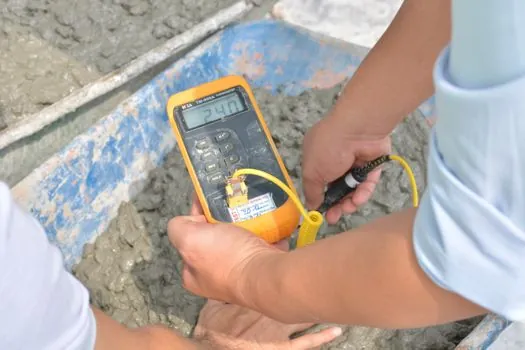
The second gate is sheath material. 316L stainless steel covers most aqueous, food, and mildly corrosive service up to about 850 C; Inconel 600 pushes the ceiling toward 1150 C and resists oxidation, sulfidation, and chloride stress-corrosion cracking better than 304 or 316L in refinery and furnace service [S4].
For aggressive chemistries, move up to Hastelloy C276 or titanium; for ultrapure water, semiconductor wet benches, and pharmaceutical clean-in-place loops, specify an electropolished 316L sheath with surface finish Ra 0.4 micrometer or better and a tri-clamp process connection. Avoid 316L in strong reducing acids such as concentrated hydrochloric or sulfuric, where the molybdenum addition does not save you and the right pick is a high-nickel alloy or a fluoropolymer-coated sheath [S4].
Sheath diameter drives both response time and mechanical strength: a 3.0 mm OD probe reaches 63 percent of a step change in roughly 2-3 seconds in stirred water, a 6.0 mm OD probe in 6-10 seconds, and a 10 mm OD thermowell in 20-40 seconds; if the process is abrasive or high-velocity, install the RTD inside a thermowell rather than exposing the sheath directly [S3][S4].
Comparison of main RTD variants by duty
Lining the main options against the four decision gates gives buyers a working shortlist. Pt100 Class A 4-wire wire-wound in a 6.0 mm Inconel 600 sheath is the calibration and refinery default, accurate to plus or minus 0.15 C at 0 C and rated to roughly 650 C continuous.
A simple decision rule: pick Pt1000 only when the loop is 2-wire or battery-powered and the accuracy budget is wider than 0.5 C; otherwise stay on Pt100, because the global installed base, the transmitter inventory, and the calibration procedures all assume 100 ohm nominal. For more on how Pt100 links to controller selection, see the temperature controller reference page [S4].
Who should NOT pick the mainstream option

Pt100 Class A 4-wire in Inconel 600 is the wrong pick when the loop is battery-powered, the lead run is fixed under 5 m, or the application accepts 0.5 C accuracy. In all three cases a Pt1000 Class B 2-wire in 316L does the same job at lower excitation current and lower installed cost [S4].
It is also the wrong pick for dynamic surface measurement on a bearing housing or a motor winding, where a small exposed-junction thermistor with a 0.5 second time constant outperforms a 6.0 mm sheathed RTD; for that duty, look at NTC or PTC thermistor assemblies with 1.0-3.0 mm tip diameter and 10 kohm at 25 C nominal [S3].
It is the wrong pick for cryogenic service below -50 C; specify a wire-wound Pt100 with a 1/3 DIN tolerance and a low-drift cryogenic calibration, and confirm the sheath is rated for the full cold-to-hot thermal cycle, including vacuum-side operation if the probe crosses a vacuum flange [S4].
Lead configuration, transmitters, and signal integrity
Lead configuration is the third gate. 4-wire RTDs paired with a Pt100 input on a modern temperature transmitter give the best accuracy; the transmitter applies a 1 mA or lower excitation current, measures the voltage drop across the element, and rejects lead resistance on the sense leads [S4].
3-wire RTDs are the most common process plant configuration and work with nearly every industrial transmitter; make sure the three leads are the same gauge and the same length so the bridge compensates correctly. 2-wire RTDs are only acceptable on Pt1000 elements or on very short leads under 5 m; otherwise the lead-resistance error shows up as a positive temperature bias that drifts with ambient [S4].
For a deeper dive into the measurement chain and the transmitter-side error budget, the temperature measurement reference page covers sensor-to-controller signal paths. For the basic Pt100 element definition, the RTD PT100 page lists alpha, nominal resistance, and the IEC 60751 base values [S4].
Calibration, drift, and sourcing

Drift is the fourth gate and the one most buyers skip. A Class A Pt100 from a reputable supplier drifts less than 0.05 C per year at 200 C in clean service; the same sensor in a vibrating, thermal-cycling environment can drift 0.1-0.3 C per year, so factor calibration interval into the sensor cost, not just the unit price [S4].
Source from manufacturers that publish traceable calibration certificates to a national lab (NIST, NPL, NIM) and that publish per-batch alpha and R0 values rather than a generic datasheet curve; the difference between a 0.00385 ohm/ohm/C element and a 0.00392 ohm/ohm/C element is roughly 1.5 C at 100 C, and mixing them on the same loop is a classic commissioning error [S4].
For buyers comparing transmitter-side signal chains, the temperature sensor reference page is a useful cross-reference.
This topic is covered further in Welded Steel Mesh Selection for High-Rise Concrete Frames.