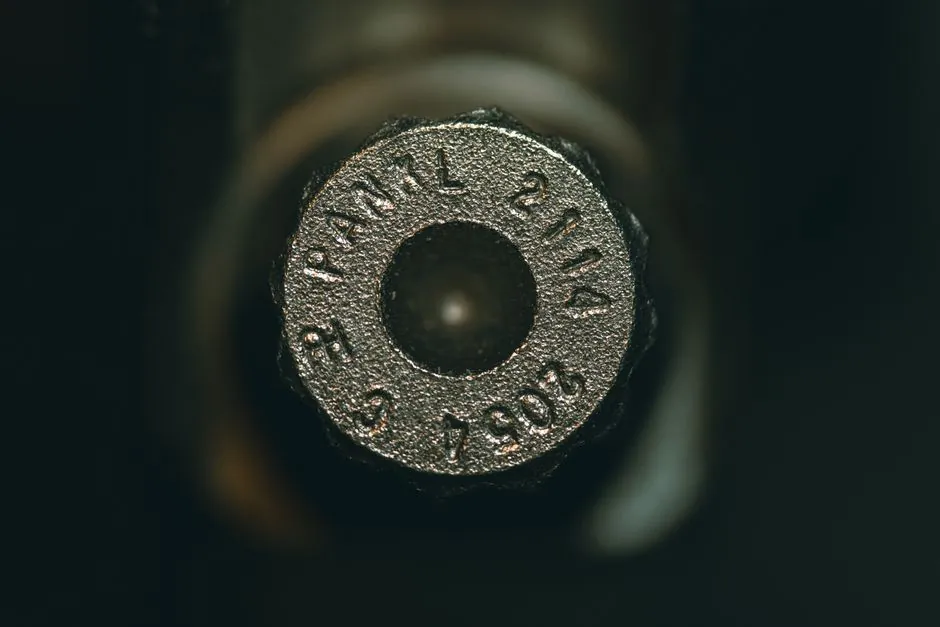
Rubber-bonded sealing washers carry a published operating window of -20°C to 100°C (-4°F to 212°F) for the nitrile element, per the MECCANIXITY M14 bonded-seal data sheet [S5]. Metal crush washers made of annealed copper or aluminum are routinely specified on oil, fuel and hydraulic fittings that sit in engine-bay ambient temperatures above that ceiling, and they remain the default at sump-plug and banjo-bolt locations [S1][S3].
The selection turns on three numbers: continuous service temperature, fluid compatibility, and torque-to-seal margin. Bonded washers (a metal carrier with a molded rubber sealing lip, often called Dowty seals) win on flat, lower-torque faces and coolant-side ports. Annealed copper crush washers win everywhere temperature or pressure pushes past the rubber limit [S1][S2].
Temperature Ratings: Bonded vs Metal Crush, Side by Side
Stock nitrile-bonded sealing washers are published with a working range of -20°C to 100°C, roughly -4°F to 212°F, with the rubber element as the limiting component [S5]. Forum-cited experience places the practical ceiling for many Dowty-style bonded seals at 225-250°F, beyond which the elastomer begins to lose recovery and the seal goes from "crush plus compression" to "compression only" [S2]. Annealed copper crush washers have no elastomer to cook; the metal itself softens with annealing rather than hardening at temperature, which is why annealed copper is the recommended state for sealing-grade copper rings [S1][S3].
Aluminum crush washers sit between the two for temperature, sealing well at the 90-180°C sump-plug band typical of gasoline-engine oil pans, but they deform less under bolt load than annealed copper and are picked when reusability and weight matter more than ultimate pressure hold [S6][S7]. A concrete comparison of the three families on the criteria that drive MRO and OEM selection:
1. Continuous service temperature: nitrile bonded 100°C (212°F), practical user-reported 225-250°F (107-121°C) for Dowty seals, aluminum crush ~180°C steady, annealed copper crush extends well past the bonded-washer ceiling on engine and hydraulic lines [S2][S5][S7]. 2. Reusability: bonded washers typically single-use after crush, copper crush single-use (work-hardens on first compression), aluminum crush often reusable 2-3 cycles if not over-torqued [S1][S3][S6]. 3. Best-fit fluid: bonded for coolant, ATF on flat faces, lower-pressure hydraulic; copper crush for hot oil, fuel, brake fluid, high-pressure hydraulic; aluminum crush for oil drain plugs and OEM oil-pan applications where the factory specifies a soft-aluminum ring [S1][S4][S7]. 4. Typical pressure ceiling: bonded seals are routinely applied into thousands-of-PSI hydraulic circuits, but user reports converge on copper or Dowty only after a plain copper washer has failed once on a converter-housing bolt (Allison/GM, 42 ft-lbs spec) [S2].
Where the Rubber-Bonded Washer Is the Right Pick
Bonded sealing washers earn their slot on flat-faced ports where the rubber lip can recover against minor surface mismatch and where the fluid stays inside the bonded-washer thermal envelope. Specified applications include hydraulic block connections, coolant fittings on engines, lower-torque transmission cooler lines, and pump-bolt sealing where the bolt passes through a smooth counterbore [S1][S2].
The MECCANIXITY M14 19.6 x 11.5 x 3 mm carbon-steel/nitrile bonded washer is a representative stock SKU: the carbon-steel carrier handles bolt clamp load, the nitrile element does the actual sealing, and the published -20°C to 100°C window covers the majority of under-hood and inside-cabinet applications [S5]. For a primer on the elastomer-metal hybrid design and where it sits in the sealing family, the sealing washer reference page covers the geometry and load path. Choosing the bonded style for the wrong job is the most common failure mode: specifying a Dowty seal on a turbocharger oil feed line that sees sustained 150°C+ oil temperatures will cook the nitrile and the joint will weep within hours, not weeks [S2].
Where the Metal Crush Washer Wins
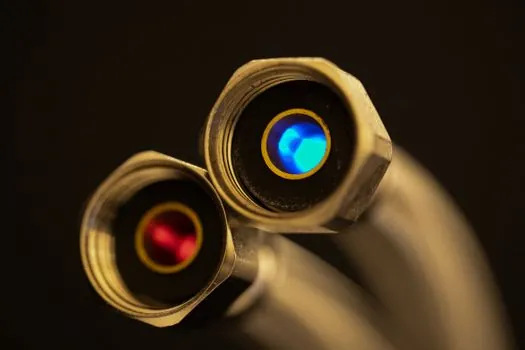
Annealed copper crush washers dominate hot-side sealing: brake line banjo bolts, fuel-injector leak-off fittings, turbo oil feed and return lines, power-steering banjo bolts, and hydraulic pump pressure ports that run hot under continuous duty [S1][S3]. The annealing step, heating copper and letting it cool, returns the metal to its softest state, which is the only state that will flow into the micro-voids between two hard mating faces on a single torque-up [S3].
For broader material context on why annealed copper and soft aluminum behave so differently under a bolt head, the metal material entry covers hardness, ductility and work-hardening behavior relevant to single-use sealing rings. Aluminum crush washers are a different proposition: an alloy ring (often 1050/1100 series) crushes predictably on a sump plug, seals well on a clean aluminum pan, and is the factory fitment for many Toyota and Honda drain-plug applications where a blue-marked aluminum or coated-aluminum ring ships with the OEM part [S4][S8]. The 90-180°C band cited by experienced wrenchers matches the steady oil-pan temperature of a normally aspirated gasoline engine on the road [S4].
Failure Modes and Common Mistakes
The dominant failure on metal crush washers is reusing a work-hardened copper ring, which will not re-crush to its original thickness and leaks at the first thermal cycle [S1][S3]. A secondary failure is fitting non-annealed copper where annealed was specified, the ring is too hard to flow into surface voids, and the joint weeps under vibration [S3]. Aluminum rings fail when over-torqued: the alloy shears at the ID rather than flowing, and the joint leaks despite the bolt feeling tight [S6].
Bonded-washer failures cluster around three causes: continuous fluid temperature above the nitrile rating, chemical attack from E85, biodiesel, or aggressive synthetic oils that swell the elastomer, and under-torque on a rough face where the rubber never reaches its design compression [S2][S5]. On Allison/GM converter-housing bolts, the OEM-recommended procedure is fresh copper washers plus PTFE paste on the threads plus a thin bead of silicone on both washer faces, torqued to 42 ft-lbs; users who skipped the paste and silicone still saw seepage even with the correct washer [S2]. The "feel" torque method, used by many technicians, is acceptable on copper but unreliable on bonded seals because the rubber's compression curve is non-linear in the last 10% of travel [S2].
Decision Rule for Specifying the Right Washer

If the joint runs above 100°C continuous, or sees fuel, brake fluid, ATF, or high-pressure hydraulic, or sits on a vibration-loaded banjo bolt, the answer is annealed copper crush (with soft aluminum as the OEM drain-plug alternative) [S1][S3][S7]. If the joint is on a flat hydraulic or coolant face below 100°C continuous and the bolt clamp force is modest, the bonded sealing washer is the lower-leakage option because the rubber recovers against minor surface mismatch [S1][S5].
For a deeper cross-reference on copper sealing rings and how they compare to fiber and composite gaskets on tap and hose connectors, the Rubber vs Fibre Washers for Tap and Hose Connectors guide covers the lower-pressure end of the same family. For high-pressure static sealing decisions that sit one tier above crush washers, the RTJ vs Spiral Wound Gasket: Material Choices and Spec Boundaries piece is the natural next read. If the next selection is a mechanical fastener family rather than a seal, the UB vs UC: flange and web proportions, spec-by-spec reference covers structural-channel sizing on a similar spec-driven basis.
Trackable signal: confirm the elastomer compound on any incoming bonded-washer lot, NBR (nitrile) is the -20°C to 100°C default, FKM (Viton-class) raises the ceiling but is rarely stocked in M14 Dowty geometry, and the data sheet should state the compound before shipment acceptance, not after a hot-side leak [S5].
For component-level specifications, see spring washer.