
EPDM gaskets can swell, soften, and lose sealing integrity when exposed to petroleum oils, fuels, greases, and hydrocarbon solvents [S1][S3].
Use EPDM rubber for water, steam, glycol, and suitable cleaning service, but screen standard EPDM out of continuous petroleum-oil duty.
Water and Petroleum Oil Expose Opposite EPDM Limits
EPDM is a family of synthetic rubber compounds rather than one fixed formulation, so grade, hardness, cure system, temperature, and exposure time determine service performance [S3]. Selected grades perform well in water and hot-water service, and EPDM has strong resistance to steam, weather, ozone, oxygen, alkali, and mild acidic media [S6].
Petroleum oil is a different compatibility problem. Petroleum oils, mineral oils, fuels, greases, and hydrocarbon solvents can swell ordinary EPDM grades [S1][S3]. The elastomer may absorb oil while some compound ingredients are extracted, changing volume, hardness, and elasticity [S3]. Experimental elastomer studies likewise found that EPDM types swell rather than dissolve in crude oils [S5].
The practical result is dimensional instability. A swollen gasket can crowd its groove or move against the mating face; later volume loss or loss of contact force can open a leak path [S3]. A molded sealing lip may also swell beyond its drawing dimensions and no longer match the mating surface [S3].
Use a Three-Part Compatibility Decision
Evaluate the gasket against three separate limits: fluid chemistry, operating temperature, and joint duty. Petroleum oil in continuous contact is a strong reason to reject standard EPDM, even if the compound has a generous published temperature range [S1][S3].
Second, separate the temperature environment from the fluid environment. EPDM can perform well in hot water and steam, while exposure to petroleum oil can cause swelling, blistering, and premature hose failure [S1].
Third, test the finished geometry. Swelling varies with the fluid, EPDM compound, temperature, and exposure time, so one swelling value does not prove whether a gasket will seal in its actual groove [S3]. A thicker section or higher initial hardness cannot make an incompatible EPDM compound chemically resistant [S3].
Compare EPDM, NBR, and HNBR by Service Criterion
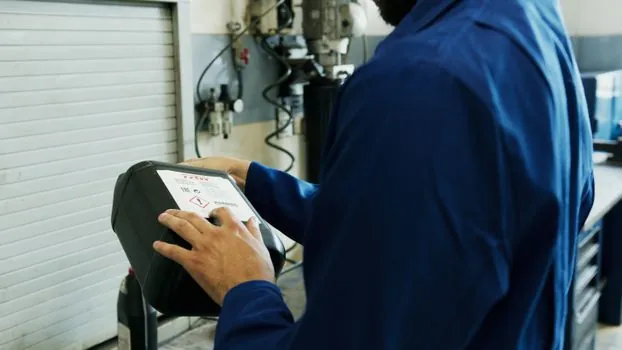
Standard EPDM, general NBR, and HNBR should be compared on the actual media, not on a generic label. EPDM is the logical choice for water, steam, weather, ozone, alkali, and suitable glycol service, but ordinary EPDM has poor petroleum-oil and fuel resistance [S3][S4]. NBR is generally stronger in petroleum oils, mineral oils, fuels, hydraulic fluids, and aliphatic hydrocarbons [S4].
The comparison becomes more demanding with temperature and aging. NBR excels in oil and hydrocarbon contact, while EPDM is suited to steam, water, ozone, ultraviolet, and weathering applications [S4].
For continuous petroleum, hydraulic-oil, or fuel service, nitrile rubber or a qualified HNBR grade is the more defensible starting point than EPDM [S1][S4]. For continuous hot water or steam, EPDM is usually the stronger candidate, but the exact compound still needs a temperature and compression assessment [S3][S6].
Match the Elastomer to the Exact Working Fluid
Water service can involve more than water. EPDM generally handles water and steam well, but fluid concentration, additives, glycol formulation, assembly lubricant, cleaning temperature, and cleaning chemistry can change the result [S3][S6]. A water-system gasket can work during production and then leak after a cleaner change because swelling, extraction, or hardening develops before visible cracking appears [S3].
Petroleum duty requires the same discipline. Oil viscosity, oil type, temperature, and contact duration affect swelling, while continuous immersion presents a greater challenge than an occasional splash [S3]. The elastomer study experimentally characterized swelling behavior under water, oil, and acid exposure to support material selection for downhole swell packers and other sealing applications [S5].
Do not infer compatibility from the service name alone. Hydraulic fluid, crude oil, diesel, fuel oil, vegetable oil, and mineral oil are not interchangeable media. The material qualification should identify the actual fluid, concentration, temperature, duration, and any cleaner or lubricant that can contact the gasket [S3].
Inspect Swelling as a Joint-Safety Problem
Swelling is not automatically a leak, but uncontrolled dimensional change can defeat the seal design. Inspect for blistering, softening, cracking, extrusion, loss of compression, and a gasket that no longer fits the groove [S1][S3]. Check exposed edges and any area where the gasket may have been incompletely seated.
Temperature accelerates rubber deterioration in hydraulic hose service, while repeated thermal cycling causes expansion and contraction that can contribute to cracking, fatigue, and leakage [S1]. For a gasket, confirm that the selected compound remains within its stated temperature range under the actual compression and exposure condition, rather than relying on a generic EPDM range [S3].
No chemical-compatibility claim for EPDM in petroleum oil should be accepted without compound-specific evidence. The procurement record should identify the elastomer grade, cure, hardness, fluid, concentration, temperature, duration, and test method. The selected gasket should also be verified in the assembled joint because free swelling tests do not reproduce groove confinement or contact force [S3].
Specify the Seal by Duty, Not by Material Name
For a flange carrying water or steam, EPDM is a sensible starting material, subject to compound-specific temperature, hardness, and compression checks. A detailed selection for rated steam service is covered in Select EPDM Gaskets for Rated Steam Service. [S3]
For petroleum oil, hydraulic fluid, diesel, or fuel, rule out ordinary EPDM early and evaluate NBR, HNBR, fluororubber, or another elastomer qualified for the exact fluid and temperature. HNBR is a logical first comparison for oil-contact seals, while fluororubber can be considered where the fluid set, temperature, and cost justify it.
For mixed or changeable service, specify every normal fluid plus startup, shutdown, cleaning, and maintenance exposure. Record the expected contact mode, including immersion or splash, temperature, pressure, duration, and joint configuration. Replace any gasket that has swollen, softened, or lost resilience after hydrocarbon exposure rather than treating the swelling as normal wear [S1][S3].
The next verification node is a compound-specific compatibility and swelling test using the actual petroleum fluid, or a manufacturer-backed compatibility statement covering the fluid concentration, temperature, and exposure duration.