
For a fuel injector O-ring exposed to E10-E85, specify a qualified low-compression-set FKM compound and validate it at the actual ethanol concentration, injection pressure, and peak temperature.
The selection must cover the complete seal interface, not merely the material family: injector systems operate at 30–200 bar [S2].
FKM grade, not the FKM label, controls fuel compatibility
FKM is a family of fluorocarbon compounds, so the statement “FKM O-ring” is incomplete for an ethanol-blended fuel duty. FKM is a family of grades, and Viton is a trademark for FKM; the grade must be compatible with the liquid being transported [S3].
The procurement specification should identify the exact compound, cure, durometer, compression set, and supplier test data rather than accepting “FKM” or a trademark name as a complete material definition [S3][S4].
For ethanol duties, fluoroelastomer behavior must be treated as a compound property rather than a universal constant. One technical comparison states that most FKM grades perform better than NBR with biodiesel and ethanol blends, while also cautioning that FKM is not the optimal elastomer for every ethanol exposure [S4]. The FKM seal guide provides the broader material context for fuel, heat, and chemical resistance.
Match the compound to ethanol concentration and injector conditions
E10 contains 10% ethanol and E85 contains 85% ethanol [S2]. A seal approved only for E10 should not be treated as qualified for E85 without test data covering the higher ethanol fraction, gasoline phase, additives, and the expected contact temperature.
Fuel-injector service can combine 30–200 bar pressure with under-hood temperatures up to +150°C [S2]. Injector seals must perform at fuel pressures up to 200 bar and under-hood temperatures up to +150°C [S2]. These values are selection limits, not a substitute for compatibility testing in the specified blend.
That distinction supports FKM where thermal and chemical resistance dominate, but it does not remove the need to control compression set, swelling, extrusion, and installation damage.
Compare FKM with NBR, HNBR, and EPDM by service severity
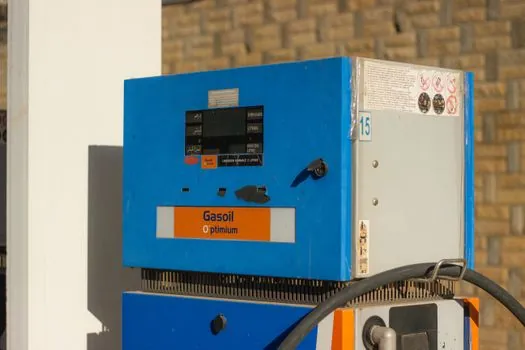
FKM and HNBR are used for gasoline, diesel, ethanol, and biodiesel injectors and provide high-temperature fuel resistance [S2]. FKM and HNBR seals are used for gasoline, diesel, ethanol, and biodiesel injectors [S2].
If extrusion control is needed above 150 bar, a backup ring can reduce the risk of O-ring extrusion, as discussed in FKM back-up ring selection.
Size, hardness, and gland design determine the leakage margin
The operating range should therefore be expressed as a measured cross-section and inside diameter with the required tolerance, rather than as a nominal size alone.
If the gland cannot satisfy that geometry, increasing hardness alone is not a reliable fix. The dimensions of the O-ring should be checked against the injector bore, seal land, compression, and maximum expansion under pressure before approving a replacement part.
Validate swelling, compression set, and fuel exposure before release
An ethanol test should use the actual worst-case fuel, including gasoline, ethanol ratio, aromatic content, and relevant additives, because gasoline and ethanol can affect an FKM compound differently [S3]. Keep the test specimen and finished O-ring geometry separate: a bulk swell result does not prove that a highly confined gland will remain leak-tight after fuel-induced dimensional change.
Record volume change, hardness change, tensile-property change, compression set, and post-test leak performance after exposure. The ORNL intermediate ethanol blends materials compatibility study, ORNL/TM-2010/326, examined elastomers, metals, and sealants for ethanol-blended gasoline infrastructure and provides the appropriate technical basis for a qualification program (2011) [S1].
Compression set matters because a fuel injector seal is a static sealing element that must retain restoring force during heat soak and thermal cycling. For a comparative discussion of cure and compression-set behavior, see FKM cure selection. Do not release an ethanol service seal using only a room-temperature hardness value, chemical compatibility chart, or short immersion result.
Apply a controlled procurement specification
Specify FKM by compound family and grade, nominal size, hardness in Shore A, operating temperature, ethanol concentration, pressure range, gland material, and qualification method. A defensible purchase description would identify a fuel-service FKM compound, low compression set, controlled dimensions, and evidence of exposure to the specified ethanol blend. [S3]
Include three acceptance gates: dimensional inspection before fitting, bulk-material and finished-seal exposure testing in the worst-case blend, and a pressure or leak test at the intended injection condition. The 30-200 bar system range and +150°C under-hood environment provide the upper design conditions to test, while the cold-start condition must confirm that the selected grade retains adequate flexibility [S2].
If the injector contacts gasoline on one side and intake air or vacuum on the other, test both media and the combined thermal cycle. Ethanol compatibility does not establish resistance to fuel additives, aromatics, oils, or cleaning contaminants, and a seal optimized for gasoline alone may not perform in the same ethanol blend [S1][S3].
Track three release criteria before approving the O-ring: worst-case E10 or E85 compatibility on the actual compound, no unacceptable swelling or compression set after exposure, and leak-free performance through the intended 30-200 bar and temperature cycle. Any change in fuel specification, ethanol ratio, gland design, or service temperature requires renewed qualification.