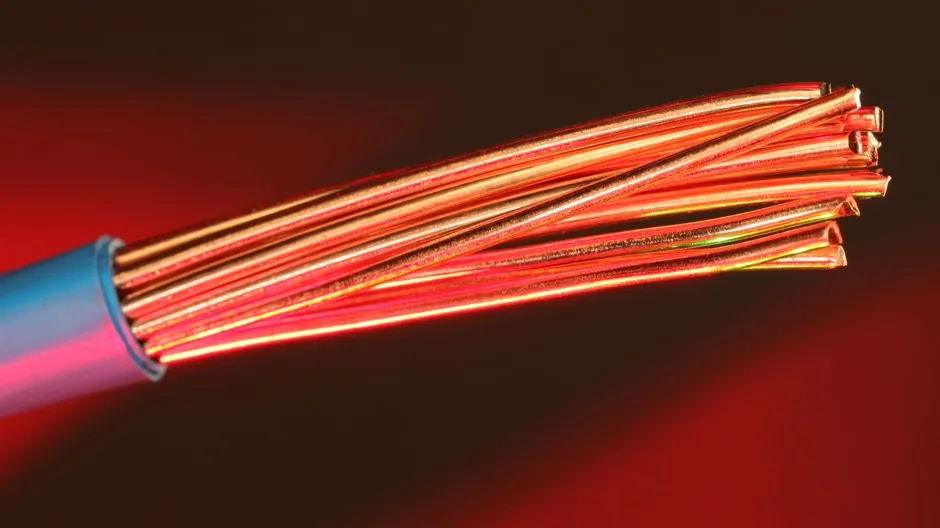
Additive-manufactured enclosure housings should use a filament with a documented UL 94 V-0 rating at the part's minimum wall thickness, rather than relying on a generic self-extinguishing claim [S5].
For industrial and electrical housings, PC-FR, FR-PC/ABS and flame-rated PA6/66 cover different balances of toughness, heat resistance and processing difficulty, while glass- or carbon-reinforced PPS serves higher-temperature duties [S1][S2][S5].
Define the Flame-Rating Requirement
UL 94 is a classification system for plastic flammability, not a general pass or fail label [S5]. The relevant result depends on the material grade, specimen thickness, lot and test conditions, so a filament described as V-0 must be checked at the housing's thinnest controlled wall [S5].
For vertical specimens, HB denotes slow horizontal burning, V-2 allows self-extinguishing within 30 seconds with permitted burning drips, V-1 applies the same 30-second condition without cotton-igniting drips, and V-0 requires self-extinguishing within 10 seconds without drips that ignite cotton [S4][S5]. The 5VB and 5VA classifications use a plaque test: 5VB permits a hole, while 5VA does not [S4][S5].
V-0 therefore does not establish 5VA performance, and a housing specification must name both the required class and the minimum thickness [S5]. A printed enclosure also needs validation because wall geometry, print orientation, infill, cooling, and additives can affect combustion behavior [S4].
Compare Candidate Filament Families
PC-FR is the impact-oriented choice among one documented AM service range: it is based on polycarbonate, rated V-0 at a 1.5 mm wall, has a heat deflection temperature of approximately 110 °C, and is positioned for drop-resistant housings, electrical enclosures, and junction boxes in room-to-moderate-temperature service [S1].
PPS-GF combines an HDT of 236–249 °C with a dielectric strength of 6.05 kV/mm, while PPS-CF has an HDT of 252 °C and the highest stiffness in the cited V-0 range at 5447 MPa XY Young's modulus [S1]. For flame-rated nylon, PA6/66 is used where mechanical performance and flame retardancy must coexist, but the specific grade and certification still require verification [S5].
Match Temperature, Impact and Electrical Duties
Housings for batteries, power electronics, or components near line voltage are candidates for flammability requirements [S5].
High-temperature service changes the selection. PPS-GF has an HDT of 236–249 °C after dual annealing and a dielectric strength of 6.05 kV/mm [S1]. PPS-CF has an HDT of 252 °C and an XY Young's modulus of 5447 MPa [S1].
In the cited comparison, the reinforced PPS grades have higher stiffness and HDT than PC-FR [S1]. Carbon-fibre PPS should therefore be reserved for stiffness-controlled duties, while glass-fibre PPS better fits insulating electrical housings. This is a property-selection distinction, not a claim that either grade is universally compliant with an end-product safety standard.
Establish Who Should Use Which Grade
PC-FR fits impact-tough electrical enclosures, junction boxes and drop-resistant housings operating near room or moderate temperature, with V-0 at 1.5 mm and approximately 110 °C HDT [S1]. Flame-retardant and high-performance filaments are used in mission-critical housings, connectors, and structures across aerospace, automotive, defense, and industrial manufacturing [S2].
PPS-GF and PPS-CF are documented for uses that include EV battery modules, motor-controller enclosures, and rail electrical housings, with an HDT of 236–249 °C for PPS-GF and 252 °C for PPS-CF [S1]. PC-FR is documented for drop-resistant housings, electrical enclosures, and junction boxes in room-to-moderate-temperature service, with an HDT of approximately 110 °C [S1].
Plan the AM Process and Evidence
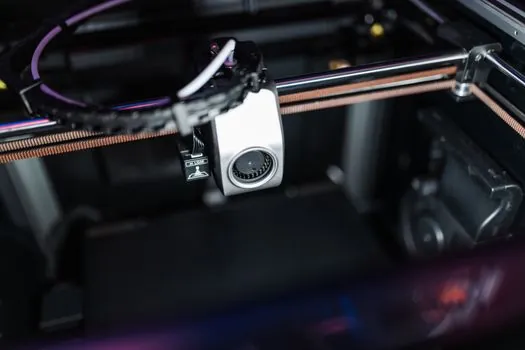
Printing temperature also matters: a user of Polymaker PC-FR reported that high chamber temperatures were required and that a stock Bambu Lab machine struggled with the material [S3].
The process plan needs a defined filament condition, chamber or enclosure temperature, nozzle, layer and cooling strategy, wall thickness, orientation, and infill. A material's flammability rating can depend on wall thickness, grade, lot, and test conditions [S5].
For procurement, require the supplier's technical data sheet, flame classification at the selected thickness, processing window, batch traceability, and specimen geometry. A service offering states that its three V-0 grades can be printed on standard FDM hardware, with a £50 minimum order and a 5–7 working-day standard lead time, but such commercial terms do not replace application-specific validation [S1].
Resolve Certification Gaps Before Tooling
UL 94 performance is thickness-dependent, and a V-0 result at 3.2 mm does not automatically establish V-0 at 1.6 mm [S5]. For AM housings, the decisive check is the flame rating at the minimum as-built wall after accounting for print orientation and manufacturing variation, not the strongest rating printed in a filament brochure [S5].
Flame resistance also does not establish UV stability. A 2026 discussion seeking outdoor flame-retardant filament explicitly left PC-FR UV resistance uncharacterized, while the proposed light fixture required an outdoor housing and normal UL-listed wiring components [S3]. Exterior service therefore needs a separate weathering assessment, or a protective enclosure and coating strategy.
Filament additives, product design and wall thickness can all change the observed burning behavior [S4]. Before releasing an enclosure, test representative printed coupons at the minimum wall and then representative parts, because the legal or standards obligation may attach to the assembled enclosure rather than to the filament spool [S4][S5].
The next traceable step is to freeze the minimum wall, maximum service temperature, impact exposure and electrical insulation requirement, then request V-0 documentation at that thickness for PC-FR, FR-PC/ABS or FR-PA6/66, moving to PPS only when the 236–253 °C class is justified [S1][S2][S5].