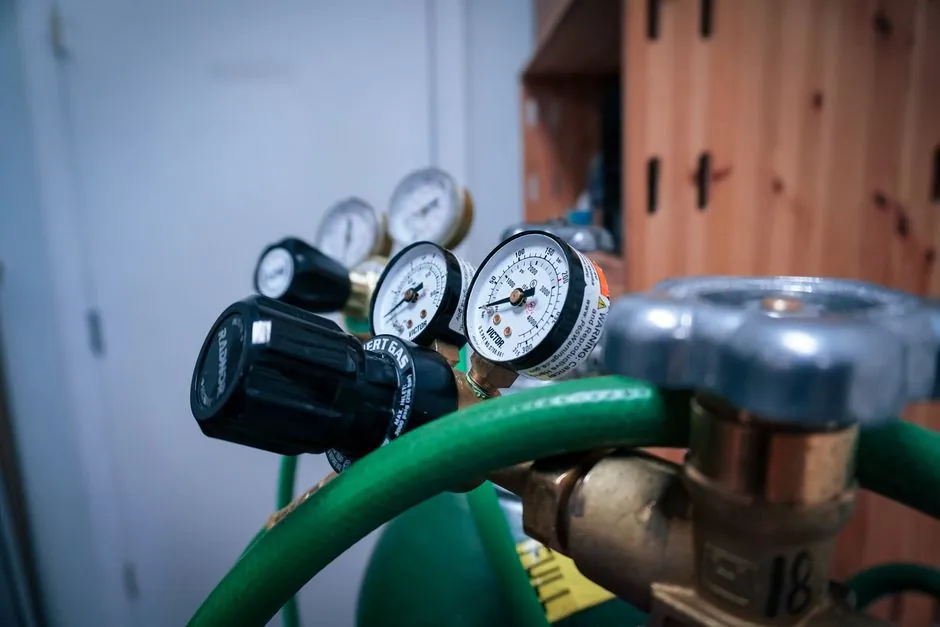
Gate valves provide straight-through flow with minimum pressure loss when fully open, making them a common choice for oil and gas pipeline isolation across upstream, midstream, and downstream service.
One manufacturer range covers 1/4–60 in sizes and ANSI 150–1500 pressure classes, with body, trim, seat, stem, and end-connection materials selected against the actual fluid, pressure, temperature, and environment [S3].
Gate Valve Duty and Service Boundaries
A gate valve is a linear-motion isolation device that raises a flat or wedge-shaped gate from the flow path and lowers it into the seat to stop flow. The fully open position provides an unobstructed bore and low pressure loss, while the design has no defined relationship between partial gate position and flow rate [S2][S4][S5].
Gate valves suit on/off service, pipeline isolation, maintenance shutdowns, emergency isolation, tank-farm connections, refinery process units, and loading systems. They can also pass tools or downhole equipment through a full-bore opening, which is valuable at wellheads [S2][S4].
They are not the right choice for throttling, metering, or proportional flow regulation. Partial opening accelerates fluid through a restricted gap, exposing the gate and seats to vibration, erosion, and damage [S2][S4]. For regulation, a globe valve provides a defined throttling function, while a quarter-turn ball valve provides faster isolation [S5].
Pressure, Size, and End-Connection Selection
Start with the line size, design pressure, design temperature, fluid phase, and required pressure class rather than selecting only by nominal diameter. Warren Valve lists sizes from 1/4 to 60 in and ratings from ANSI 150 to ANSI 1500, demonstrating the commercial breadth available, but the selected class must be checked against the governing service conditions [S3].
End connections are a separate selection item alongside size, body material, and pressure-temperature rating. Published configurations include raised face, ring-type joint, threaded, and socket weld, with combinations such as threaded-to-socket weld also available [S3]. The data sheet must be checked against the piping specification, because valve size, flange class, facing, gasket, and line connection have to form a compatible set.
For high-temperature or large pipeline service, confirm the pressure-temperature capability of the body, seat, stem, bolting, and end connection. A pressure class alone does not establish safe operation at an elevated design temperature; the manufacturer’s rating chart is the controlling document [S3].
Body, Trim, Seat, and Stem Materials

Published body material options include WCB, A105N, LF2, LCC, CF8M, 316, 316L, Alloy 20, and Hastelloy C, while trim options include 13Cr, 316 stainless steel, Alloy 20, Monel, and Hastelloy C for stems and wedges [S3]. Carbon steel, stainless steel, and alloy steels are established construction families for gate valves, with the choice governed by corrosion, wear, pressure, and temperature [S2].
Material selection must account for sulfur content, wax formation, corrosive media, and abrasion rather than treating “carbon steel” as a universal production default [S9]. Stainless steel may suit many corrosive services, but high chloride content, sour service, erosion, and weld-overlay condition can change the required grade. Published ranges therefore include carbon steel, stainless steel, Alloy 20, Hastelloy C, and other specialized alloys [S2][S3][S7].
Flexible wedge gates use a machined disc driven between tapered integral seat rings, generating a tight closure and accommodating dirty fluids containing solids. Parallel gates use a flat gate between parallel seats, while knife gates use a sharp lower edge to cut through viscous or slurry service [S3][S4]. Wedge gates are widely used in oil, gas, refining, and high-temperature service because the wedge develops sealing force as it enters the seats [S4].
Sealing Architecture and Fugitive Emissions
The seal arrangement determines whether a gate valve is appropriate for the required shutoff class, fugitive-emissions control, and service environment. Metal-to-metal seats provide a robust isolation barrier, but they can wear, corrode, and collect deposits, while soft seats require compatible elastomer or polymer performance within the process temperature range [S6].
Flexible wedge designs seal against two tapered body seat rings, whereas parallel and knife configurations use different closure geometry. A knife gate is more appropriate when a sharp edge must cut through thick liquid, slurry, or viscous media, while a wedge gate is preferred where high sealing force and tighter closure are the governing requirements [S3][S4].
Fugitive emissions should be treated as an explicit procurement requirement, not an assumed property of metal-to-metal shutoff. A manufacturer’s published product family identifies low-emission construction and NACE-certified options as separate selection elements [S3]. The oil seal or packing arrangement, stem exposure, actuator interface, and testing evidence must be reviewed as part of the valve package rather than inferred from the body material alone.
Gate, Ball, and Knife Valves Compared
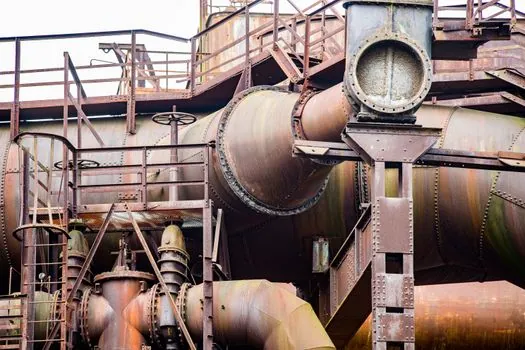
Gate valves provide low pressure loss and economical straight-through isolation, but they normally require multiple stem turns and are less suitable for throttling. Ball valves close in a 90° rotation and generally provide tighter sealing, making them attractive for rapid shutoff and frequent cycling, although their full-port pressure loss depends on the selected bore [S5][S6].
The practical comparison is not simply “gate versus ball.” Gate valves are strong candidates for large-bore, low-loss isolation where manual or geared operation is acceptable; ball valves are stronger candidates for quarter-turn isolation, emergency response, and applications requiring very tight shutoff. Knife gates are more specialized, using a sharp-edged gate to divide viscous or solids-containing media [S4][S6].
One manufacturer lists metal trim options including 13Cr, 316 stainless steel, Alloy 20, Monel, and Hastelloy C, and packing or gasket options including graphite and Teflon [S3]. These alternatives affect chemical compatibility, temperature, wear, and maintenance, so body grade alone cannot be used as a shorthand for valve suitability.
Actuation, Maintenance, and Failure Prevention
Manual operation uses a handwheel or rising or non-rising stem, while pneumatic and other powered actuators provide remote or automated isolation. A pneumatic piston gate valve should be selected by evaluating the actuator fail action, available instrument-air pressure, stem travel, torque requirement, hazardous-area classification, and enclosure rating against the installation [S7].
Actuator sizing must reflect the valve’s actual seating torque, stem condition, and operating medium rather than a generic cycle count. Fluid force, high differential pressure, and dirty service can increase closing resistance. A flexible wedge can close around dirty fluids containing solids, but that mechanical tolerance does not eliminate the need for inspection and clean seating surfaces [S3].
Two principal operating failures should be designed out. Partial-operation damage occurs when a gate is left between fully open and fully closed, while seat and stem leakage can result from wear, corrosion, deposits, or damaged packing [S2][S4][S6]. The operating procedure should require an explicit open or closed target, supported by position indication where remote operation is used.
Specification Checklist for Oil and Gas Procurement

A complete oil and gas gate-valve specification should state nominal size, pressure class, design pressure, design temperature, flow direction, fluid composition, sulfur content, corrosion allowance, seat material, body and trim materials, end connection, stem configuration, actuator type, fail action, and fugitive-emissions requirement [S3][S7][S9].
Petroleum service may also require special alloys, fire-resistant construction, and international certification [S8]. Those requirements should be attached as explicit line items rather than assumed from the generic words “oil and gas.” The procurement package should also identify the applicable industry, vendor, documentation, and any project-specific purchase specification.
Gate valves are used throughout oil and gas because they isolate flow with a straight, low-loss passage. They are not universal: high-cycle, rapid shutoff, and throttling duties often favor a ball valve, while solids-laden service may favor a knife gate valve. The final choice must remain traceable to the service envelope and verified manufacturer data.