
Selective pallet rack stores roughly 3,000 pallet positions in 15 rows with 8 forklift aisles in a representative 8-pallet-wide layout, while the same footprint with a high-density drive-in configuration achieves the same storage volume in about 20% of the floor area, per pallet-rack vendor guidance [S1][S4]. The headline number hides a real operational gap: selective gives direct access to every single pallet position from the aisle, while drive-in forces the forklift to drive into the rack structure to load and retrieve, with lanes commonly run 3 to 5 pallets deep [S3].
That access gap drives almost every downstream decision: pick faces per shift, forklift damage risk, FIFO/LIFO stock rotation, SKU count per lane, and the rebuild cost if a layout change is forced. Drive-in lanes are dedicated to a single SKU, and operators store pallets back-to-front and pick them front-to-back, so the most recently stored pallet is the first one out [S1][S3].
Defining the Two Systems and Their Access Profile
Selective pallet racking is a single-deep or double-deep upright-and-beam structure where every pallet position is reachable from a dedicated aisle without disturbing neighboring loads; it is the most common rack type in retail, distribution, and cold-storage facilities because it can run FIFO or LIFO and reconfigures easily when slotting changes [S1][S5].
Drive-in pallet racking collapses the aisles: the rack itself forms a tunnel of horizontal rails supported by upright frames, the forklift enters the tunnel, and pallets sit on those rails at multiple depths. Each lane is single-SKU, and lanes are typically 3 to 5 pallets deep, with deeper runs trading more density for higher impact and longer retrieval cycles [S3][S4]. Storage density improvements above 80% versus a conventional selective layout are routinely cited for drive-in and drive-through configurations [S1][S4].
Decision Criteria: SKU Count, Turnover, Rotation, and Floorplate
Four criteria dominate the choice, and they should be answered before any racking quotation is signed: SKU count per lane, turnover velocity, rotation discipline (FIFO versus LIFO), and the ratio of floor area to building height available. ECSECO's 2025 buyer guide lists space utilization, inventory rotation, SKU variety, and accessibility as the four primary decision factors, in that order [S5].
Selective wins on three of those factors when SKU variety is high: operators can reach any pallet without moving another, both FIFO and LIFO are supported, and reconfiguration between double-deep and single-deep is a beam swap rather than a structural change [S5]. Drive-in wins on the first factor when SKU count is low: a single SKU per lane, often stored 4 to 10 positions deep, eliminates almost every operational aisle and pushes volumetric utilization above 80% [S1][S4].
Side-by-Side Comparison: Selective vs Drive-In on Five Engineering Metrics
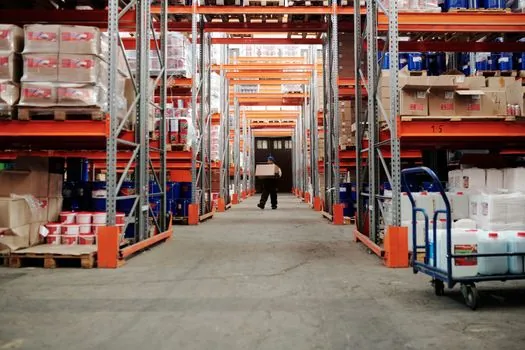
On storage density, a standard selective layout in a 15-row, 8-aisle building yields 3,000 pallet positions, while a double-deep selective version in the same envelope yields 3,910, roughly a 30% gain, and a drive-in or drive-through system can hit comparable density in about 20% of the floor area at the cost of access [S4][S6]. On accessibility, selective scores 100% (every pallet direct), drive-in scores 1-of-N per lane because the operator must pull the front pallet to reach the rear ones [S3][S5].
On SKU flexibility, selective tolerates hundreds to thousands of distinct SKUs because every position is independent, while drive-in requires a full lane per SKU and works best when each SKU fills 3 to 5 or more pallet positions [S3][S5]. On rotation, selective can run either FIFO or LIFO by slotting choice, while drive-in is structurally LIFO and its cousin drive-through is structurally FIFO because pallets enter one side and exit the other [S2][S7]. On damage risk, selective keeps the truck in the aisle, while drive-in places the truck between uprights where a misalignment can rack an upright frame, a real consideration in cold stores where brittle steel and condensation are common [S3][S4].
Where Drive-In Earns Its Keep: Cold Storage, Bulk SKUs, and High-Bay Buildings
Drive-in is most often the right call in three scenarios: cold storage and freezer warehouses where the building cost per cubic meter is high and every wasted aisle is wasted conditioned air; bulk-staging operations where 5 to 20 SKUs each consume dozens of pallet positions; and tall warehouses where the operator wants to push more pallets per square meter of footprint even at the cost of a slower pick cycle [S1][S4][S9]. A standard reference observation is that drive-in can deliver the same storage volume as selective in roughly 20% of the floor area, which directly reduces conditioned-air load in a -25 degrees C freezer [S4].
SJF's racking guide notes a secondary benefit: the confined, repetitive drive-in driving pattern trains operators into more consistent forklift habits, which in practice reduces fuel burn per pallet moved because the truck idles less and travels less per pick cycle [S4]. The same vendor data also point out that drive-in and drive-through are frequently mixed with pallet flow gravity lanes on the picking face, with pushback for medium-velocity SKUs, and selective for the long-tail SKU wall, so the system choice is rarely binary in a real DC [S3][S5].
Where Selective Earns Its Keep: Mixed-SKU DCs and High-Velocity Picking
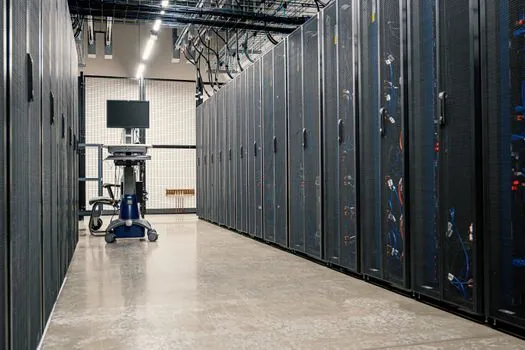
Selective is the default for distribution centers carrying hundreds to thousands of active SKUs, for retail replenishment where pick faces rotate weekly, and for operations running cross-docking or wave-pick strategies that demand any-pallet-at-any-time access [S1][S5]. The trade-off is real: more aisles means lower density, but the operational upside is that a slotting change, a new SKU, or a recall can be handled without unloading an entire lane [S5].
For operations thinking about a half-step between the two, double-deep selective adds roughly 30% density versus standard selective in the same envelope (3,910 positions vs 3,000 in the cited 15-row scenario) while keeping every pallet reachable from one of two aisle faces, so it is often the right answer when SKU count is moderate and turnover is mixed [S6]. A pallet stacker or manual pallet jack deployed at the picking face can further reduce the forklift requirement on a selective aisle, since the heavy truck stays in the aisle and lighter equipment handles the last-meter move.
Failure Modes, Damage Risk, and Inspection Burden
Drive-in's biggest weakness is also its biggest design feature: the forklift enters the structure. Lilly Forklifts' operator-focused guide points out that drive-in lanes are only slightly wider than the pallet load, so any misalignment racks the upright rather than the beam, and a damaged upright in a drive-in block typically disables the whole lane until replacement, not just one position [S3]. The same logic applies to drive-through, which has the same geometry on both ends [S2][S9].
Selective racking keeps the impact zone in the aisle where a beam or a plastic pallet face shield can absorb the hit, and the failure mode is usually a beam replacement rather than a lane outage. For both systems, RMI-style rack inspection cadence applies: an immediate check after any observed impact, a routine visual check on a documented cycle, and a documented load-plaque review whenever the stored unit load changes [S1][S5]. If a facility runs mixed fleets, an electric pallet truck on the picking face keeps the heavier counterbalanced forklift out of the inner lanes, which materially reduces drive-in damage rates in practice.
How to Read a Vendor Quote Without Getting Burned

Three numbers separate a useful quote from a marketing sheet: usable pallet positions per square meter, maximum pallet weight per position, and number of beam levels. For selective, also confirm the frame capacity in kg per bay and the seismic or code-of-record bracing. For drive-in, additionally confirm rail spacing, lane depth in pallet positions, and whether the design is drive-in (LIFO) or drive-through (FIFO), because the two are quoted separately and the lead time can differ by weeks [S2][S7].
For operators choosing between drive-in and its close cousin drive-through, the technical difference is one structural dimension: drive-in is accessible from one end and runs LIFO, drive-through is open on both ends and runs FIFO, making drive-through the default for date-sensitive goods and drive-in the default for non-perishables where only the freshest pallet needs to be picked [S2][S3][S7]. A useful sanity check is to ask the vendor for a storage rack layout drawing that shows both the structural footprint and the forklift swept envelope, not just the rack plan view, because the swept envelope is what actually determines usable density.
Track these signals over the next planning cycle: vendor disclosure of lane-depth options (3, 4, 5, or deeper) for drive-in, lead time differentials between selective and drive-in orders, and any new RMI or EN 15635 inspection guidance that changes the cost of running a high-density lane in cold storage.
This topic is covered further in 2oo3 Voting vs Single-Sensor Trip: Decision Matrix for SIS and ESD Loops.