
A 20% LEL low alarm can provide an initial warning to investigate the source of a gas leak.
The configuration applies to combustible gas monitoring where 100% LEL represents the selected gas-specific lower explosive limit, with the final settings governed by the site risk assessment, applicable requirements, and response actions.
What 20% and 40% LEL Mean
The lower explosive limit, also called the lower flammable limit, is the minimum concentration of a combustible gas or vapor in air that can ignite when an ignition source is present [S3][S4]. A detector expresses this threshold as 100% LEL, allowing setpoints to be compared across gases without confusing percent LEL with percent volume [S4].
At 20% LEL, the measured concentration is one fifth of the gas-specific LEL. At 40% LEL, it is two fifths of that limit. Methane has an LEL of approximately 5.0% by volume, so 20% LEL corresponds to about 1.0% methane and 40% LEL to about 2.0% methane, assuming the detector is calibrated and configured for methane under comparable reference conditions [S1][S3].
Setpoint selection must use the correct gas calibration. Methane, propane, butane, and hydrogen have materially different LEL values: approximately 5.0%, 2.1%, 1.8%, and 4.0% by volume, respectively [S1][S2]. The same 20% LEL command therefore represents different gas concentrations and different physical hazards at each release point.
Why Use Two Alarm Stages
A low alarm at 20% LEL and a high alarm at 40% LEL separates an early investigation condition from a more serious escalation condition [S2]. The 20% stage can trigger controlled actions such as ventilation, operator notification, leak investigation, and process review, while the 40% stage can support stronger isolation, evacuation, or emergency response measures.
Published guidance describes low alarms as commonly set at 10% or 20% LEL and high alarms across 25% to 50% LEL, with the purpose of the low stage being an initial warning to investigate the source [S7]. Delphian identifies 20% LEL, 40% LEL, and 60% LEL as typical low, high, and high-high settings, while placing responsibility for suitability on the user [S2].
The distinction matters because a single alarm threshold does not tell operators what action to take. Two stages should map to two defined response plans, including who receives the alarm, the required response time, and whether ventilation, process shutdown, or emergency escalation is automatic. The controller must also distinguish a gas alarm from a fault, over-range condition, or sensor failure.
Compare Alternative Alarm Setpoint Strategies
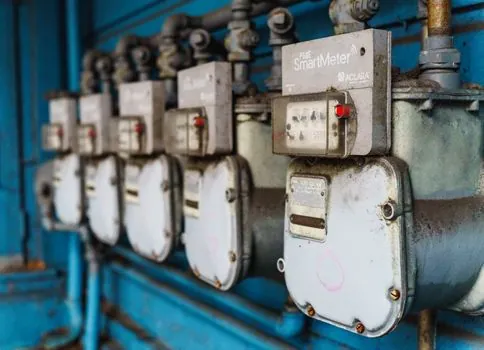
A three-stage strategy commonly assigns 20% LEL to low, 40% LEL to high, and 60% LEL to high-high, providing more separation between warnings, escalation, and emergency isolation [S2]. A 10% LEL low alarm offers greater warning time but can increase nuisance-alarm risk, particularly in domestic fuel-gas applications where brief releases occur during normal appliance operation [S5].
The right comparison is not simply sensitivity versus safety. It is warning time, nuisance rate, operator workload, shutdown consequence, and the reliability of the downstream action. A 10% LEL alarm can sound earlier than a 25% LEL alarm, but NFPA 715 committee material also records the concern that a more sensitive threshold may create nuisance alarms [S5].
Where 20% and 40% LEL Fit
Gas identity and release behavior determine whether the settings work. Methane and hydrogen are lighter than air and tend to collect at high points, while propane and butane are heavier than air and require low-level placement in suitable airflow conditions [S1][S2]. A controller setpoint cannot compensate for incorrect detector location, unsuitable sample flow, or a sensor that cannot recognize the target gas.
For portable instruments, operator action and location are controlled differently from fixed installations. A portable gas detector can support personal monitoring, but a fixed gas alarm controller should receive stable field signals from installed detectors and execute the approved alarm sequence. The related four-gas configuration described in Configure a Four-Gas Monitor for H2S, CO, O2, and LEL also illustrates why the LEL channel must be treated as one part of a broader gas-safety instrument.
Sensor Technology and Configuration Limits
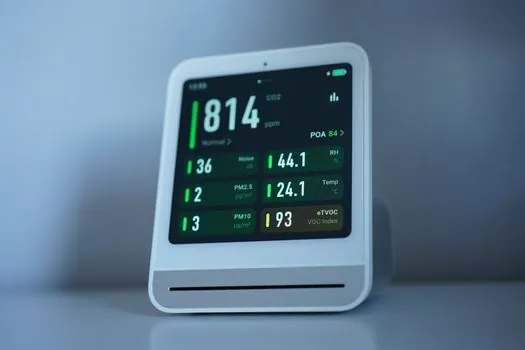
The alarm setpoints should be implemented only after confirming that the detector technology can measure the intended gas reliably.
Sensor selection changes in more than one variable. A catalytic bead versus infrared comparison should therefore be completed before fixing the controller input type and calibration method.
LEL instruments are generally designed for a 0% to 100% LEL measurement range, and exposure below 10% oxygen can impair the reading [S3]. Gases above 100% LEL can also damage some sensors; an over-limit condition may require the sensor to be switched off while alarms remain active [S3]. The 40% LEL setpoint must therefore be paired with a separate over-range strategy rather than treated as a substitute for it.
Outputs, Failures, and Maintenance Controls
A 20% LEL low alarm and 40% LEL high alarm require at least two independently defined output paths. The low alarm should drive an approved notification or ventilation action, while the high alarm should drive the more restrictive action. Common outputs include audible and visual annunciation, relay contacts for ventilation or shutdown, and communication to a facility alarm system. [S1]
Relay contacts require an appropriate load rating, normally open or normally closed failure configuration, and a defined state for loss of power or sensor wiring failure. A high-concentration event must remain visible even if the detector is disconnected or driven above its measuring range. The perimeter alarm category is relevant where the system must repeat a gas event beyond the room containing the detector.
Setpoint changes should be recorded against the detector serial number, gas type, calibration gas, alarm configuration, and responsible approval. Maintenance must verify not only that the controller displays 20% LEL and 40% LEL, but that each input, output, notification path, and automatic interlock operates as intended. Sensor drift, poisoning, condensation, and contamination can alter readings without creating a controller-level configuration error.
Standards and Sourcing Basis
The 20% and 40% LEL values are engineering baselines, not universal statutory setpoints. The available technical guidance places typical low settings at 10% or 20% LEL and high settings between 25% and 50% LEL, depending on regulations, site risk, and process requirements [S1][S7].
NFPA 715 committee records illustrate why setpoint decisions require jurisdiction-specific review. A proposal sought to change a 10% LEL detection threshold to 25%, while the committee action retained the 10% threshold in the cited resolution and indicated an intention to revisit it in a later edition [S5]. The material therefore supports treating 10% LEL as a serious design issue, not as a universal replacement for 20% LEL.
For procurement, the data sheet should state the target gas, LEL basis, low and high setpoints in %LEL, high-high provision, sensor technology, output ratings, over-range behavior, and calibration interval. The device category is broader than the fixed gas detector itself because the controller also handles alarm logic, outputs, and fault reporting.
A verifiable implementation record should confirm the approved alarm philosophy, gas-specific calculation for 20% and 40% LEL, functional test results, and responsible authority approval. If the risk assessment changes the release assumptions, gas identity, ventilation strategy, or emergency response, the setpoints should be re-evaluated rather than left at the original baseline.