Shrink wrap systems form a heat-contracted polymer envelope (POF, PVC, or PE) that conforms to product geometry but contributes near-zero compressive stiffness to the load; a case packer wraps the product in a corrugated or solid-board shell that carries vertical stacking load through its wall structure (per [S1] JinLuPacking shrink wrap guide, 2026).
The mechanical strength decision is not a contest of "stronger" vs "weaker" — it is a question of which failure mode the pack must survive. A 25 kg pallet of beverage cans that must survive 4-high warehouse stacking, lift-truck handling, and multi-stop distribution needs a different primary package than a 0.5 kg cosmetics carton that needs tamper evidence and a shelf-ready footprint. Engineers who skip this framing end up over-packing SKUs that needed only film and under-packing SKUs that needed corrugated wall strength.
How Each Machine Generates Mechanical Strength
A shrink wrapping machine dispenses polyolefin, PVC, or PE film around a product, seals it in either L-bar or side-seal configuration (per [S2] BestPack shrink wrap machine guide), then passes the bundle through a heat tunnel where the film contracts and grips the load. The film itself provides tensile containment and surface protection, but the bundle's compressive strength equals the compressive strength of the product stack inside the film — the film adds nothing in the vertical axis (per [S1] JinLuPacking).
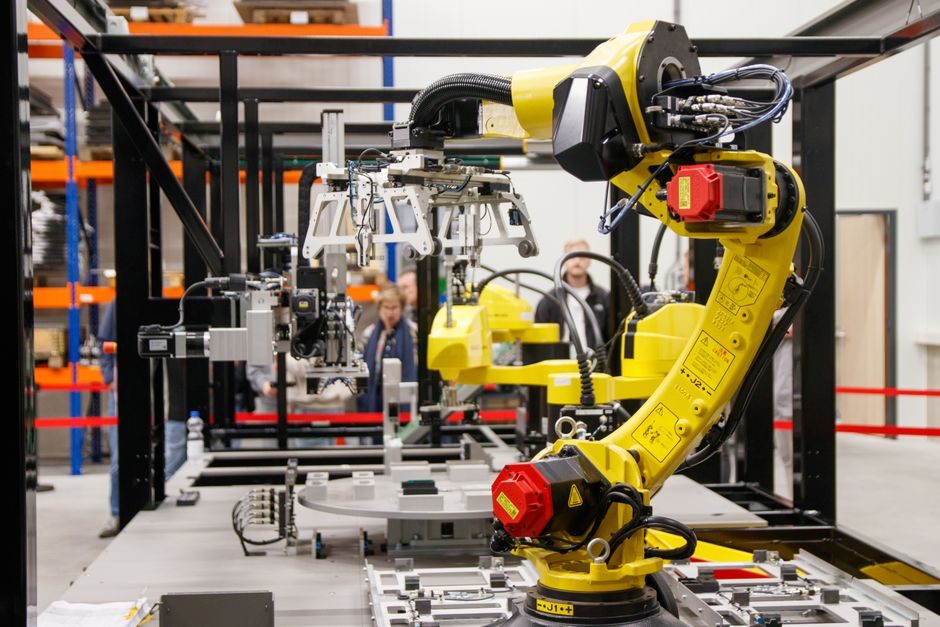
A case packer erects a corrugated or solid-board case, loads product via pick-and-place or robotic arms, then seals top and bottom flaps. The corrugated flutes act as engineered structural members that distribute vertical load, absorb stacking compression, and isolate the product from corner impact. The CpONE case-and-tray packer (per [S1] JinLuPacking) uses robotic arms for case setup, loading, and sealing, which lets the line handle multiple case sizes without mechanical changeover.
Decision Criteria: Where Each Technology Wins
On four scored load-axis criteria, the case packer wins 3 of 4 against a shrink-only bundle of equivalent product (per [S1] JinLuPacking film behavior and [S6] MSK Covertech building-materials duty). Specifiers should rank the same four criteria before picking a primary pack.
Compressive top-load: a corrugated case typically carries several times the static stacking load of a film-only bundle of the same product, because the board flutes are the load-bearing element. Lateral stability: shrink film locks the product to itself and eliminates internal shifting; a case relies on internal fitments, dunnage, or partition inserts. Edge and puncture resistance: shrink film is vulnerable to sharp corners, which is why [S6] MSK Covertech specifies reinforced film systems for sand-lime bricks, breeze blocks, and clinker — heavy, sharp-edged building materials where plain film would shear. Tamper evidence: a torn or breached shrink envelope is immediately visible, while a case can be opened and resealed with little visible trace.
Snapshot matrix at a 1,500 unit-per-hour spec phase: Compressive top-load — Shrink wrap: low (film only); Case packer: high (board flutes). Lateral stability — Shrink wrap: high (film locks product); Case packer: medium (depends on internal fit). Edge/puncture resistance — Shrink wrap: low to medium (film gauge dependent); Case packer: high (board walls isolate product). Tamper evidence — Shrink wrap: high; Case packer: medium. A 1 kg retail SKU with low stack-height requirement and high tamper-evidence need points to shrink; a 20 kg distribution SKU entering a 4-high pallet pattern with rough handling points to case.
Use Cases Where Shrink Wrap Carries the Load

Shrink wrap replaces steel strapping for heavy, sharp-edged building materials when the film system is engineered for that duty, per [S6] MSK Covertech. Sand-lime bricks, breeze blocks, and clinker pallets are secured with reinforced shrink film rather than steel bands, with the film providing load stability and the brick geometry absorbing the compressive force that the film itself cannot carry.
Food, beverage, retail, manufacturing, and logistics lines use shrink wrap when the primary requirement is bundling, surface protection, and tamper evidence rather than compressive stacking (per [S5] Millwood). Software goods, multi-pack canned goods, and boxed cosmetics are typical shrink applications where the inner carton is the structural element and the film is the surface envelope. Auto L-bar sealers and auto-side-seal shrink machines (per [S2] BestPack) handle these product geometries — the L-bar is constrained to products smaller than the sealing bar, while the side-seal configuration can wrap elongated products like molding and baseboards up to a specified width.
Use Cases Where Case Packing Carries the Load
Case packers are the correct choice when the package itself must carry vertical stacking load without internal pallet or rack support, per the CpONE case-and-tray packer architecture described in [S1] JinLuPacking. E-commerce shipping cartons, pharmaceutical trade packs, appliance packs, and any 4-high warehouse storage pattern require the compressive strength of corrugated walls.
The robotic-arm architecture referenced in [S1] JinLuPacking handles case setup, loading, and sealing on a single platform, so a mixed-SKU line can run multiple case footprints without manual retooling. This is the structural argument for case packing on a contract-pack line: the line absorbs SKU variability that a shrink wrapper would need a manual changeover to handle.
Failure Modes and Operating Limits
Shrink wrap failure modes center on heat and film handling, with [S4] John Maye Company stating that "a wrapper that introduces heat spillover, vapor, or film fumes into controlled space can invalidate the zone" — a quote that maps directly onto the food, pharma, and cosmetics lines where shrink tunnels and sealers sit inside controlled enclosures and where the zone classification has a regulatory cost if breached.
L-sealer and side-sealer geometries constrain the maximum product size to the sealing bar length (per [S2] BestPack), and sharp product edges can pierce the film before or after shrinking. Case packer failure modes center on board quality, flap closure, and case-erection reliability: wet or crushed corrugated collapses under stacking load, poorly erected cases jam the loader, and case packers running corrugated at high speed need a PLC coordinated with servo-motor drives to keep flap-folding timing within tolerance. The shrink line is mechanically simpler but adds thermal energy to the plant load and a controlled-environment risk that a case line does not.
Line Integration: Automation Architecture
A 6-axis servo architecture with PLC coordination is the typical control footprint for a robotic case packer handling multi-SKU runs, per the CpONE case-and-tray packer reference in [S1] JinLuPacking. The case packer needs 6+ servo axes for case erection, product pick, and flap folding, plus discrete I/O for vacuum, glue, and tape.
A shrink line needs fewer axes but adds temperature-loop control for the shrink tunnel and pressure-sensor feedback on the film-tension dancer to prevent web breakage at high speed. The shrink line's capital cost runs lower than a robotic case packer at the same throughput, but the case packer reduces damage-rate exposure on heavy or fragile SKUs in the field — a number the procurement team should pull from in-house damage claims, not from vendor marketing, before the spec is frozen.
For procurement, the trackable signals that confirm the choice in the field are damage-rate reports from the 3PL partner at 30 / 90 / 180 days post-startup, and pallet-stack-height data captured by the warehouse management system. If those two signals move in the right direction by the 90-day mark, the spec holds; if not, the film gauge or board grade is the first variable to revisit before re-engineering the machine choice.