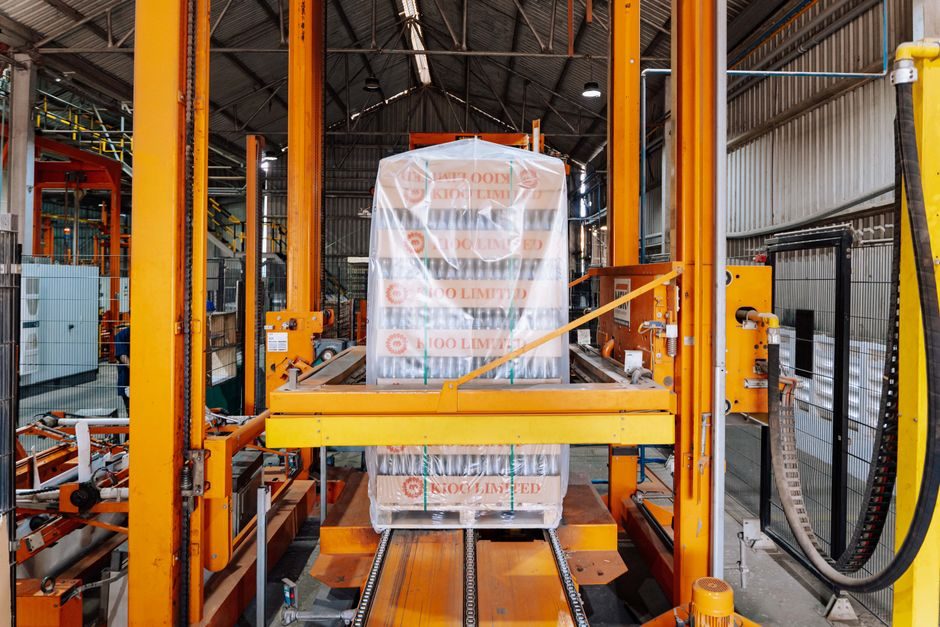
A 4-way pallet shuttle retrofit on a plasterboard packaging line moved packaging-material storage from floor-level stacking to multi-deep rack lanes controlled by a PLC-driven shuttle fleet, freeing the original floor footprint for production (per [S1] Teccon Warehouse Storage Solutions case study, 2024-2025 project cycle).
For packaging-line retrofits specifically, the existing conveyor height, encoder resolution, and PLC scan cycle dominate the spec; shuttle top speed and maximum payload are secondary filters because the surrounding line sets the throughput ceiling (per [S2] Posimat integration guide).
Why Retrofit Criteria Differ From Greenfield
Integration of a new shuttle into an existing packaging line is never a plug-and-play process: ceiling height, existing aisle widths, and the live throughput of conveyors force the shuttle spec to be derived downstream of the line survey rather than chosen off a catalogue (per [S2] Posimat). In food, pharmaceutical, cosmetic, and chemical plants, the retrofit envelope is dictated by the surrounding machinery footprint and zoning rules, not by the shuttle OEM's preferred bay geometry. A greenfield spec can chase utilization; a retrofit must trade utilization against disruption hours, which is the most common cause of late-stage scope changes on shuttle projects (per [S3] NCC Automated Systems integration workflow, accessed 2026-06).
Seven Weighted Selection Gates for a Shuttle Retrofit
For 4-way shuttle retrofits, evaluation should include the provider's track record on similar transformations, the robustness of shuttle technology under live production conditions, and the depth of retrofit experience where existing building constraints demand creative engineering (per [S4] HyDA-SRS guidance on technology-partner evaluation). Procurement teams compress that list into seven gates: (1) shuttle payload and pallet/carton dimensional envelope, (2) drive topology — typically a servo-motor per shuttle axis versus a bused stepper array, (3) control stack alignment with the existing PLC and SCADA, (4) communication bus (PROFINET, EtherNet/IP, OPC UA) compatibility, (5) aisle and rack compatibility with the existing racking supplier, (6) safety category, typically PL d under ISO 13849-1 for shuttle fleets, and (7) WMS/ERP handshake latency budget. A shortcoming on any one of those gates tends to surface as a post-PO integration surcharge rather than a pre-quote exclusion (per [S3] NCCAS).
Pallet Shuttle vs Carton Shuttle: 4-Axis Comparison
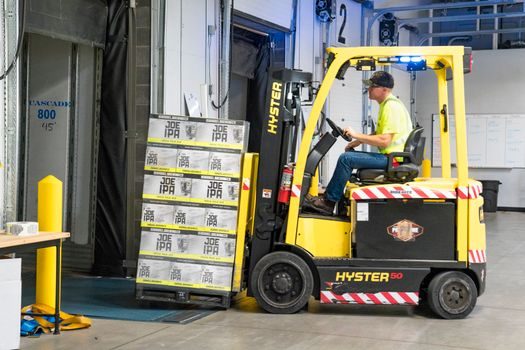
Pallet shuttles and carton shuttles are the two dominant retrofit options, and the four most common decision axes are payload, footprint, WMS complexity, and PLC scan-budget impact (per [S2] Posimat and [S4] HyDA-SRS, 2025-2026 integration guidance).
• 4-way pallet shuttle (mother-daughter or single-shuttle): strongest fit when the existing line feeds full-pallet loads and the racking footprint is fixed; lower WMS complexity because each lane is dedicated; less flexible for SKU volatility. Hardware cost is higher per lane, but retrofit disruption is lower when aisles already exist (per [S1] Teccon and [S4] HyDA-SRS).
• Carton / tote shuttle (carton-flow, 3D shuttle): strongest fit when SKUs are unit-level, lot sizes are small, and the existing line ends at a case-packer rather than a palletizer; far higher SKU density per square metre, but requires tighter WMS integration and more aggressive PLC scan-cycle budgets to avoid convoy collisions. Retrofit disruption is higher because carton shuttles normally need new racking and a new conveyor head (per [S2] Posimat and [S4] HyDA-SRS).
Integration Sequence: Survey, Simulate, Stage, Cut-Over
The integration sequence that consistently appears in retrofit guides is survey → 3D simulate → stage off-line → cut-over in planned micro-stops (per [S2] Posimat). A line survey captures conveyor face height, encoder pulses per metre, existing servo-motor drive model on case-packers and palletizers, PLC rack layout, and the voltage available at the proposed shuttle field cabinet. A 3D simulation then tests whether the shuttle's turning radius and lift stroke fit the surveyed envelope without forcing structural-steel changes. Staging off-line — running the shuttle fleet against a mocked PLC for two to four weeks before installation — exposes the majority of bus addressing and handshake faults before the production cut-over window is consumed (per [S3] NCCAS workflow). The cut-over itself is normally executed in 2-6 hour micro-stops rather than a full weekend outage, because pallet shuttles tolerate mixed live/dead lane operation; carton shuttles, which depend on a contiguous racking field, do not.
Failure Modes and Constraints Specific to Packaging Retrofit
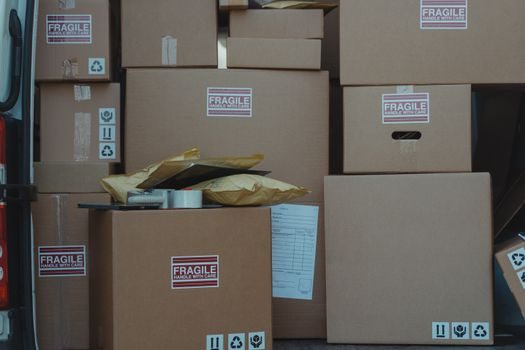
Three failure modes consistently appear in retrofit post-mortems: (a) PLC scan-budget overrun when the shuttle bus is added to an already-saturated rack — the typical fix is to move shuttle I/O to a dedicated PLC coupled by an industrial gateway, not to expand the existing scan; (b) encoder and handshake mismatch between the existing conveyor and the shuttle infeed, which forces mechanical re-gauging of the conveyor rather than a parameter change; (c) safety zoning gaps, because shuttle fields added to an existing packaging hall often need a re-rated perimeter scanner and e-stop chain that the original line audit never specified (per [S2] Posimat and [S4] HyDA-SRS). Other hard constraints include minimum ceiling clearance for the shuttle lift, fire-suppression zoning under rack rows, and the operator-floor load rating for shuttle battery-swapping stations when battery shuttles are chosen over bus-bar-powered units (per [S1] Teccon pallet-shuttle case).
Documentation, Standards, and Provider Vetting
Documentation is the cheapest insurance on a shuttle retrofit: the provider should ship a full electrical schematic, the bus configuration file, a verified PLC tag list, a hazard assessment referencing ISO 12100, and a CE/UKCA technical file aligned to the Machinery Directive 2006/42/EC (per [S3] NCCAS commissioning checklist). Provider vetting should weight live retrofit references over greenfield references — a vendor with multiple greenfield shuttle installs and no retrofits of comparable scale carries a higher integration risk on a packaging-line retrofit than a vendor with a smaller but retrofit-only reference list (per [S4] HyDA-SRS).
Trackable next signal: monitor the conveyor-encoder interface specified at the RFQ stage — a discrete I/O handshake rather than a bus handshake on a 2026 shuttle retrofit correlates with a 2-4 week first-install integration slip and a meaningful post-PO electrical rework surcharge.
Related: pressure transmitter.