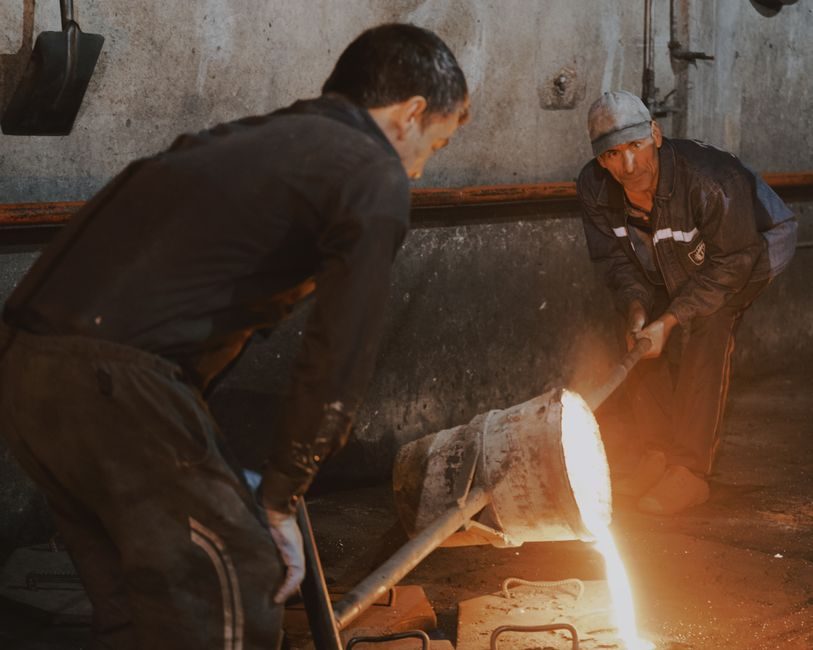
China-based silicon carbide ceramic suppliers shipped 10+ product categories in 2026, with ShanDong, JiangSu, and HeBei clusters dominating OEM capacity and a combined export reach spanning 10+ countries and 100+ distributors [S3].
FOB bands for finished SiC components run from US$0.05/piece (SiC-coated sandpaper sheets) up to US$150/piece (SiC ceramics factory blanks), with crucible pricing at US$5-100/piece and SiC ceramic foam filter plates clearing 200,000 pieces per month at single-source capacity [S4][S5][S7].
Cluster Geography and Maker Tier Structure
The Chinese SiC ceramics base concentrates in three provinces: Shandong (Linyi, Zibo) for wear-resistant SiC, abrasive grains, and alumina-SiC composite refractories; Jiangsu (Lianyungang) for advanced SiC crucibles and wafer substrates; Hebei for bonded abrasive and grinding media [S3][S5][S8]. Zibo Huao New Materials alone runs 15+ branches, 100+ company distributors, and exports to 10+ countries with 10+ years of trading history, positioning it as a multi-product refractoried-ceramics hub rather than a pure SiC shop [S3]. For buyers mapping the global silicon carbide ceramic supply, the cluster pattern matters: Shandong sources favor heavy-section wear parts and foam filters, while Jiangsu makers lead on small-batch precision crucibles and wafer-grade semi-finished goods [S2][S5][S7].
Product-Category Price Bands and MOQ Levers
FOB unit pricing on Made-in-China listings for the six top SiC categories shows wide bands driven by purity, forming method, and tolerance: SiC sandpaper sheets (Kraft paper, 230x280mm) at US$0.05-0.15 with 2,000-20,000 piece MOQs; bonded SiC ceramics (Shandong Boxuan) at US$20-150 with 10-piece MOQ; SiC ceramic crucibles at US$5-100 with 1-10 piece MOQ; SiC ceramic foam filter plates at scale (200,000 pc/month single-line capacity, 200-piece MOQ) [S4][S5][S6][S7]. Lianyungang Baibo New Material anchors the crucible low end at US$30-50/10 pieces, while Hebei Baotong New Material Technology covers the broader US$5-100/1 piece range for both laboratory and foundry-grade SiC [S5]. The MOQ spread — from 1 piece on crucibles to 20,000 pieces on sandpaper — is the cleanest signal of where a supplier sits in the value chain: trading houses push volume on abrasives, while engineered crucible and wafer makers absorb low MOQs to feed R&D buyers [S5][S6][S10].
Foam Filters, Crucibles and Casting-Line Specs
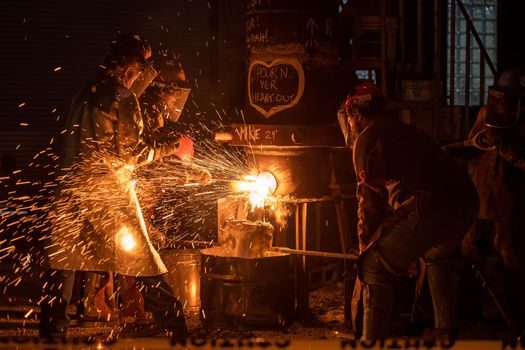
SiC ceramic foam filters are specified by PPI (pores per inch) and serve molten-metal filtration in iron, steel, and non-ferrous casting; the buyer-facing reference set covers PPI selection logic and aluminum-foundry application notes, with 10-60 PPI the common industrial range for aluminum and copper-alloy work [S2][S9]. For buyers scaling a lost foam casting line, SiC foam filter selection sits downstream of flask and vacuum choices, and a single supplier shipping 200,000 pieces/month is sufficient for most 5,000-15,000 ton/year casting facilities [S4][S9]. SiC crucibles, by contrast, target non-ferrous melting (aluminum, copper, zinc, precious metals) with operating envelopes generally rated to 1,600-1,800 °C for oxide-bonded grades, although the specific operating limit must be confirmed against the supplier's data sheet rather than assumed from the material class [S5].
Wafer-Grade, Optical-Grade and High-Purity SiC
Upstream of foundry ceramics sits the wafer and optical-grade SiC tier, where Raytek and similar suppliers publish engineered SiC substrates for optical systems demanding high stiffness, low thermal distortion, and tight surface figure [S1]. These materials are optimized at the stock-coupon stage rather than as finished wear parts, and the pricing is typically quoted per finished wafer or per machined optic rather than per piece [S1][S10]. GoldSupplier maintains an active SiC ceramic wafer category with 20 years of global trade infrastructure backing it, useful for buyers who need a managed trade desk rather than a direct factory channel [S10]. For most industrial buyers the wafer category is irrelevant; for semiconductor equipment, laser optics, and metrology-stage integrators it is the actual decision surface [S1][S10].
Selection Criteria: When SiC Beats Alumina and Silicon Nitride
SiC outperforms alumina ceramic on thermal conductivity (roughly 120-200 W/m·K for dense SiC versus 20-30 W/m·K for 95% alumina) and on thermal-shock resistance, while silicon nitride beats SiC on fracture toughness and electrical insulation at a higher unit cost [S3][S5]. The selection matrix a buyer should run: choose SiC when the duty cycle is high-temperature heat transfer, abrasive wear, or molten-metal contact; choose alumina when electrical insulation, dimensional stability, and cost dominate; choose silicon nitride when impact loading, high-temp insulation, or non-magnetic duty is the constraint. Crucibles, foam filters, and wear liners are the SiC sweet spot; insulators, structural labware, and bearing elements are usually alumina or silicon nitride territory, although ceramic bearing hybrids do use SiC in specific rolling-element roles. The decision rule a procurement engineer can apply: if the failure mode is thermal-shock cracking or abrasive wear at >800 °C, SiC is the default; if the failure mode is dielectric breakdown or chipping impact at room temperature, pick a different material class.
QA, Standards and Supplier Verification Levers
Verified-supplier signals on Made-in-China (Diamond Member, Gold Member, Audited Supplier) and ISO 9001 certification appear consistently across the top SiC maker listings, with Linyi Sanchao Abrasives, Lianyungang Baibo, and Hebei Baotong all carrying Diamond or Gold tier at the 2026-04 to 2026-05 cut [S5][S8]. Hongyuan Ceramics (HYSIC) publishes a buyer-guide sitemap covering SiC filter selection, PPI selection, and aluminum-filter comparisons, which is a useful vendor-side spec reference even for non-customers [S2]. Okorder's SiC foam filter page records 200,000 pc/month supply capability with a 200-piece MOQ and TT/LC payment terms, the kind of capacity statement a sourcing manager should cross-check against the supplier's plant tour or video audit [S4][S9]. For end-customer QA, the practical lever is to require a material certificate with SiC content (typically ≥85% for sintered/oxide-bonded, ≥99% for CVD/reaction-bonded optical grades), bulk density (g/cm³), and a thermal-conductivity or MOR number from the actual production batch.
Use Cases, Constraints and Failure-Mode Map
SiC ceramics in the Chinese supplier base break into five end-uses with distinct failure modes: foundry filters (clogging, thermal-shock fracture on preheat); crucibles (oxidation at the rim, chemical attack by reactive alloys); wear liners and grinding media (impact fracture, abrasive rounding); abrasive paper and grinding wheels (grain pull-out, heat-checking on the workpiece); wafer and optical substrates (subsurface damage, warp on cool-down) [S1][S2][S4][S5][S6][S7][S9]. Buyers specifying SiC filters for iron and steel casting should preheat the filter to ≥900 °C before pouring to avoid thermal-shock fracture; buyers specifying crucibles for precious-metal melts should avoid basic oxide fluxes that oxidize SiC above 1,000 °C; buyers specifying wear liners in aggregate handling should request the supplier's measured fracture toughness (MPa·m^½) and not just the hardness number. Sandpaper and bonded abrasive buyers should match grit size and backing (Kraft paper, C-weight, waterproof) to the substrate and coolant, since dry-grinding on a paper backing at 30 m/s is the most common SiC-abrasive failure mode [S6][S8].
Sourcing Channels and Maker Map Logic
Three channels dominate: Made-in-China B2B (the broadest maker list, Diamond/Gold tier signals), Okorder (factory-direct RFQ platform with published supply capability, e.g. 200,000 pc/month on foam filters), and HYSIC (vendor-published buyer guides for cast-house filter spec'ing) [S1][S2][S4][S5][S9]. For a foundry buyer mapping the lost foam casting line supply base, the practical maker map is: filter plates and crucibles from Jiangsu and Hebei (Lianyungang Baibo, Hebei Baotong), wear-resistant cast SiC from Shandong (Boxuan), alumina-SiC refractories from Zibo (Huao), and abrasives from Linyi and Jiangsu (Sanchao, Pangea, HL Group) [S3][S5][S7][S8]. Trackable signals through 2026-Q3: whether Shandong Boxuan expands its US$20-150 SiC ceramics range into larger reaction-bonded sections, and whether Huao Materials extends its 10-country distribution into additional alumina-SiC composite parts beyond the current 15-branch footprint [S3][S7].