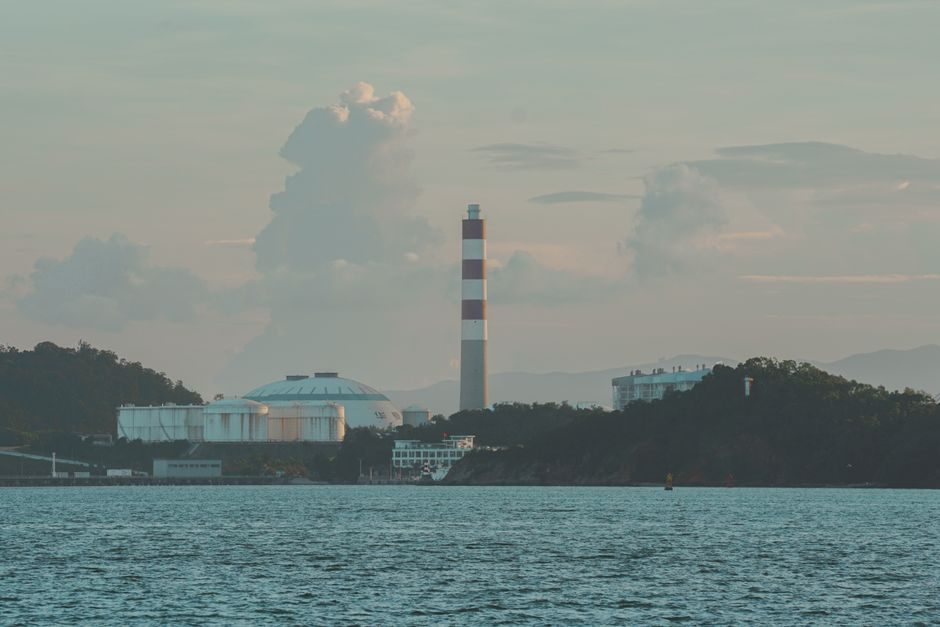
For 2026 power-generation procurement, hot-isostatic-pressed (HIP) silicon nitride balls at ≥3.20 g/cm³ density, ≥1,500 HV10 hardness and a Weibull modulus ≥15 are the dominant specification for high-speed generator bearings, gas-turbine hot-section insulators and solid-oxide fuel-cell (SOFC) substrates [S2][S3].
The material system is Si3N4, typically densified with 3–8 wt% Y2O3 + Al2O3 sintering additives, and competes head-to-head with silicon carbide in wear parts and with alumina and zirconia in insulating and structural roles [S3][S6]. For a primer on the base material, see the silicon nitride reference page.
Grade Taxonomy: HIP, GPS, SRBSN and RBSN
Four commercial Si3N4 process routes dominate the power-generation supply chain, and each maps to a different combination of density, fracture toughness and cost [S2][S3][S6].
Hot-isostatic-pressed (HIP) Si3N4 delivers the highest density band at ≥3.20 g/cm³ (often quoted as ≥99.5% of theoretical 3.24 g/cm³), room-temperature flexural strength of 800–1,100 MPa and a Weibull modulus of 15–25, which is the grade typically specified for precision generator bearings and high-rpm hybrid turbomachinery shafts [S2]. Gas-pressure-sintered (GPS) Si3N4 is the volume-grade, sitting at 3.20–3.26 g/cm³ with 700–950 MPa flexural strength; it is the workhorse for hot-section insulating rings, heat-shield plates and large SOFC cell frames where billet size matters more than ultimate strength [S3]. Sintered reaction-bonded silicon nitride (SRBSN) reaches 3.20–3.25 g/cm³ with 600–800 MPa strength and the lowest thermal expansion (~3.0×10⁻⁶/K), used where thermal-shock resistance beats peak strength [S3]. Reaction-bonded Si3N4 (RBSN) sits lower at 2.20–2.60 g/cm³ with 200–300 MPa strength and 15–25% residual porosity; it is acceptable for low-stress insulating housings but not for load-bearing service [S3].
Spec Bands That Matter for Power-Generation Hardware
The three numeric thresholds that drive an accept/reject decision on a Si3N4 datasheet for power-plant hardware are density, hardness and Weibull modulus, each with a tight band that is consistent across HIP-SRBSN-GPS suppliers [S2][S3].
Density must be ≥3.20 g/cm³ for any rotating or load-bearing service; the Wuxi Gaoxuan HIP product line specifies ≥99.5% theoretical density, which equates to roughly 3.22 g/cm³ [S2]. Hardness ≥1,500 HV10 (Vickers, 10 kg load) and fracture toughness K_IC of 6–8 MPa·m¹/² are the standard 2026 acceptance window for turbine-grade Si3N4 bearings [S2][S3]. For oxidation-limited hot-section hardware, maximum-use temperature is set at 1,200 °C in air with a mass gain under 1 mg/cm² after 100 h at 1,000 °C, the typical SRBSN/GPS supplier guarantee [S3]. Thermal conductivity sits in the 20–35 W/m·K band, dielectric strength at 10–20 kV/mm, and volume resistivity ≥10¹⁴ Ω·cm at 25 °C, all of which make Si3N4 a viable insulator next to conventional silicon steel laminations in generator stator assemblies [S3].
Where Si3N4 Wins in a Power Plant — and Where It Loses
Si3N4 is the wrong call for highly acidic flue-gas condensates below pH 3, for hydrofluoric-acid-exposed environments, and for very large monolithic structural panels above 600 mm where moulding pressure and sintering shrinkage make GPS yields uneconomic — in those cases, reaction-bonded SiC (SiC, RBSiC) or sintered SiC grades from suppliers such as Silicon Carbide Products (SCProbond™ R) are the lower-cost path [S6]. Si3N4 also loses to alumina (Al2O3) for ultra-low-cost 6 kV-class insulators where dielectric demands are modest and the operating temperature stays below 800 °C; alumina at 3.85–3.95 g/cm³ and ≥1,500 HV still costs roughly half of equivalent GPS-grade Si3N4 at 2026 spot prices [S3].
Vendor Landscape and Sourcing Logic, 2026
The 2026 Si3N4 supplier map for power-generation buyers splits into three tiers based on the density and Weibull data they publish on their product pages [S2][S4][S5].
Tier-1: established Western material majors — 3M™ Silicon Nitride (US), with explicit positioning for "high-strength ceramic materials for high performance in extreme environments" and traceable ASTM C1161/C1211 test data [S5]. Tier-2: Chinese HIP specialists — Wuxi Gaoxuan New Materials Technology Co., Ltd. (xwsilicon.com), specifying HIP-SrBSN with ≥99.5% density, ≥1,500 HV and 30% weight reduction versus bearing steel [S2], and Jiangsu Sinocera Jinsheng Ceramic Technology Co., Ltd. (stock code 300285), which lists Si3N4 balls alongside ZrO2, Al2O3 and SiC balls as part of a multi-ceramic portfolio [S4]. Tier-3: custom fabricators such as Silicon Carbide Products (SCP, US, since 1994) for reaction-bonded Si3N4-bonded SiC hybrid components and Innovacera for engineered structural Si3N4 parts [S6][S3]. For a broader sourcing map of Chinese industrial ceramic suppliers, see the Industrial Ceramic Suppliers 2026 reference, and for the technical specification levers behind the grade names, see How to Specify Silicon Nitride Ceramic.
Comparison: HIP Si3N4 vs GPS Si3N4 vs RBSN vs Bearing Steel
The decision matrix below lines the four main options against four procurement criteria, drawing directly on the 2026 supplier datasheets and on established ceramic-mechanics data [S2][S3].
Density (g/cm³): HIP 3.22–3.26, GPS 3.20–3.26, RBSN 2.20–2.60, bearing steel ~7.85. Flexural strength (MPa): HIP 800–1,100, GPS 700–950, RBSN 200–300, steel (AISI 52100) ~2,500 in compression but only ~500 as a rotating-bending endurance limit at 10⁷ cycles. Maximum dry-running contact stress: HIP and GPS Si3N4 tolerate DN values above 1.5 million without oil, where steel needs continuous lubrication [S2]. Cost per kg at 2026 spot: HIP 3–4× GPS, GPS 2–3× RBSN, RBSN cheapest but porosity-bound [S2][S3]. The trade-off is therefore: pick HIP for premium bearings and SOFC frames where density and Weibull data dominate; pick GPS for insulating rings and large heat-shield panels where billet size and cost dominate; pick RBSN only for non-rotating, non-load-bearing housings.
Selection Workflow for Power-Generation Buyers
A 2026 procurement workflow for Si3N4 in power-generation hardware compresses to four checkpoints, each tied to a numeric gate rather than a brand preference [S2][S3][S5].
Checkpoint 1 — service class: rotating, load-bearing, hot-section insulating, or structural? Rotating and load-bearing routes force HIP; insulating and large structural allow GPS; non-critical allows RBSN. Checkpoint 2 — numeric gate: density ≥3.20 g/cm³, hardness ≥1,500 HV, Weibull modulus ≥15 for HIP; these three numbers are the only ones a quality engineer should sign off on without a site audit [S2]. Checkpoint 3 — test-report evidence: insist on ASTM C1161 (flexural), ASTM C1211 (Weibull), and ISO 6474-style chemistry disclosure of Y2O3 + Al2O3 sintering aid content in the 3–8 wt% range [S3]. Checkpoint 4 — electrical qualification: for switchgear or generator-stator insulators, demand volume resistivity ≥10¹⁴ Ω·cm and dielectric strength ≥10 kV/mm at operating temperature; these are the published Si3N4 insulators bands consistent with silicon nitride and adjacent to the dielectric envelope of power cable insulation systems [S3].
Cost, Lead-Time and 2026 Market Signals
Spot prices for HIP-grade Si3N4 ball blanks sit in the USD 80–140/kg band in mid-2026, GPS-grade machined components at USD 50–90/kg, and RBSN billets at USD 20–40/kg; lead times are 8–14 weeks for HIP, 6–10 weeks for GPS, and 4–8 weeks for RBSN [S2].
Three trackable signals to watch: (1) Jiangsu Sinocera Jinsheng's 300285 quarterly disclosure on Si3N4 ball line utilisation, a proxy for Chinese Tier-2 supply tightness [S4]; (2) 3M's ASTM C1161/C1211 test-report release cadence, the main Western traceability anchor [S5]; (3) the SOFC commercialisation track referenced in the 2019 Dalian Institute lecture on BaCe_xZr_{1−x−y}Y_yO_{3−d} protonic electrolytes, which sets the long-cycle demand for HIP-SrBSN cell frames and is still the most concrete roadmap for Si3N4 entering renewable-fuel generators [S1].