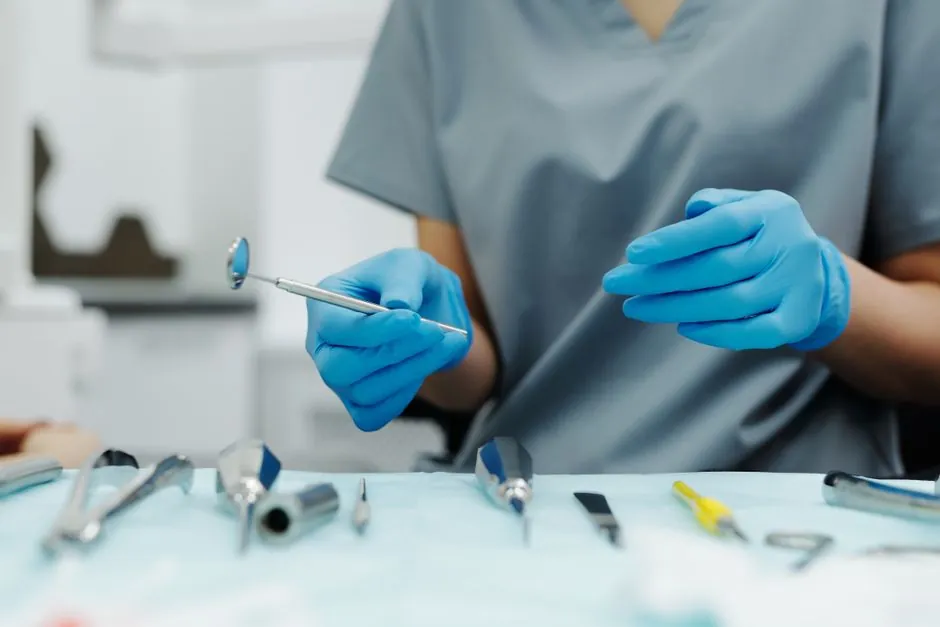
Silicon carbide (SiC) is a non-oxide engineering ceramic with 3.21 g/cm³ density, Mohs hardness 9, melting point 2700°C, and cubic (3C) or hexagonal (4H, 6H) polytypes, and it is the only common medical-grade ceramic that simultaneously delivers 25–35 W/m·K thermal conductivity, >250°C thermal-shock tolerance (ΔT), and Vickers-class hardness above 2400 kg/mm² [S1][S3][S8].
For medical-device engineers, that combination matters: it places SiC in a narrower slot than alumina or zirconia, but it also lets it do jobs those oxide ceramics cannot, including load-bearing wear surfaces in peristaltic pump headers, X-ray plate enclosures, MRI structural insulators, and hermetic feedthroughs for implantable electronics [S5][S6].
Material Class and Why SiC Sits in a Separate Slot
SiC is grouped with silicon nitride (Si₃N₄) and aluminium nitride (AlN) as a non-oxide high-performance ceramic, distinct from the oxide family (Al₂O₃, ZrO₂) that dominates orthopaedic implant bearings and ceramic bearing races [S5].
Where alumina is specified for its biocompatibility and low cost, and zirconia for transformation-toughening, SiC is specified where a device needs hardness and thermal conductivity at the same time: surgical instrument cutting edges, sliding components in fluid-handling modules, and housings that must sink heat away from drive electronics without using metal [S1][S4][S5]. The raw material typically arrives as a powder with >99% purity, in micron or nano cuts, in black, grey, or green colour, before sintering into the dense part [S1].
Core Property Bands Engineers Actually Check
The published property bands a spec writer can pull off a SiC datasheet without overstating are: density 3.02–3.21 g/cm³, Mohs hardness 9, Vickers ≈2400 kg/mm², modulus of elasticity 300–330 GPa, bending strength 250 MPa at 20°C, thermal conductivity 25–35 W/m·K (general) to 45 W/m·K at 1200°C (SiSiC), CTE 4.0–4.5×10⁻⁶/K, maximum service temperature 1380–1650°C, and thermal-shock ΔT >250°C [S1][S3][S4][S8].
Those bands are the reason a part designer in medical reaches for SiC instead of silicon nitride when the priority is wear, or instead of silicon steel laminations when the priority is biocompatible thermal management. Sintered SiSiC (silicon-infiltrated silicon carbide) is the variant most often quoted for medical-wear applications because it hits the 45 W/m·K conductivity number and 250°C ΔT shock figure in a single body [S3].
Selection Criteria Against the Oxide and Other Non-Oxide Options
On a side-by-side selection matrix against the other medical-grade ceramics, SiC is the right call when at least two of these four criteria are met: surface speed or sliding contact that would wear Al₂O₃, a heat flux that ZrO₂ cannot sink, an electrical-insulation requirement that rules out metal, and a sterilisation regime (autoclave + gamma) that would degrade polymers [S1][S2][S5][S8].
Conversely, SiC is the wrong call for load-bearing articulating orthopaedic surfaces: ZrO₂ and Al₂O₃ remain the implant-bearings default because their wear debris has a longer clinical track record under ISO 10993 testing [S5]. SiC is also the wrong call where the device is a one-shot disposable: a SiSiC liner with 3–50 mm ceramic thickness and vulcanised rubber backing has the geometry of a process-industry part, not a single-use catheter, and the per-part cost only amortises in reusable or high-cycle hardware [S3][S6].
Form Factors and Where Each Lives in a Medical Device
Published SiC medical form factors cluster in three families: tubing and fluid-handling wear components, device housings and structural hardware, and implantable hermetic assemblies. In tubing, the realistic fit is upstream of the patient, in the peristaltic pump head, valve seat, or abrasive-slurry side of a dialysis water loop, rather than in the patient-contact lumen itself [S2].
In housings, SiC is named for diagnostic-equipment enclosures, hospital-bed actuator parts, medical-device keypads and displays, MRI machine components, portable oxygen concentrators, and X-ray plate enclosures, where its X-ray transparency, electrical insulation, and thermal conductivity are co-required [S6]. In implants, SiC enters via ceramic-metal hermetic feedthroughs for pacemakers and cochlear implants, where the ceramic must seal against body fluid while passing electrical signals over decades [S5]. Sterilisation compatibility (autoclave + gamma) is the property that lets the same SiC part sit in both reusable surgical instruments and single-cycle disposables [S1][S2].
Limitations, Failure Modes, and Sourcing Constraints
Three failure modes drive SiC rejects in medical production: surface micro-cracking from incorrect grinding (SiC is hard to machine and must be diamond-ground), residual porosity above 0.1% in non-infiltrated grades that lets bodily fluids penetrate, and galvanic coupling when SiC is mated to a dissimilar metal in a saline environment without an insulating barrier [S3][S4].
Sourcing is the other real constraint: the medical-grade supply chain is dominated by a small set of vendors (CeramTec for finished medical components; Zibo Chenyi and Chinese SiSiC liners for industrial-grade wear tiles that occasionally cross over into medical-fixture hardware), and qualification under ISO 10993 biocompatibility testing is what separates a medical SiC part from the same chemistry sold into mining or semiconductor fabs [S5]. Buyers should expect 3–50 mm thickness options, 50–800 mm plate sizes, and CE-documented shipments as the baseline commercial offering from the Chinese SiSiC liner tier [S3]. For a non-medical reference on how comparable ceramic-powder supply chains are structured for industrial buyers, see this spec map on industrial ceramic procurement.
Standards, Biocompatibility, and What to Put on the Drawing
The standard that gates SiC for any patient-contact or implant-adjacent use is ISO 10993 biocompatibility, and that is the line CeramTec publishes against for its oxide and non-oxide medical portfolio including SiC [S5]. Beyond biocompatibility, drawings should call out: density ≥3.2 g/cm³, apparent porosity <0.1%, hardness ≥2400 kg/mm², four-point bending strength ≥250 MPa at 20°C, CTE 4.0–4.5×10⁻⁶/K, and a surface finish specified in Ra rather than left to the machine shop [S1][S3][S4].
Crystal polytype (3C, 4H, 6H) belongs on the print only when the downstream application is electronic or semiconductor-like, which is rare in mainstream medical; for wear and structural parts, the consolidated SiSiC body is the default [S1][S3]. Signals worth tracking over the next sourcing cycle are whether vendors start publishing ISO 10993 test reports per SiC grade rather than per portfolio, and whether medical-device OEMs begin standardising on the 45 W/m·K SiSiC variant for handheld diagnostic heat-sink duties, a shift that would mark SiC's first real move from niche hermetic to volume medical electronics [S3][S5][S8].