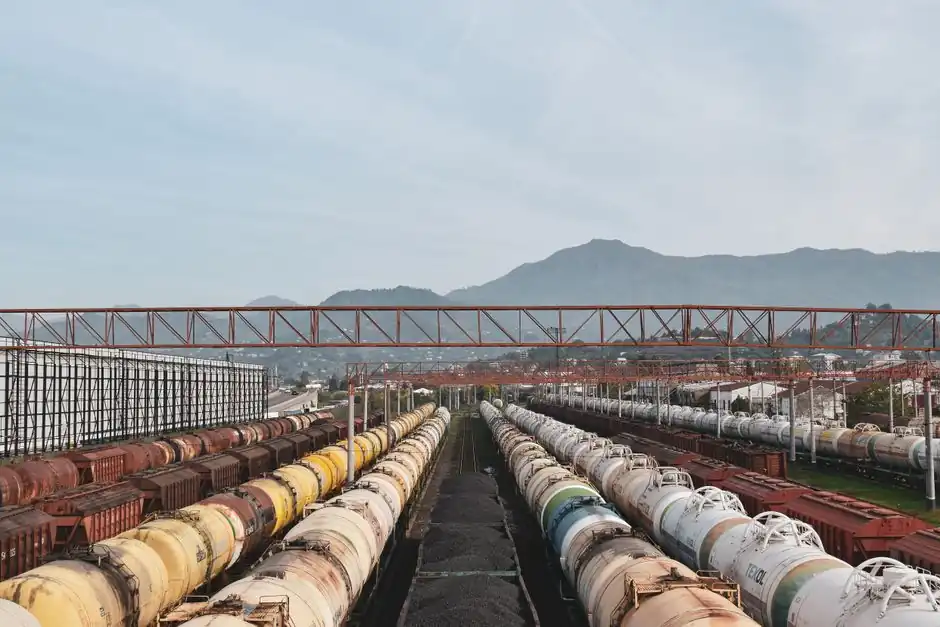
Silicon nitride (Si₃N₄) is the dominant monolithic ceramic for rail-spec rolling-element bearings, insulator pins and high-speed shaft sleeves, where it delivers a 40% mass saving over steel plus a flexural strength band of 800–1200 MPa and fracture toughness of 6–7 MPa·m^1/2 per Dayoo industrial listings [S1].
The procurement audience for rail splits into three sub-groups: traction-motor bearing buyers specifying ISO 3290 grade-3 Si₃N₄ balls, rolling-stock insulator and sensor-housing buyers needing EN 45545-compliant structural Si₃N₄, and pantograph/catenary slide buyers weighing SSN against self-lubricating zirconia-toughened variants. Each weighs the same five spec gates differently, and the rail operating envelope (-40°C to +1200°C, with vibration and humidity cycling) penalises the wrong sintering route hard.
Spec Gate 1: Grade, Sintering Route and Phase Composition
Sintered Si₃N₄ (SSN) and hot-isostatically-pressed Si₃N₄ (HPSN) convert to interlocking beta-phase needles that drive the 6–10 MPa·m^1/2 fracture toughness envelope rail specifiers rely on, while reaction-bonded Si₃N₄ (RBSN) retains residual alpha plus free silicon and is rejected for rail bearing service [S5][S10].
For rail bearing rollers and traction-motor shafts, HPSN at ~3.2–3.3 g/cm³ and near-zero porosity is the default; typical manufacturer data sheets show flexural strength ≥900 MPa, Vickers 1500–1800 HV, elastic modulus 280–320 GPa, and a max continuous service temperature of 1200–1600°C in inert atmosphere [S2][S3]. Hot-pressed sintered Si₃N₄ (used in structural bracket and connector components) hits ≥600 MPa flexural, HRA ≥92, and a density of 3.2–3.3 g/cm³ per EveryChina-spec thermal-shock structural parts [S4]. Buyers should always request the mill certificate naming the alpha/beta phase share, since phase ratio is rarely published per SKU and is the controlling variable behind the 800–1200 MPa vs 400–600 MPa flexural band quoted by different Chinese suppliers [S1][S5].
Spec Gate 2: Density, Thermal Shock and Operating Envelope
Silicon nitride's coefficient of thermal expansion of 2.95–3.2×10⁻⁶/°C and thermal-shock ΔT > 600°C make it the only common engineering ceramic that survives the -40°C/+120°C daily cycle plus peak brake-debris heating on rail undercarriage brackets, per Innovacera-spec shafts at CTE 2.95–3×10⁻⁶/°C [S2][S3].
For undercarriage structural parts, hot-pressed Si₃N₄ at density 3.2–3.3 g/cm³ and flatness ≤0.02 mm/100 mm is the production benchmark; surface roughness down to Ra ≤ 0.4 μm is achievable as-fired and is mandatory for bearing-race surfaces [S4]. Thermal conductivity sits in a 15–30 W/(m·K) band for hot-pressed parts and 23–27 W/(m·K) for shaft-grade material, well below aluminium nitride but adequate for heat dissipation away from traction-motor housing inserts [S3][S4]. For traction-motor sleeve applications where weight saving compounds, the 40% mass reduction versus steel reduces un-sprung rotating mass, a direct lever on energy consumption per km.
Spec Gate 3: Electrical Insulation and Fire-Smoke Compliance
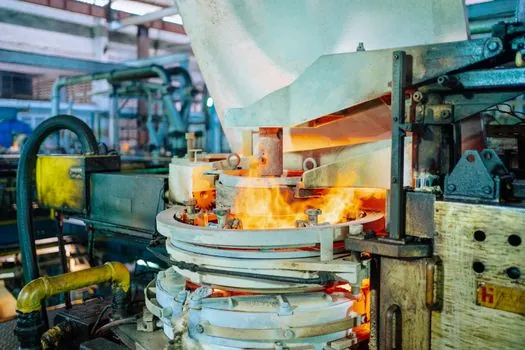
Volume resistivity >10¹⁴ Ω·cm and dielectric strength 10–25 kV/mm make Si₃N₄ a dual-purpose structural insulator for third-rail insulators, sensor housings and pantograph support ceramics, with breakdown voltage ratings of 20–25 kV/mm quoted for the Dayoo igniter/heater grade used in similar insulator service [S1][S4].
For rolling-stock interior and under-floor applications, EN 45545-2 hazard level HL2/HL3 fire-smoke-toxicity compliance is the hard gate; the inorganic Si₃N₄ chemistry inherently passes the smoke-density and toxicity requirements because the material does not contain organic binders, halogen flame retardants, or sulphur-bearing fillers that would otherwise drive FST failure. Volume resistivity >10¹⁴ Ω·cm and dielectric constant εr ~9.5 at 1 MHz position the material well for current-collector and bus-bar insulator service, with a loss tangent below 0.0002 at 1 MHz confirming low RF losses for trackside signalling sensors [S2][S4]. Where the insulator also sees mechanical load, the 800–1200 MPa bending-strength range and 6–7 MPa·m^1/2 fracture toughness give a 2–3× safety margin over porcelain at one-third the weight.
Spec Gate 4: Geometry Tolerance and Bearing-Grade Sphericity
Bearing-grade Si₃N₄ balls for rail traction-motor and gearbox service must meet ISO 3290 grade 3 or tighter, typically sub-micron sphericity, while as-fired plates run wider tolerance bands and ground/honed parts sit in the middle; mixing the three is the most common rail-procurement budget failure [S5].
For shaft and sleeve applications, the maximum manufacturable envelope is length ≤ 1200 mm, diameter ≤ 300 mm, thickness ≤ 50 mm per Innovacera-spec Si₃N₄ shaft data, with hole-diameter tolerance of ±0.01 mm and flatness ≤0.02 mm/100 mm on structural parts [S3][S4]. The Dayoo industrial structural component example is 128×17×4 mm with roughness 0.1 μm achievable, illustrating that even thin-section Si₃N₄ is machinable to precision tolerances on a custom basis [S1]. Rail specifiers should specify "as-sintered," "OD-ground," or "precision-finished" explicitly in the RFQ; otherwise they will pay ground-rod pricing on bearing-grade tolerances or vice versa.
Spec Gate 5: Wear, Friction and Tribological Pairing

Si₃N₄'s self-lubricating behaviour (friction coefficient 0.1–0.3) and wear rate orders of magnitude lower than metallic shafts is the lever behind its specification in rail auxiliary motor bearing cages, door-mechanism rollers and brake-system spacers, with hardness at HRA 92–94 (Mohs 9+) second only to diamond and a few carbides [S3][S4].
For traction-motor hybrid bearings (ceramic rolling elements on steel races), the Si₃N₄/steel pair is the proven configuration; Si₃N₄-on-Si₃N₄ all-ceramic bearings are specified in premium high-speed applications where electrical isolation of the inner race is also required, at a ~2× cost premium. Shaft and pin applications in rail bogies exploit the low friction coefficient to drop grease re-lubrication intervals from ~12 months to ~48 months, a track-side maintenance-cost reduction that usually justifies the Si₃N₄ material premium within two overhaul cycles. As a direct alternative to silicon carbide and alumina in wear-and-corrosion baseline comparisons, silicon nitride sits at ~3.2 g/cm³ versus SiC at ~3.1 g/cm³ and alumina at ~3.9 g/cm³, a meaningful spread for rotating unsprung mass.
Comparison: Si₃N₄ vs SiC vs Alumina for Rail Subsystems
For rail-bearing, insulator and structural-rail applications, the three-way tradeoff between Si₃N₄, silicon carbide and alumina ceramic runs on four decision axes: density, toughness, thermal-shock tolerance and cost-per-part [S5][S6].
Si₃N₄ wins on fracture toughness (6–10 MPa·m^1/2 versus SiC at 3–5 and alumina at 3–4) and on thermal-shock ΔT > 600°C, which is why it dominates rail bearings and shock-loaded brackets. SiC wins on hardness and on continuous service temperature above 1400°C, but loses on cost and on toughness-driven impact survival. Alumina ceramic is the cost leader and the incumbent for low-stress insulator housings and tile liners, but its 3–4 MPa·m^1/2 toughness and 200°C ΔT thermal-shock ceiling disqualify it from rail bearing and high-stress structural service; for insulator-only duty, alumina ceramic remains the default. For the bearing and rolling-element slot specifically, the silicon nitride grade spec'd at 6–7 MPa·m^1/2 and 800–1200 MPa flexural is the only option that meets both ISO 3290 grade-3 sphericity and the rail impact-load envelope.
2026 Sourcing Landscape and Cost Levers
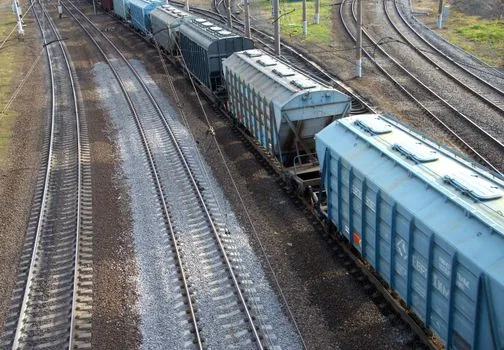
Reference pricing as of April–May 2026 puts 4 g of 85% min alpha-phase Si₃N₄ powder (CAS 12033-89-5) at $852 from Sigma-Aldrich, while 10-piece MOQ Si₃N₄ boards ship at US$15 baseline from audited Chinese wholesalers; the industrial supplier index shows 19 Si₃N₄ composition entries versus 4 aluminium nitride and 2 silicon carbide as adjacent alternatives [S5].
Mainland Chinese suppliers cluster in Zibo (Shandong) and Jiangsu, with stock-listed players like Sinocera-jinsheng (300285) holding the rail-bearings ball segment and Shandong Anda Industrial (Zibo, founded 2016) running a typical multi-ceramic lineup of Si₃N₄, alumina and boron nitride; phase share is rarely published per SKU, so the mill certificate is the controlling document [S5]. For rail procurement, two leverage points dominate: (1) tighten the tolerance spec to the actual ISO 3290 grade needed rather than over-spec to grade 1, since each grade step can add 30–60% to unit cost; (2) consolidate the geometry family across SKUs to share pressing and sintering tooling, since form factor (tube, rod, plate, ring, ball) is the silent driver of unit cost. For marine-adjacent rail-bridge applications and corrosion-rail duty, the spec logic overlaps with silicon nitride selection for marine engineering, where the same HPSN route and density band apply. Two trackable signals to watch through Q4 2026: ISO 3290 grade-3+ Si₃N₄ ball pricing out of Zibo, and any EN 45545-2 HL3 test data published by Chinese Si₃N₄ mill suppliers, since HL3 certification is the last gate before wider rail-interior adoption.
Spec-level background on the components involved: silicon carbide.